


Walk through the supplement aisle and you'll see two dozen protein powders making variations of the same claim: "The best for muscle." The science is more boring than the marketing. Whey is the most-studied and the most efficient on a per-gram basis. Casein is genuinely useful for slow release. Plant proteins work for muscle growth too, with a few caveats about dose and amino acid profile. The brand and the flavor matter less than whether you actually use the product consistently.
This is a guide to the three main categories of protein powder, what the evidence supports about each, and how to choose based on your training and lifestyle rather than packaging.
Why Protein Quality Matters Less Than the Internet Suggests
Protein "quality" is a real concept: it refers to how well a protein source provides the essential amino acids your body cannot synthesize, especially leucine, which is the trigger for muscle protein synthesis. Whey scores highest by most metrics because it has the highest leucine content per gram and is rapidly absorbed.
But protein quality differences shrink dramatically once you account for total daily protein intake. A person eating 30 g of pea protein four times a day will build muscle similarly to a person eating 25 g of whey four times a day, given equivalent training and total energy. The difference between sources matters more in marginal situations (small servings, very low total intake, single-source diets) than for someone hitting a reasonable daily target from a varied diet.
The number that matters most is your total daily protein, expressed as 1.6 to 2.2 grams per kilogram of body weight per day for active adults aiming to gain or preserve muscle. Pick a source you'll actually use consistently. The chemical differences are smaller than that consistency.
Whey Protein: The Default Choice
Whey is the liquid that separates from milk during cheese production. It contains the highest concentration of branched-chain amino acids (leucine, isoleucine, valine) of any common protein source and the highest percentage of leucine specifically: typically around 11–12% by weight.
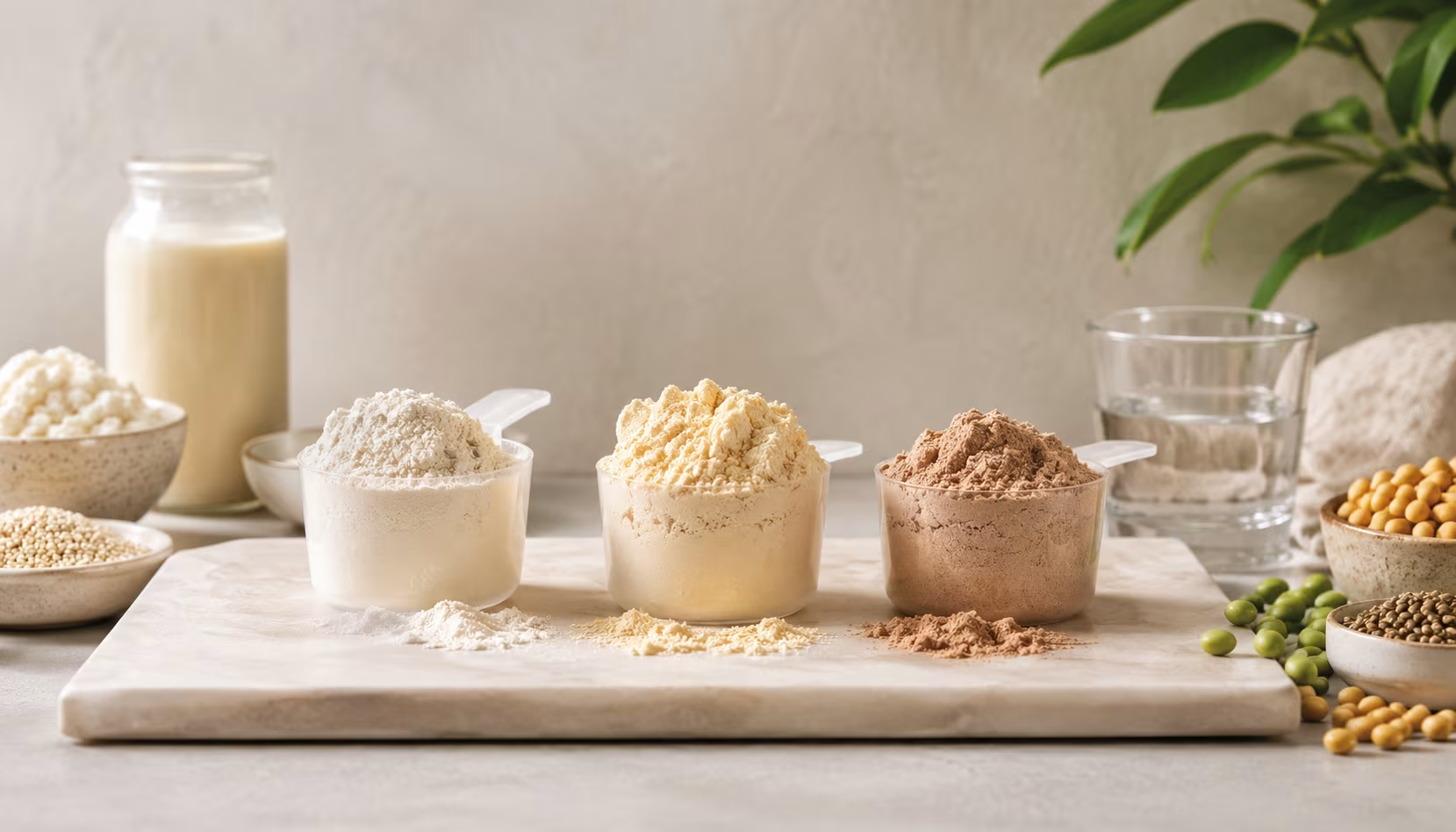
Whey is rapidly absorbed: blood amino acids peak within roughly 60–90 minutes of ingestion, with leucine spiking sharply. This rapid spike is what makes whey particularly effective at triggering muscle protein synthesis after a training session.
Standard whey serving for muscle protein synthesis is 20–25 grams for most adults under 60. Older adults need slightly more (30–40 grams) because anabolic resistance (the diminished response of muscle to a given dose of protein) increases with age.
Whey has one practical drawback: the lactose content of whey concentrate can cause digestive issues in lactose-sensitive people. Whey isolate has nearly all the lactose removed and is usually well-tolerated even by people who avoid milk.
Casein Protein: The Slow-Release Option
Casein is the other major protein in milk: the part that curdles and forms cheese. It coagulates in the stomach and digests over 6 to 7 hours, releasing amino acids gradually. Where whey is a sharp spike, casein is a long, low plateau.
Casein's main use case is before bed. A 30–40 g serving of casein at night provides a slow trickle of amino acids during sleep, which a 2012 study by Snijders and colleagues showed increased overnight muscle protein synthesis by about 22% compared to placebo in young men.
Casein is also useful between meals when you'll be without protein for an extended period: long meetings, travel days, intermittent fasting protocols. The slower absorption blunts hunger more effectively than whey.
Texturally, casein is thicker than whey when mixed with liquid, almost pudding-like at higher concentrations. Some people use it specifically for that reason; others find it unappealing. Cottage cheese is essentially natural casein and serves the same physiological purpose at a similar nighttime dose.
Plant Proteins: What Works and What Doesn't
Plant proteins have caught up to whey in research attention over the past decade. The main contenders:
Pea protein
the most popular single-source plant powder. Around 7–8% leucine by weight (lower than whey but higher than most other plant sources). Well-tolerated digestively. Slightly lower in methionine than animal sources.
Rice protein
typically lower in lysine than animal sources. Combined with pea, the two complement each other and produce an amino acid profile close to whey. Most plant-based blends use this combination for that reason.
Soy protein
the only plant protein that is genuinely complete and has been heavily studied. Around 6–7% leucine. The post-workout response to a 30 g dose of soy is roughly equivalent to 20 g of whey in young adults. Less popular for consumer preference reasons (taste, isoflavone concerns that the evidence does not support at typical intakes).
Hemp protein
popular but lower in protein content (often 50% by weight vs 80–90% for whey or pea isolates) and lower leucine. Better as a fiber source than as a primary protein source.
For muscle growth, the practical recommendation with plant proteins is to take a slightly larger serving (30–40 g instead of 20–25 g of whey) and prefer blends that combine sources. A study by van Vliet and colleagues (2015) showed that the amount of plant protein needed to match a given response to whey is roughly 40% higher, but it does match.
Plant protein has independent benefits that the powder choice doesn't capture. Diets higher in plant protein and lower in red and processed meat are associated with lower all-cause mortality in long-term cohort studies. This isn't about powder versus shake; it's about the broader food pattern. Use whatever powder you like and let your meals carry the variety.
The Leucine Threshold and Per-Meal Targets
The concept of a leucine threshold is foundational to modern protein science. Muscle protein synthesis is triggered when blood leucine reaches roughly 2.5–3 g: the amount in about 25 g of whey or 30–40 g of plant protein. Below the threshold, the meal contributes to amino acid availability but doesn't produce a strong synthesis response.
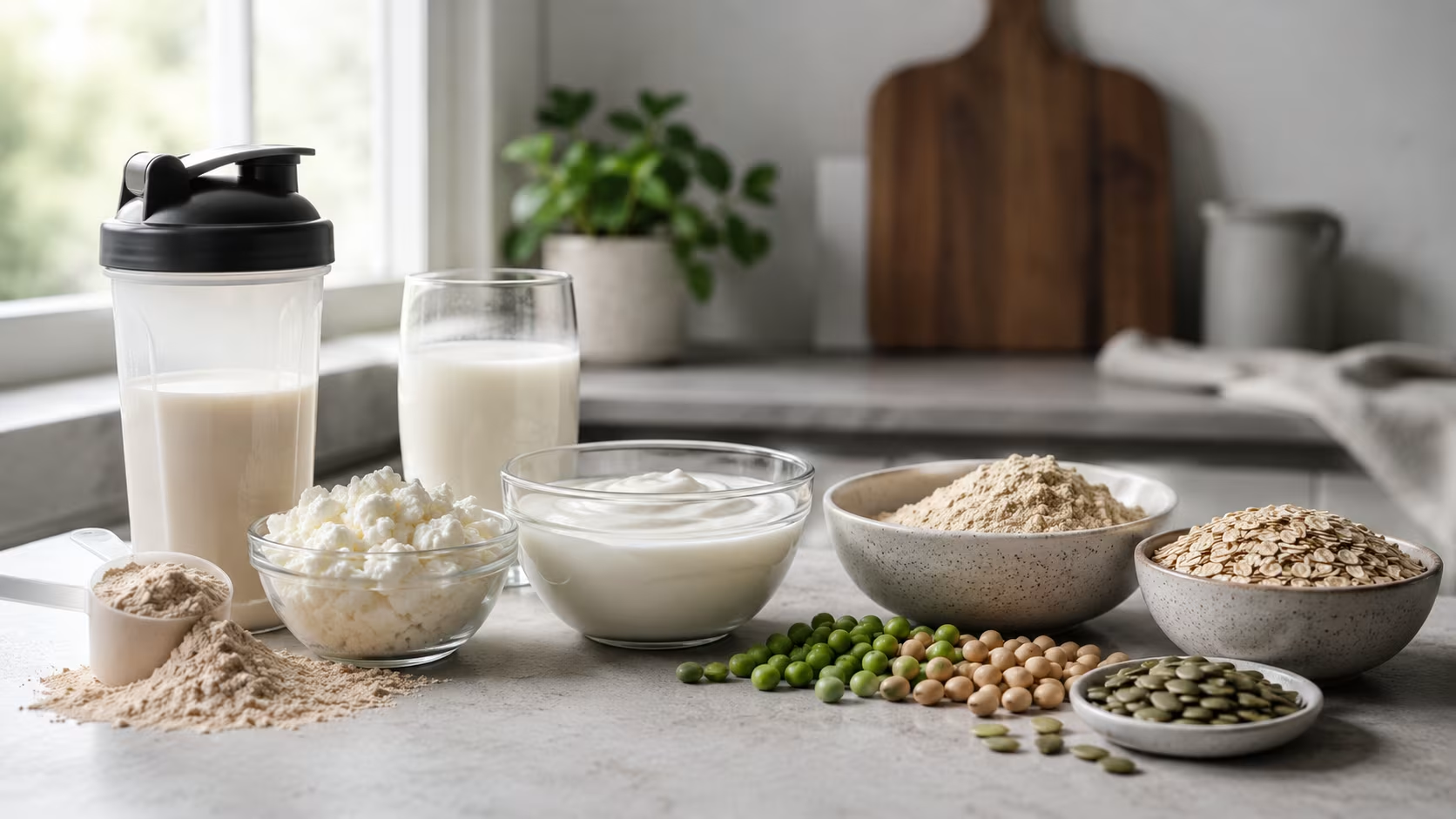
Practical implication: a 10 g protein bar between meals does very little for muscle. A 25 g whey shake or a 4 oz chicken breast crosses the threshold and triggers the response.
Spreading total daily protein across 3–5 meals/snacks that each cross the leucine threshold appears to be more effective than concentrating it in 1–2 meals. The classic recommendation is 0.4 g per kg body weight per meal, four times a day, for active adults.
For a 70 kg person, that's 28 g per meal, 4 meals = 112 g daily. The exact number can flex with training intensity and total calorie target.
Whey Concentrate vs Isolate vs Hydrolysate
Three processing levels:
Whey concentrate
70–80% protein by weight, with some lactose, fat, and bioactive peptides. Cheapest, most processed flavor. Fine for most people.
Whey isolate
90%+ protein. Most lactose removed. More expensive. Better choice for lactose sensitivity or for anyone who notices bloating from concentrate.
Whey hydrolysate
partially pre-digested into smaller peptides. Marketed as "fastest absorbed." The actual difference in absorption rate is small and does not translate to meaningful real-world benefit for most users. Most expensive of the three. Generally not worth the markup.
For most healthy adults: whey concentrate is fine. Switch to isolate if you notice digestive issues or want the cleaner amino acid profile per gram. Skip hydrolysate unless your dietitian specifically recommended it.
Reading a Protein Label
Three things matter on the label:
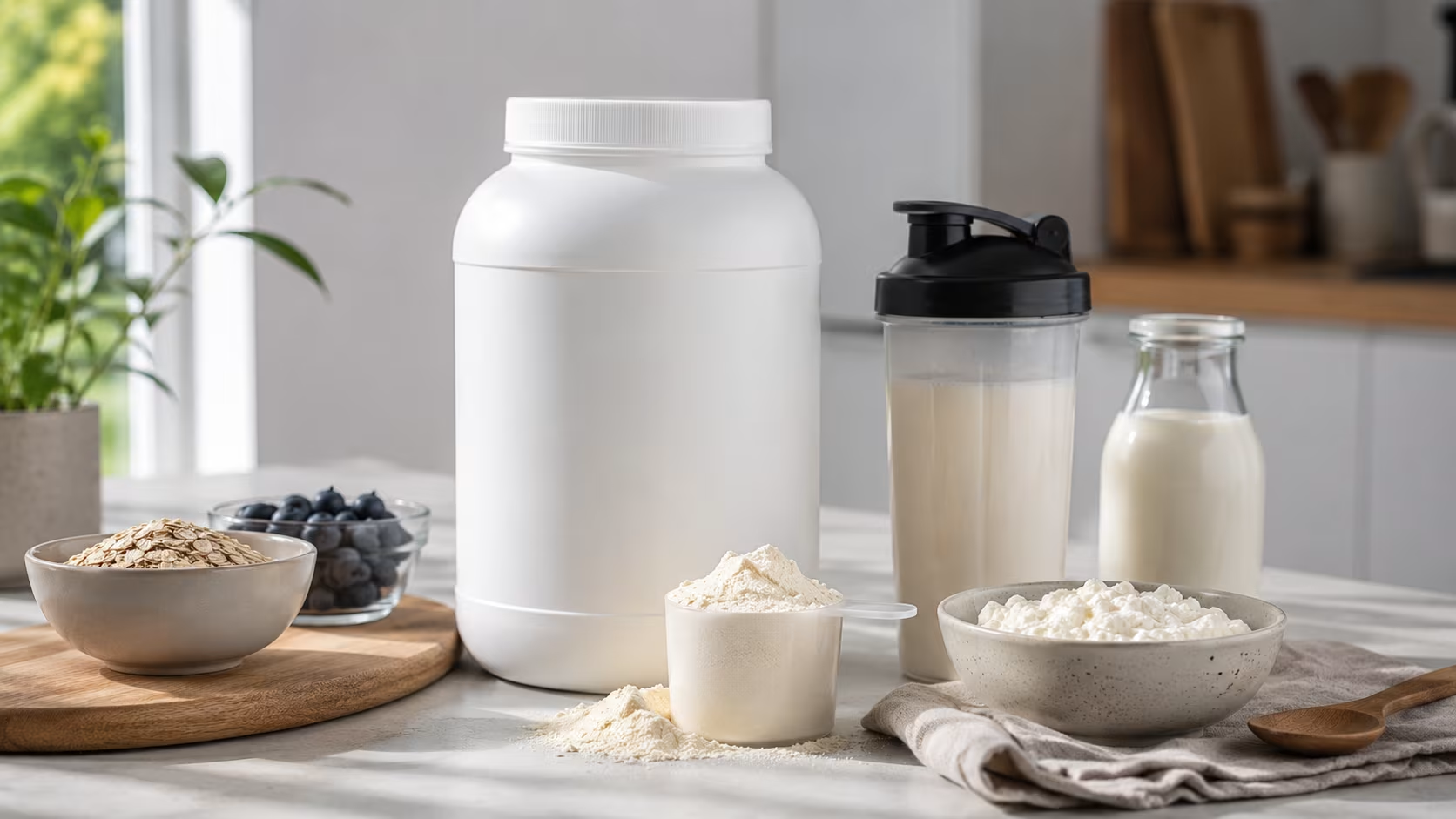
Protein per serving in grams
should be at or near the leucine threshold dose (20–25 g whey, 30–40 g plant). Beware of small "scoops" that contain 12 g of protein.
Ingredient list length
shorter is generally better. The core ingredients should be the protein source (whey isolate, pea protein), a flavoring (cocoa, vanilla extract), a sweetener (stevia, sucralose, or sugar), and an emulsifier (sunflower lecithin). Anything beyond that, including long lists of "amino acids" with each one called out separately, often signals filler.
Third-party testing certifications
NSF Certified for Sport, Informed Choice, USP Verified, BSCG Certified Drug-Free are the meaningful labels. These confirm the powder doesn't contain banned substances or undeclared contaminants. Important if you compete or test; reassuring if you don't.
Be skeptical of:
- "Proprietary blends" that don't list individual ingredient amounts: usually means the marquee ingredient is present at trivial doses
- Powders with more than 5–6 sweeteners: usually compensating for poor base flavor
- Excessive added BCAAs on top of whole protein: no benefit if you're already at the leucine threshold from the protein itself
What's Actually Worth Paying For
Three things justify a price premium:
- Third-party testing if you're a tested athlete or want belt-and-suspenders quality assurance
- Whey isolate over concentrate if you're lactose-sensitive
- A flavor you actually like because consistency over time matters more than chemistry
What is not worth a premium:
- Hydrolyzed whey for the average user
- "Grass-fed" or "pasture-raised" whey unless you specifically want it for ethical reasons (the protein quality is not meaningfully different)
- "Anabolic" or "thermogenic" formulations (mostly added stimulants and creatine that you can buy more cheaply separately)
- Designer flavors at twice the per-serving cost
The main principle: protein powder is a convenience tool. A 5 kg tub of standard whey or pea protein at a reasonable price-per-serving ($1.50–$2.50 per 25 g serving in 2026) is the right purchase for most people. Save the rest of your budget for groceries.
Frequently Asked Questions
Is whey protein better than plant protein for building muscle?
Whey is more efficient on a per-gram basis because it has a higher leucine content and complete amino acid profile. But plant proteins still work for muscle growth if you eat enough total protein and either combine sources (rice + pea, for example) or take slightly more per serving (typically 30–40 g instead of 20–30 g of whey).
When should I take casein vs whey?
Whey is better immediately after training (rapid absorption, fast leucine spike). Casein is more useful before bed because it digests slowly and provides amino acids over 6–7 hours. Many people use both: whey post-workout, casein at night.
Do I actually need protein powder?
Not if you're hitting your daily protein target from food. Powder is a convenience tool, not a magic ingredient. Most people who use it benefit from the consistency it provides on busy days, not from anything chemically superior.
Which plant protein has the best amino acid profile?
Pea protein is the most leucine-dense single plant source. A blend of pea + rice protein closely matches the amino acid profile of whey. Soy protein is also complete and well-studied but less popular due to taste and consumer preferences.
How much protein powder is too much?
There's no harm at typical supplemental doses (1–3 scoops per day) for healthy adults with normal kidney function. The issue is rarely 'too much protein' and more often 'too little of the rest of the diet.' Use powder to top up real food, not replace it.




0 Comments
Leave a comment
Your email won't be published. Required fields are marked with *.