

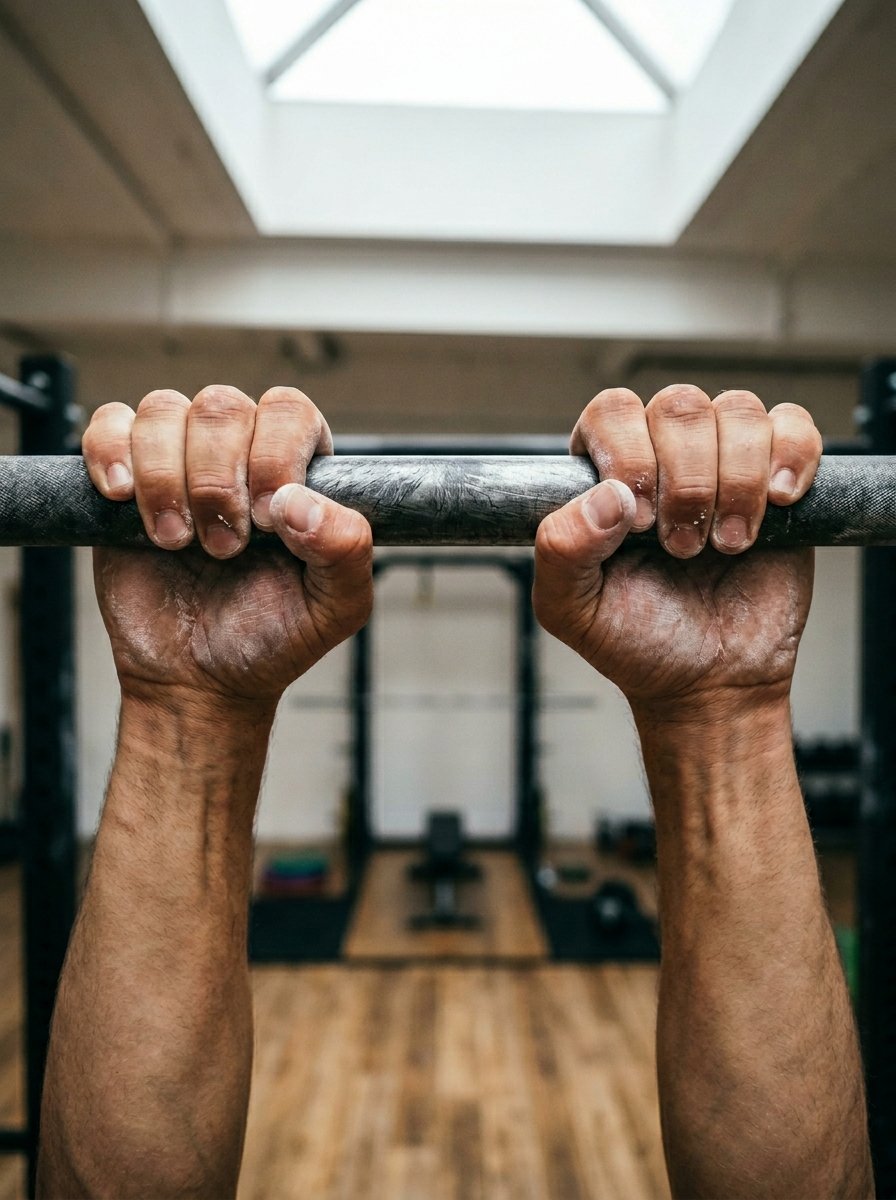
In 2015, a study in The Lancet tracking nearly 140,000 adults across 17 countries found that each 5kg decrease in grip strength was associated with a 17% higher risk of cardiovascular mortality and a 16% higher risk of all-cause mortality. The association was independent of age, education, tobacco use, physical activity, and several other confounders. Grip strength outperformed systolic blood pressure as a predictor of cardiovascular death in this dataset, a finding that surprised many clinicians.
Grip strength has since appeared as a significant predictor in studies examining cognitive decline (a 2019 systematic review in Mechanisms of Ageing and Development), incident diabetes (multiple prospective cohort studies), bone mineral density, and quality of life in older adults. The Lancet finding (replicated and expanded in subsequent work) established hand-grip dynamometry as a useful clinical tool in geriatric and preventive medicine.
The question for most people isn't what grip strength predicts. It's why, and whether training grip strength specifically produces health benefits or whether it's simply a proxy for overall muscle health and physical activity, and either way, whether it's worth training.
What the evidence shows
Grip strength works as a biomarker for a few distinct reasons:
First, it's a reliable proxy for total skeletal muscle mass and muscle quality. Sarcopenia (the age-related loss of muscle mass and function) affects full-body muscle in a correlated pattern, and grip strength (being relatively easy to measure with a dynamometer) tends to track overall muscularity reasonably well. Someone with high grip strength is likely to have adequate muscle mass elsewhere; someone with low grip strength for their age often has broader muscle deficits.
Second, grip strength reflects functional reserve: the physical capacity to respond to physiological stress. Low grip strength in older adults predicts poor surgical outcomes, prolonged hospital stays, and increased vulnerability to illness-related decline. The clinical utility here is genuine.
Third, there's an independent association beyond being a proxy. Forearm flexors, the primary muscles in grip, share blood supply and neural innervation patterns with other cardiovascular-relevant tissues. Some researchers have proposed that peripheral vascular health (the condition of small blood vessels in the extremities) is reflected in grip capacity, and that grip training itself may improve peripheral vascular tone.
Normative reference values from the 2015 Lancet study provide benchmarks. The data varies by sex, age, and BMI. In broad terms, values frequently cited for concern in clinical literature:
- Men under 40: below 37–40 kg on dominant hand
- Men over 60: below 30–32 kg
- Women under 40: below 22–24 kg
- Women over 60: below 18–20 kg
These are rough clinical concern thresholds, not performance targets. A reasonably active adult should be well above these values; the concern begins when grip strength is declining over time or falling into these lower ranges.
Does training grip strength specifically improve health? The evidence is less direct here: most of the research is observational (higher grip strength correlates with better outcomes) rather than interventional (training grip strength improves outcomes). The reasonable inference is that training grip strength is part of a broader resistance training regimen that produces the outcomes associated with higher muscle mass and physical capacity, and that the specific training benefits function through those broader pathways.
How to apply it
Grip strength is trained both directly and indirectly. If you're already doing compound pulling movements (deadlifts, rows, pull-ups, farmer's carries) with progressively increasing loads, your grip is already being trained effectively as a limiting factor in those movements. The following protocol adds targeted grip work:
10-minute grip training protocol (add to existing training 2–3×/week)
1. Dead hangs: 3 sets × 20–60 seconds Hang from a pull-up bar with hands shoulder-width apart. Start at 20 seconds and build over weeks. This trains crush grip (closing the hand around an object) and grip endurance simultaneously, plus decompresses the spine as a bonus.
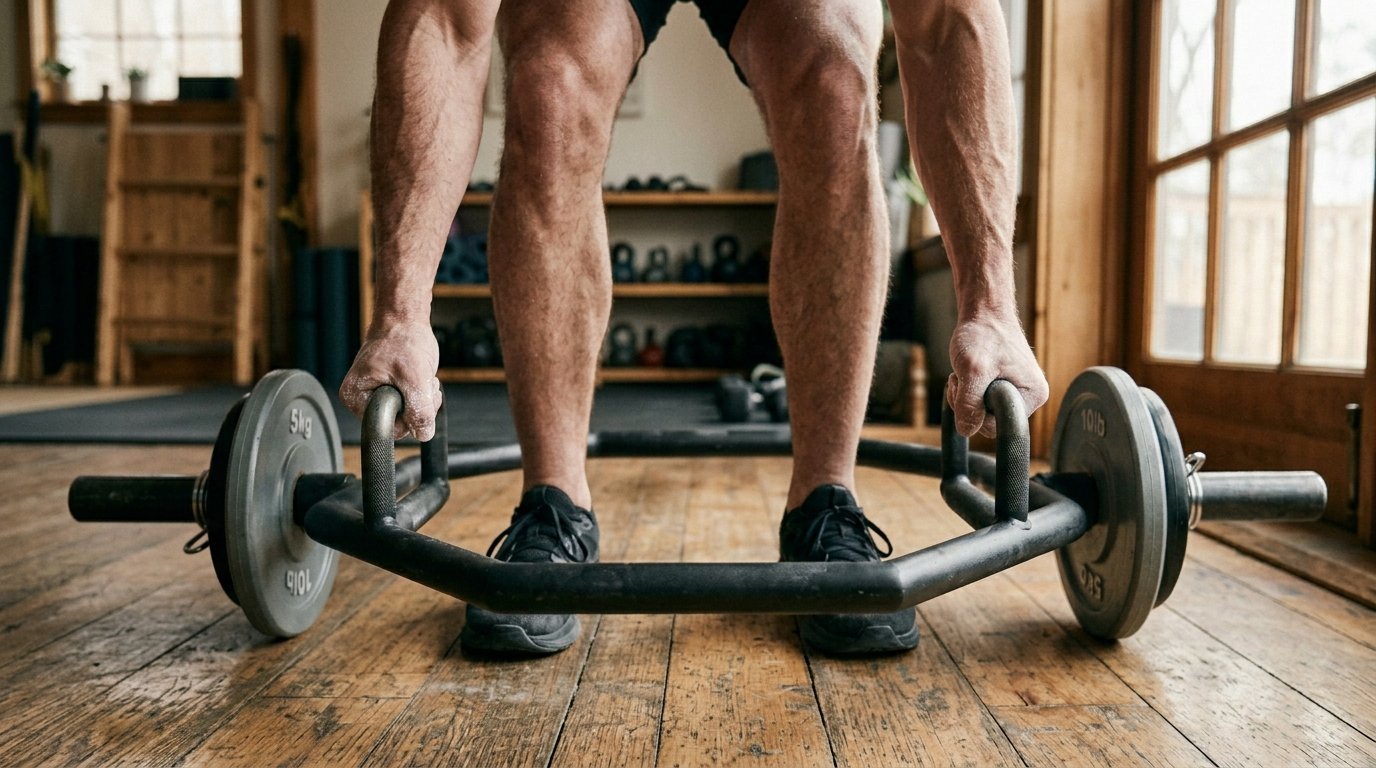
2. Farmer's carries: 3 sets × 20–30 meters Pick up a heavy dumbbell or kettlebell in each hand and walk a set distance. Use a weight where grip is the limiting factor, not cardiovascular capacity. Start with 60–70% of what you can deadlift for a single rep on each side.
3. Plate pinches: 3 sets × 20–30 seconds Hold a weight plate (10–25 lbs) pinched between fingers and thumb at hip height. This trains pinch grip, a different strength quality from crush grip. Start light: this is harder than it looks.
4. Towel pull-ups or towel rows (optional): 2 sets × as many reps as possible Drape a towel over a pull-up bar or around a low anchor and perform rows or pull-ups gripping the towel instead of a bar. The unstable, thick grip dramatically increases forearm demand.
Beginner version
Start with just dead hangs (20 seconds) and farmer's carries (3 sets of 15 meters at a modest weight) twice weekly. Build over four weeks before adding pinch grip work.
Progression
Add 5 seconds per week to dead hangs until you reach 60 seconds. Increase farmer's carry distance or load every two weeks. Progress plate pinch weight every two to three weeks.
How to test yourself
A hand-grip dynamometer (available for $20–40 online) measures grip strength in kilograms. Test dominant and non-dominant hand, three trials each, note the best score. Test every eight weeks to track progress.
Wrist and forearm balance
Grip strength is the product of the wrist and finger flexors, predominantly the muscles of the forearm. Training grip without attending to the wrist extensors and the muscles that open the hand (the finger extensors, much weaker in most people than the flexors) creates an imbalance that can contribute to lateral epicondylitis (tennis elbow) and wrist pain. Add 2–3 sets of reverse wrist curls (dumbbell resting on knee, wrist facing down, curl the dumbbell upward) and finger extension work (rubber band around the fingers, repeatedly opening the hand against resistance) to balance the flexor-dominant grip training above.
Common mistakes
Overtaxing the forearm flexors before heavy pull training
Grip-specific work should typically follow compound pulling exercises in a session, not precede them: fatigued grip limits performance on deadlifts and rows. Unless grip training is the point of the session, put it at the end.
Neglecting the non-dominant hand
Most people's non-dominant grip is significantly weaker than their dominant grip. Training both hands and noting any asymmetry is valuable.
Using straps on every pull
Lifting straps extend what you can lift when grip fails before the target muscle, but consistently using them on every heavy pull eliminates the grip training stimulus from those movements. Use straps selectively: for your heaviest sets of deadlifts, not for every row and pull-up.
Ignoring wrist mobility
Grip strength without adequate wrist mobility creates imbalance patterns. Basic wrist circles, extension stretches, and flexor stretches should accompany forearm work.
Treating grip training as vanity work
It's easy to dismiss forearm and grip work as aesthetic-focused. The epidemiological evidence makes this characterization inaccurate: grip strength is among the more meaningful health markers you can directly measure and train.
When to see a professional
Consult a physician or physiatrist if: you notice a sudden or unexplained drop in grip strength, which can indicate neurological or rheumatological conditions; you experience pain in the hand, wrist, or elbow during grip training (carpal tunnel syndrome, lateral epicondylitis, and other conditions are often aggravated by loading); or you have Raynaud's syndrome or other peripheral vascular conditions where isometric gripping can trigger symptoms.
Frequently asked questions
How often should I train grip strength specifically?
Two to three dedicated sessions per week is appropriate: compound pulling movements in your regular training (deadlifts, rows, pull-ups) provide additional stimulus. More frequent loading without adequate recovery leads to forearm tendon overuse, which typically takes two to four weeks to resolve. Start at twice weekly, assess whether forearms are recovering between sessions, and add a third session only if recovery is consistently good.
Are hand grip trainers at my desk useful?
Grip trainers (squeeze devices) provide meaningful stimulus for grip endurance and are better than nothing for people without regular gym access. They're limited for developing maximal crush grip or pinch grip strength, which require loaded resistance. They're a reasonable supplement (particularly useful for desk workers looking to accumulate some forearm training throughout the day), but not a substitute for dead hangs, farmer's carries, and plate pinches.
Should I stop using lifting straps to improve grip strength?
Lifting straps have a legitimate place: they allow heavier deadlifts and rows where the goal is back or leg development, not grip training. The mistake is using straps on every pulling movement, which eliminates the grip training stimulus entirely. A reasonable approach: use straps on your heaviest one to two sets of deadlifts, and do all rows, pull-ups, and lighter deadlift sets without straps. This balances training the target muscle with maintaining grip development.
Does grip strength decline faster than other strength qualities with age?
Grip strength declines at roughly 1–3% per year after age 50, comparable to or slightly faster than overall muscle mass loss. This makes early and consistent training of grip particularly important for maintaining functional reserve. The good news is that grip strength responds to resistance training at all ages studied: older adults show measurable grip strength gains from appropriately programmed training, often within eight to twelve weeks.
Sources and verification
Check current details with these primary or subject-authority sources before acting on the information.



0 Comments
Leave a comment
Your email won't be published. Required fields are marked with *.