


The home gym is one of the highest-leverage purchases a serious lifter can make. The amortized cost over years of use beats commercial gym memberships, the convenience eliminates "I didn't have time" excuses, and the customization to your specific training needs is impossible to replicate at most commercial gyms. The setup costs $1,000–3,000 typically, with the right priorities producing dramatically more useful training than the wrong ones at any budget level.
This is a practical guide to building a home gym for under $2,000 (or scaled up to $5,000+) with specific equipment recommendations and the most common purchase regrets to avoid.
The Four Essentials
A productive home gym needs four items as the foundation:
- Barbell (20 kg / 45 lb Olympic standard)
- Plates (enough to load the barbell for your working weights)
- Power rack or squat stand with safety pins
- Adjustable bench (flat at minimum, incline capability preferred)
With these four items, you can productively train:
- Back squat, front squat, overhead squat
- Conventional deadlift, sumo deadlift, Romanian deadlift
- Bench press (flat and incline)
- Overhead press, push press
- Bent-over row, Pendlay row
- Rack pulls, paused squats, all kinds of variations
The four-item setup costs $800–2,000 depending on quality choices. Everything beyond this is supplemental and depends on training goals.
The Barbell: Where Quality Matters Most
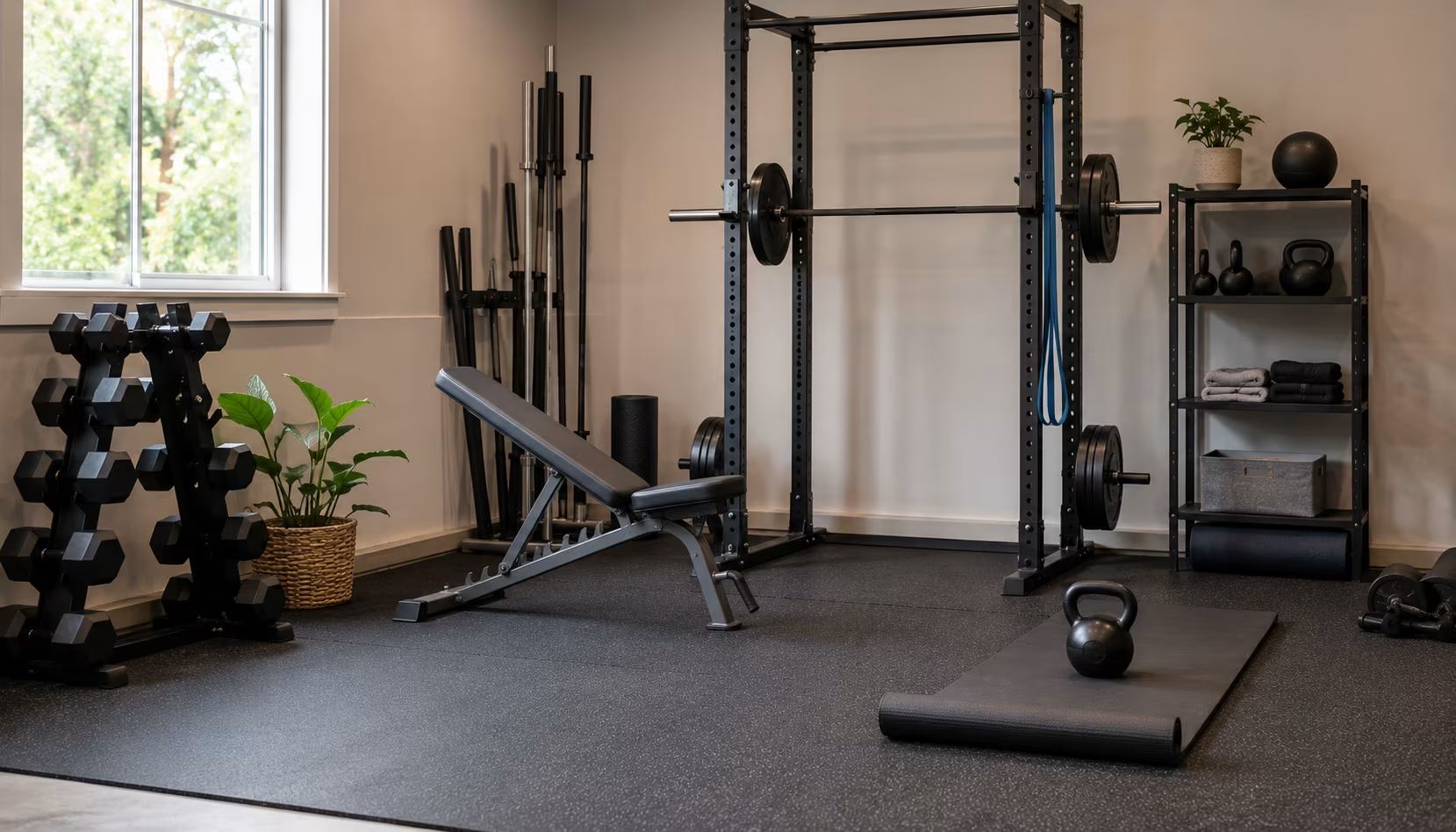
The barbell is the highest-leverage item in the gym and the one where quality differences are most felt. A bad barbell ruins the training experience; a good one lasts decades.
What to look for:
- 20 kg / 45 lb weight (Olympic standard)
- 28–29 mm shaft diameter for general training; 25 mm for women-specific bars
- 190–200,000 PSI tensile strength rating (higher is more durable under heavy loads)
- Rotating sleeves with quality bearings or bushings — needles bearings preferred for Olympic lifting, bushings adequate for most strength training
- Knurling depth — moderate aggressive knurling is preferred; too smooth is hard to grip, too aggressive tears hands
- Center knurl if doing back squats heavy (helps the bar grip the back)
- Reputable manufacturer with warranty
Budget options ($150–250) that are actually serviceable in 2026:
- Rogue Echo Bar or similar entry-level bars from established brands
- REP Fitness Sabre Bar
- Vulcan One Bushing
- Various competitive brands at this price point
Mid-range ($350–500):
- Rogue Ohio Bar
- REP Deep Knurl Power Bar
- Eleiko Performance Series (entry to their range)
High-end ($600–1,000+):
- Eleiko XF, Rogue Westside, Texas Power Bar, calibrated competition bars
For most home gym lifters, the mid-range $300–500 bar is the right purchase. Cheap bars ($75–125 store-brand options) often have seized sleeves within months, develop bent shafts, or rust quickly.
The Power Rack vs Squat Stand Decision
The choice between a full power rack and a minimal squat stand affects everything from space requirements to long-term usability.
Power rack (4-post or 6-post):
- Pros: complete safety with spotter arms; lat pulldown, dip, and pull-up attachments possible; band pegs; storage; long-term durability
- Cons: $500–1,500; significant floor footprint (1.2 × 1.5 m typical); needs ceiling height of 215 cm or more
Squat stand (2-post or short rack):
- Pros: cheaper ($200–500); smaller footprint; can be moved
- Cons: less safe (sometimes lacks safety arms); limited attachments; less stable at heavy loads
For most serious lifters with space, the power rack is the right purchase. The safety, expandability, and stability make up for the cost difference. Squat stands work for lifters with severe space constraints or much lower budgets.
Budget power racks ($400–700) in 2026 from REP Fitness, Titan, Bells of Steel, and similar provide perfectly adequate quality for home use. The premium ($1,200+) racks from Rogue and Sorinex add weight capacity, customization, and refinement that recreational lifters don't necessarily need.
Plates: Bumpers vs Iron
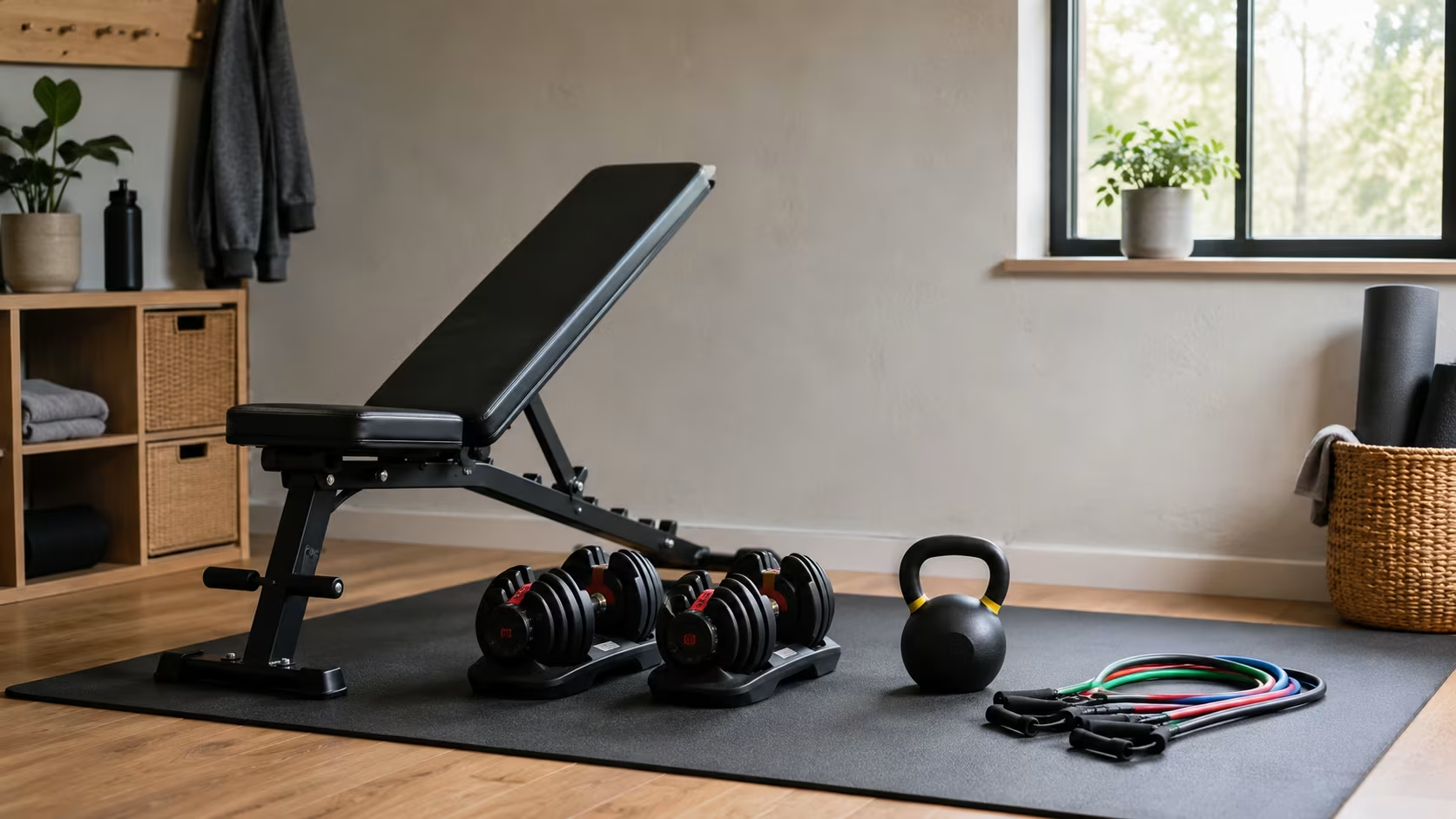
Iron plates (cast iron or rubber-coated cast iron):
- Cheapest per pound: $1.50–2.50 per lb in 2026
- Compact (45 lb plate is ~17 inch diameter)
- Cannot be dropped from height safely
- Best for general strength training without Olympic lifts
Bumper plates (rubber):
- More expensive: $2.50–4.50 per pound
- Larger (Olympic-standard 45 lb bumper is 17.7 inches)
- Can be safely dropped from overhead
- Best for Olympic lifting and apartment/upstairs gyms where noise and floor protection matter
Competition bumpers:
- Highest quality, calibrated weight, harder rubber
- $5–8 per pound
- For serious Olympic lifters or competition prep
For most home gyms, a mix works well: a set of bumpers for deadlifts and any drops, plus smaller iron plates for fine loading. A typical starting set:
- 2 × 45 lb bumpers
- 2 × 25 lb bumpers (or iron)
- 2 × 10 lb iron plates
- 2 × 5 lb iron plates
- 2 × 2.5 lb iron plates
- 2 × 1.25 lb micro plates (for incremental progression)
Total weight: roughly 260 lbs without the bar. Adequate for early-to-intermediate lifters. Add more 45s as you progress.
Cost: $400–700 for this starter set in 2026.
The Bench
The bench is one of the more variable purchases. Three tiers:
Flat bench only ($75–150):
- Adequate for bench press, dumbbell rows, and skull crushers
- Limits incline pressing, decline work, and supported exercises
Flat-incline-decline (FID) adjustable bench ($150–400):
- The sweet spot for most home gyms
- Inclines for bench press, declines for decline bench
- Look for: 1,000+ lb weight rating, no gap between the seat and back at flat position, sturdy adjustment mechanism
Heavy-duty FID ($400–800):
- Commercial-grade construction, lifelong durability
- Better mechanism for adjustment under heavy loads
- Larger footprint
For most home gyms, the FID bench in the $200–350 range is the right purchase. The cheap flat-only benches are limiting; the high-end heavy-duty benches are overkill for recreational use.
Phase 2: After the Essentials
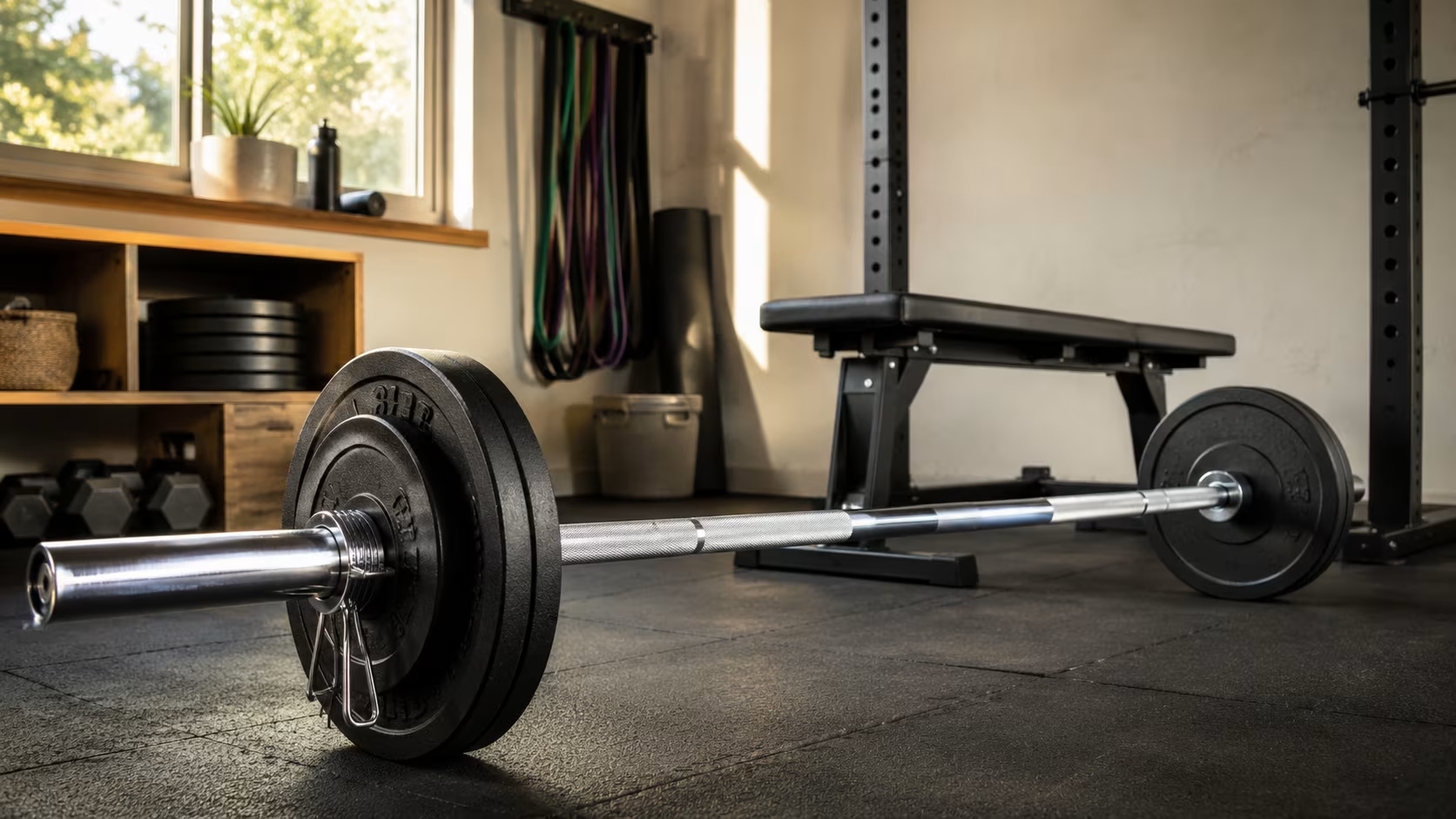
Once the four essentials are in place, the next priority items depend on training goals:
For strength training broadly:
- Dumbbells (adjustable like Powerblocks or fixed pairs from 10 to 50 lbs initially)
- Pull-up bar attachment for the rack
- Dip attachment for the rack
- Glute ham developer (advanced)
For Olympic lifting:
- Bumper plates (if not already)
- Olympic lifting platform or rubber mats
- Lifting shoes
- Tape, chalk, knee sleeves
For hypertrophy/bodybuilding:
- Dumbbells (broader range, 10 to 80 lbs)
- Cable system (lat pulldown / cable column) — most useful in hypertrophy training
- Hyperextension or back extension
- Leg curl machine (if space allows)
For conditioning:
- Concept2 rower or Echo bike (excellent conditioning tools)
- Jump rope (cheap, surprisingly effective)
- Resistance bands (versatile and cheap)
For mobility and warmup:
- Foam roller ($25)
- Lacrosse ball ($5)
- Resistance bands ($30 for a set)
What to Skip
Common purchases that disappoint:
Smith machine — adds significant cost and space for an exercise tool that many lifters use poorly. Free-weight bench press in a power rack is better.
Specialty bars (safety squat bar, cambered bar, etc.) — useful for advanced lifters with specific needs but unnecessary in the foundational setup. Add later if you find a specific need.
Bowflex or all-in-one systems — marketed as space-saving alternatives. In practice they're worse than dedicated equipment at every individual function.
Vibration plates — fitness fad with limited evidence and substantial cost.
Treadmill for serious lifters with running goals — outdoor running is free and more enjoyable. Treadmills are useful only in specific climates or for very specific training needs.
Heavy-duty boutique equipment under $1,000 — at the entry price points, established brands (Rogue, REP, Titan, Bells of Steel) offer better quality than premium-marketed budget brands.
Excessive plate quantity early — buying 600 lbs of plates immediately is unnecessary. Start with enough to bench your current 1RM plus 50 lbs and add more as your lifts grow.
Budget Allocation Examples
$1,200 budget — minimal serious gym:
- Barbell: $250 (mid-range Olympic bar)
- Power rack: $450 (entry-level branded rack with safety pins)
- Plates: $400 (260 lbs total, mix iron and bumper)
- Bench: $100 (basic flat bench)
Total: $1,200. Adds dumbbells and pull-up bar in next phase.
$2,500 budget — comfortable mid-range:
- Barbell: $350 (quality bushing or bearing bar)
- Power rack: $650 (mid-range with pull-up bar attached)
- Plates: $700 (320 lbs total with more bumpers)
- Bench: $300 (FID adjustable)
- Dumbbells: $300 (adjustable like Powerblocks or fixed pairs 10–50 lbs)
- Mats/flooring: $200
Total: $2,500. A genuinely capable home gym.
$5,000 budget — high-end serious lifter:
- Barbell: $500 (premium quality)
- Power rack: $1,500 (heavy-duty 4-post or 6-post)
- Plates: $1,200 (mix of competition bumpers and iron)
- Bench: $600 (commercial-grade FID)
- Dumbbells: $800 (fixed pairs 5–80 lbs)
- Cable column or lat pulldown: $400
- Rower or Assault Bike: $700 (used) or $1,200 (new)
- Accessories: $300
Total: $5,000–6,000. Approaches commercial gym capability.
Frequently Asked Questions
What's the minimum equipment for a serious home gym?
A barbell, a set of bumper plates or iron plates, a power rack or squat stand, and a flat bench. With those four items you can train every major lift productively. Total cost under $1,000 for entry-level quality, $1,500–2,500 for mid-range, $3,000+ for high-end commercial-grade gear.
Should I buy a barbell first or weights first?
A barbell, ideally. A quality 20 kg barbell with appropriate sleeve rotation is the foundation; without it, plates are useless. Plates can be added gradually as you progress. A bad barbell (whippy, with seized sleeves, with poor knurling) ruins the experience even if you have plenty of plates.
Are budget power racks safe?
Modern budget power racks ($300–500 range) from reputable brands are generally safe for the loads recreational lifters handle. The risks come from very cheap unbranded racks, racks designed for limited weight capacity (under 700 lbs), or improper bolting and assembly. Buy from a known brand with safety pins and verified load ratings.
Do I need bumper plates or iron plates?
Bumper plates are safer (you can drop them) and better for Olympic lifting. Iron plates are cheaper per pound. For a budget home gym used for general training, iron plates work fine. For Olympic lifting (cleans, snatches) or to protect your floor, bumpers are worth the cost.
What's the most overrated piece of home gym equipment?
Cable systems are usually overrated for home gyms. They take significant space, cost as much as multiple other items, and offer limited exercises that can't be replicated with dumbbells, bands, or bodyweight. Focus on barbell, rack, and bench before investing in cables.


0 Comments
Leave a comment
Your email won't be published. Required fields are marked with *.