


Massage therapy has been part of medical and athletic care for at least 4,000 years. References to massage appear in ancient Chinese medical texts, Egyptian tomb paintings, and Hippocratic writings. The practice has persisted because it produces effects that humans value — feeling better, recovering faster, hurting less — across cultures and across time.
Modern research on massage has accumulated mostly in the last 50 years. The findings are interesting: massage produces real, measurable effects on several outcomes, but the mechanisms are different from what's often claimed, the dose-response is real, and the type of massage matters less than popular conversation suggests for most outcomes.
What massage actually does
Several mechanisms have been documented for what massage produces, in varying proportions for different outcomes.
Reduced muscle tone
Hands-on pressure applied to muscles produces measurable reductions in muscle tone, both during the session and for hours afterward. This is partly mechanical (the pressure interrupts protective contraction patterns) and partly neural (the sensory input alters spinal reflex thresholds). The reduction in tone often produces the subjective experience of "release."
Autonomic nervous system shifts. Massage activates parasympathetic responses — slowed heart rate, reduced blood pressure, reduced cortisol, increased heart rate variability. The effects are real and produce subjective relaxation and stress reduction. The mechanism involves both the direct sensory input and the broader experience of being cared for in a quiet environment.
Pain modulation
Massage activates pain-modulating systems including endogenous opioid release and reduction of neural sensitization. The pain reduction often outlasts the session itself. The mechanism is similar to that of other touch-based pain interventions and involves both peripheral and central processing.
Subtle inflammation effects
Some studies have shown reductions in inflammatory markers after massage, though the effect sizes are modest and the mechanism is uncertain. The "flushing" framing isn't accurate, but some real anti-inflammatory effects have been documented.
Increased local blood flow
Within the massaged area, blood flow increases significantly during and after the session. The functional importance of this is debated — the body's circulation isn't typically limited by lack of local blood flow — but the effect is measurable.
Connective tissue effects
Sustained pressure may produce small remodeling effects on fascia and connective tissue over weeks of regular treatment. This is more theoretical than well-established but is a plausible contributor to long-term flexibility and tissue quality changes.
Psychological effects
Beyond the autonomic shifts, the experience of being touched, attended to, and cared for has effects on mood, social connection, and stress that contribute to the broader benefits. These effects are real even if they're harder to isolate experimentally.
The combination of these mechanisms probably explains why massage produces broader effects than any single mechanism would predict.
The evidence for specific outcomes

A summary of what the research supports for several common applications.
Chronic low back pain
A 2015 Cochrane review by Furlan and colleagues found that massage was helpful for chronic non-specific low back pain, with effects comparable to other recommended treatments. The benefits were maintained at 6-month follow-up in some studies. Massage is included as a recommended option in several major back pain guidelines.
Neck pain
Similar evidence to back pain, with massage producing modest improvements in pain and function for chronic neck pain. The 2012 Cochrane review found benefit but cautioned about study quality limitations.
Tension headaches
Several trials have shown reductions in headache frequency and intensity with regular massage. The effect sizes are moderate.
Cancer-related symptoms
Massage has been shown to reduce pain, anxiety, and fatigue in cancer patients. Many cancer centers now incorporate massage as part of supportive care. The 2016 review by Boyd and colleagues summarized this evidence.
Anxiety and depression
Multiple studies have shown short-term reductions in anxiety and depression symptoms after massage. The effects don't typically persist long-term without continued treatment, but for acute symptom relief, massage has reproducible effects.
Sleep quality
Several studies have shown improved sleep quality with regular massage, particularly in populations with sleep disturbance from pain or anxiety.
Sports recovery
This is more nuanced (see below). The acute effects on perceived recovery are real; the effects on objective performance markers are smaller and less consistent.
Fibromyalgia
A meta-analysis by Li and colleagues found benefits of massage therapy for fibromyalgia, with effects on pain, anxiety, depression, and sleep.
Pregnancy-related back pain and labor
Massage during pregnancy and labor has shown reductions in pain, anxiety, and labor duration in some studies.
The evidence base is real and broad. The effect sizes are typically moderate — not as large as some surgical interventions but comparable to other conservative treatments. Massage's safety profile is favorable, which makes it a reasonable option for many of these conditions even when other treatments are also being used.
Sports massage and recovery
The application of massage in athletic contexts has accumulated specific research worth understanding separately.
For perceived recovery and reduced soreness massage after intense exercise reliably reduces subjective soreness ratings in the days following. A 2018 systematic review by Dupuy and colleagues found massage to be among the more effective recovery interventions for reducing perceived muscle soreness.
For objective performance recovery the effects are smaller and less consistent. Massage hasn't been shown to dramatically improve subsequent performance in well-controlled studies. The benefit is real but modest.
For flexibility and range of motion massage produces short-term improvements in range of motion that last several hours. Whether this translates to performance benefit depends on the sport.
For inflammation massage has been shown to reduce markers of muscle damage and inflammation after exercise in several studies. Crane and colleagues' 2012 study used muscle biopsies to show mitochondrial signaling effects of massage after exercise — a more cellular-level effect than the typical recovery framing.
For injury prevention the evidence for massage as injury prevention is weaker. Studies haven't consistently shown reduced injury rates from regular massage in athletic populations. The popular claim that regular massage prevents injury is more belief than data.
For acute injury treatment massage is not appropriate for acute injuries (strains, sprains, contusions) in the first 48 to 72 hours. Treatment of fresh injuries with massage can prolong inflammation and slow healing.
For elite athletic settings, massage continues to be used heavily despite the modest research evidence, in part because subjective athlete preference matters in elite sport, in part because the small effects compound across many sessions and contribute to the marginal gains that distinguish performance levels.
For recreational athletes, massage is reasonable as an occasional recovery tool but isn't essential to good training. The basics — adequate sleep, sensible nutrition, appropriate training load — matter much more.
Deep tissue, Swedish, and the type question
The various styles of massage have distinct traditions but produce overlapping effects.
Swedish massage
The classic relaxation-oriented style, using long flowing strokes, kneading, and friction at moderate pressure. The most common style available in spa and wellness settings. Best for general relaxation, stress reduction, and mild musculoskeletal complaints.
Deep tissue massage
Uses heavier pressure and slower work to target deeper layers of muscle and connective tissue. Often uncomfortable during the session. Marketed for chronic pain and specific muscle problems. The "no pain, no gain" framing is not supported by research — pressure beyond what produces tissue change just produces unnecessary discomfort.
Sports massage
A blended approach using techniques from Swedish, deep tissue, and other traditions, with emphasis on muscles relevant to the athlete's sport. Often includes stretching components. The distinct identity is more marketing than mechanism — a good general massage therapist can typically provide what sports massage offers.
Trigger point therapy
Focuses on specific tender points (trigger points) in muscles, applying sustained pressure to release them. Has its own theoretical framework about referred pain patterns. The research support is mixed; the framework is influential but the existence of trigger points as discrete pathological entities is contested in the medical literature.
Myofascial release
Targets the fascia (connective tissue) using sustained gentle pressure. Theoretically distinct from muscle work but uses similar techniques. Some practitioners distinguish myofascial release from regular massage; others see them as overlapping practices.
Thai massage
A specific traditional style involving stretching, compression, and rhythmic pressure, often done on a mat with the client clothed. Different from Western massage in technique and feel. Research base is smaller but suggests similar effects to other massage styles.
Lymphatic drainage massage
Uses very light strokes specifically aimed at moving lymphatic fluid. Has medical applications for specific conditions like lymphedema after cancer treatment. The general wellness application of "lymphatic massage" for detox is less well-supported.
Shiatsu, Tuina, and other Asian traditions
Use techniques from traditional Chinese and Japanese medicine including acupressure points and meridian-based work. Research base smaller but growing.
The research generally hasn't shown one style to be dramatically superior to others for most outcomes. The therapist's skill, the dose, and the matching of technique to the client's needs probably matter more than the specific tradition. For someone who wants a relaxing experience, Swedish is the obvious choice. For someone with a specific muscle issue, deep tissue or trigger point work may be more appropriate. For most other purposes, the tradition is less important than the practitioner.
What massage doesn't do
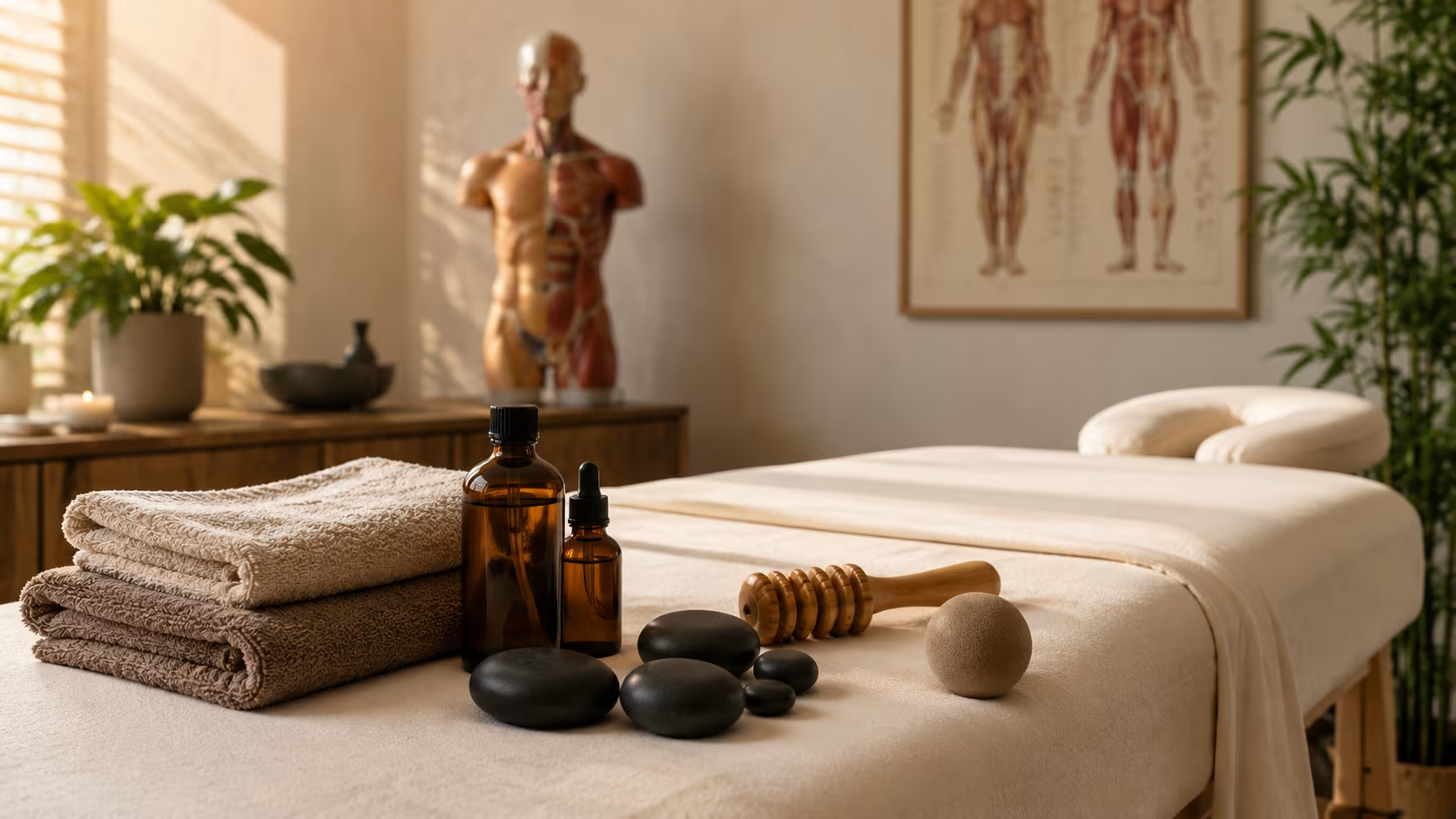
A few popular claims about massage that the research doesn't support.
Detoxification
The body's detoxification systems are the liver and kidneys. Neither is meaningfully assisted by massage. The "drink lots of water to flush out the toxins released by massage" guidance is based on a folk understanding of physiology, not biochemistry.
Cellulite reduction
Massage doesn't change the underlying structural architecture of subcutaneous fat that produces cellulite. The temporary smoothing effect after massage is from skin and fluid changes that revert within hours.
Permanent posture correction
Massage can reduce muscular tension that contributes to posture, but lasting posture change requires postural training and behavior change. Massage alone doesn't fix posture.
Permanent flexibility gains
Massage produces short-term flexibility gains lasting hours. Lasting flexibility requires regular stretching or movement work.
Clearing lactic acid
Lactic acid is cleared by the body's normal metabolic processes within an hour of intense exercise. By the time most post-exercise massage happens, lactic acid is no longer the issue. The soreness that comes hours later is from muscle damage and inflammation, not lactic acid.
Releasing fascia in a single session
Fascial restrictions, where they exist, develop over months to years and respond to consistent loading over weeks. A single session can produce neural changes but not the structural remodeling sometimes claimed.
These overstatements don't undermine the real benefits of massage. They just clarify what the practice actually does versus what some marketing suggests.
Self-massage and tools
For people who can't access regular professional massage, self-massage produces some of the same benefits.
Foam rolling. Discussed at length in a separate article. Produces neural and tissue effects similar to professional massage for accessible muscle groups.
Massage balls
Small balls (lacrosse, racquet, specialized massage balls) can target areas a foam roller can't reach. Useful for feet, glutes, around the shoulder blades.
Percussion massagers
Battery-powered devices like Theraguns have become popular. Research shows) they produce some of the same effects as manual massage for muscle soreness and range of motion. The intensity can be greater than self-massage by hand. Use cautiously over bony areas, the spine, and the front of the neck.
Manual self-massage
Using hands to work specific areas — neck, shoulders, hands, feet — has been done for centuries and produces real benefits. The reach is limited but for accessible areas, it works.
Cupping
A traditional Chinese medicine technique using suction cups on the skin. Has accumulated some Western research showing benefits for muscle pain and recovery. The mechanism is debated.
For someone who can afford one regular professional session per month and wants to extend the benefits, self-massage and tools fill the gap effectively. The accumulating effects of consistent self-work probably outweigh the deeper but less frequent benefits of professional sessions only.
Choosing a therapist
The therapist matters more than the modality for most outcomes.
Look for licensed or certified practitioners. The credentials vary by state and country but represent some standard of training. In the United States, "licensed massage therapist" (LMT) is the standard.
Ask about specific experience with your needs. A therapist who works regularly with athletes, with chronic pain patients, with pregnant clients, or with cancer survivors will bring different expertise. The first session is partly diagnostic — see whether the therapist's approach fits your goals.
Communicate during the session. Pressure that feels too light or too heavy, areas you want more attention on, areas to avoid — say something. A good therapist welcomes feedback. A bad one treats the session as a fixed routine to complete regardless of your input.
Notice whether you feel listened to. A good massage session begins with a brief intake conversation about your goals and current state. If the therapist starts working without checking in, the experience tends to be less effective.
Don't assume more pressure equals better. Some therapists have a reputation for "deep" work. Some clients are proud of being able to take heavy pressure. Neither correlates well with outcome. The right pressure for any client is the pressure that produces the desired effect, which varies.
Try different therapists if needed. The fit between client and therapist matters. Don't keep going to a therapist whose work consistently doesn't help just because they came recommended.
Frequency and dose
How often makes sense depends on the goal.
For acute pain or specific musculoskeletal issues being actively addressed: weekly to twice-weekly sessions for several weeks, then tapering as the issue resolves. This is the dose used in most clinical research showing benefit.
For chronic pain management weekly or bi-weekly sessions sustained over months, often as part of broader treatment.
For athletic recovery during heavy training weekly sessions, possibly more frequent during competition periods.
For general wellness and stress management monthly sessions are a reasonable maintenance dose for most people.
For ongoing maintenance of a previously addressed issue: every 2 to 4 weeks, with frequency adjusted based on how the issue responds.
Daily massage isn't necessary or particularly more beneficial for most outcomes. The body needs time between sessions for the physiological effects to consolidate. The marginal benefit of multiple sessions per week is small compared to the benefit of moving from no massage to weekly massage.
The cost is real for most people. A reasonable approach: prioritize the sessions that target your most pressing need, supplement with self-massage and tools for general maintenance, and adjust frequency based on what's actually helping rather than what's marketed as ideal.
Sources
Furlan, A. D., Giraldo, M., Baskwill, A., Irvin, E., & Imamura, M. (2015). Massage for low-back pain. Cochrane Database of Systematic Reviews, (9), CD001929.
Patel, K. C., Gross, A., Graham, N., Goldsmith, C. H., Ezzo, J., Morien, A., & Peloso, P. M. J. (2012). Massage for mechanical neck disorders. Cochrane Database of Systematic Reviews, (9), CD004871.
Crane, J. D., Ogborn, D. I., Cupido, C., Melov, S., Hubbard, A., Bourgeois, J. M., & Tarnopolsky, M. A. (2012). Massage therapy attenuates inflammatory signaling after exercise-induced muscle damage. Science Translational Medicine, 4(119), 119ra13.
Dupuy, O., Douzi, W., Theurot, D., Bosquet, L., & Dugué, B. (2018). An evidence-based approach for choosing post-exercise recovery techniques to reduce markers of muscle damage, soreness, fatigue, and inflammation: A systematic review with meta-analysis. Frontiers in Physiology, 9, 403.
Boyd, C., Crawford, C., Paat, C. F., Price, A., Xenakis, L., Zhang, W., & Evidence for Massage Therapy (EMT) Working Group. (2016). The impact of massage therapy on function in pain populations—A systematic review and meta-analysis of randomized controlled trials: Part II, cancer pain populations. Pain Medicine, 17(8), 1553–1568.
Field, T. (2014). Massage therapy research review. Complementary Therapies in Clinical Practice, 20(4), 224–229.
Li, Y. H., Wang, F. Y., Feng, C. Q., Yang, X. F., & Sun, Y. H. (2014). Massage therapy for fibromyalgia: A systematic review and meta-analysis of randomized controlled trials. PLOS ONE, 9(2), e89304.
Frequently Asked Questions
How often should I get a massage?
For chronic pain or musculoskeletal issues being actively managed, weekly or bi-weekly is the dose used in most studies. For general wellness or athletic maintenance, monthly is reasonable. Daily massage isn't necessary or particularly more effective for most outcomes.
Deep tissue or Swedish — which is better?
Depends on the goal. Swedish is better for general relaxation and stress reduction. Deep tissue is better for specific muscle problems but isn't necessarily better than Swedish for most outcomes — and the 'no pain, no gain' framing for deep tissue isn't supported by research. Pressure should match the goal, not be maximized.
Is sports massage actually different from regular massage?
Sports massage typically involves more focused work on specific muscle groups relevant to the sport, with techniques drawn from both Swedish and deep tissue traditions. The differences from general massage are smaller than the marketing suggests. A good general massage therapist can usually provide what a sports massage offers.
Does massage actually flush out toxins?
No. The 'flushing toxins' claim has no biochemical basis. The body's detoxification systems are the liver and kidneys, neither of which is meaningfully assisted by massage. The benefits of massage are real but the mechanism is not detoxification.


0 Comments
Leave a comment
Your email won't be published. Required fields are marked with *.