


Sauna has been part of Finnish culture for thousands of years and part of athletic recovery practice for decades. What's relatively new is the body of research, much of it from Finland, that has documented substantial cardiovascular and mortality benefits from regular sauna use. The effect sizes are large enough that some researchers now describe sauna as a kind of cardiovascular intervention comparable in some respects to moderate exercise.
The wellness conversation has caught up to part of this — sauna is now widely promoted for general health — but the specific findings, the doses that produce the effects, and the limits of what sauna can do are less clearly understood than the popular discussion suggests. Here's a careful look at the evidence and what to make of it.
The Finnish cardiovascular research
The KIHD study (Kuopio Ischaemic Heart Disease Risk Factor Study) followed 2,315 middle-aged Finnish men for an average of 20 years, with detailed information on sauna use captured at baseline. Several papers from this dataset, primarily by Jari Laukkanen and colleagues, have documented striking associations between sauna frequency and cardiovascular outcomes.
Compared to men who used the sauna 1 time per week, men who used the sauna 4 to 7 times per week had:
- 50 percent lower risk of fatal cardiovascular disease
- 40 percent lower risk of all-cause mortality
- 66 percent lower risk of dementia
- 65 percent lower risk of Alzheimer's disease
These are association studies, not randomized trials, so the causal interpretation requires caution. The researchers controlled for known confounders (exercise, smoking, alcohol, blood pressure, diabetes), and the dose-response pattern (more sauna, more benefit) is consistent with a causal effect. But unmeasured confounding — perhaps sauna users are different in other ways that explain some of the difference — can't be entirely ruled out.
A 2018 randomized controlled trial by Laukkanen and colleagues randomized older adults to a 30-minute sauna session or a control condition and measured cardiovascular changes immediately after. The sauna group showed reductions in systolic blood pressure, heart rate, and arterial stiffness comparable to a moderate-intensity exercise session. This experimental work supports the plausibility of the causal relationship suggested by the observational studies.
Subsequent research has extended these findings. A 2017 study found that sauna use was associated with reduced incidence of dementia. A 2019 study showed reductions in respiratory disease mortality. A 2018 study found benefit for fatal lung diseases. The pattern is consistent across multiple outcomes and consistent with the cardiovascular mechanism (improved vascular function, reduced cardiovascular disease).
The bottom line: regular sauna use is associated with substantial reductions in cardiovascular and all-cause mortality. The effect sizes are large enough to be clinically meaningful. The mechanism appears largely cardiovascular, with the heat exposure producing changes similar in some respects to moderate exercise.
What's happening physiologically
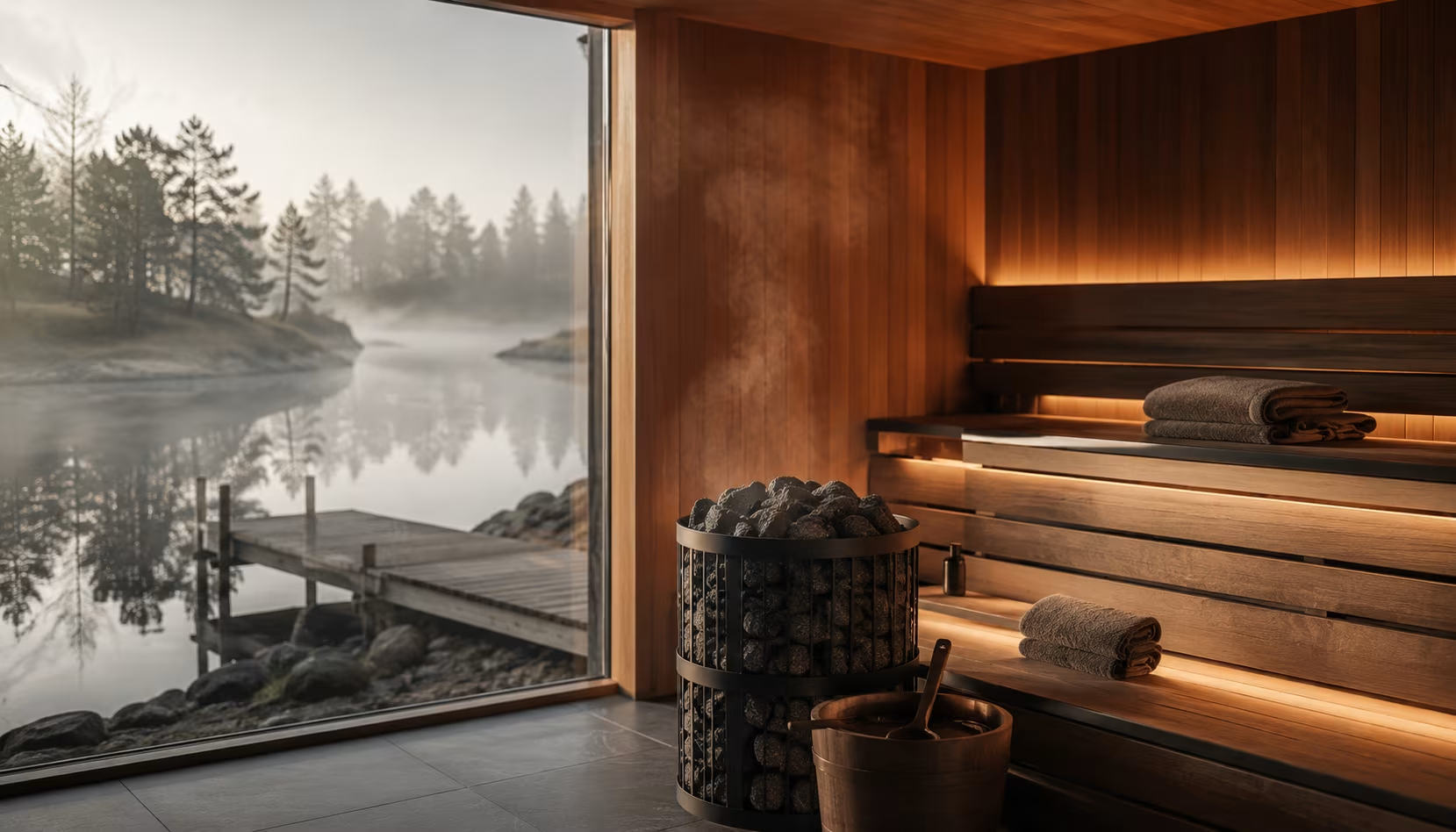
Sauna sessions produce significant physiological responses that explain the cardiovascular benefits.
Heart rate during a 20-minute sauna session typically rises to 120-150 beats per minute, similar to a moderate-intensity exercise session. The cardiovascular load is real, even though no skeletal muscle work is being performed. This sustained moderate cardiac demand is one of the active ingredients of the practice.
Core body temperature rises by about 1 to 2°C during a typical session. The peripheral vasodilation that accompanies the heat allows the cardiovascular system to dissipate the heat through skin blood flow, which significantly increases stroke volume and cardiac output during the session.
Heat shock proteins are upregulated by the heat exposure. These proteins help cells respond to stress and may contribute to the cellular protection effects associated with regular sauna use. The mechanism is similar to one of the proposed mechanisms for the benefits of exercise.
Blood pressure during the session rises briefly, then drops below baseline as peripheral vasodilation continues. The post-sauna blood pressure reduction can persist for several hours. Over weeks of regular practice, baseline blood pressure shifts downward modestly.
Plasma volume increases over weeks of regular sauna use. The repeated heat stress drives adaptations similar to those seen with heat acclimatization in athletes. These adaptations include improved cardiovascular function and improved tolerance to thermal stress.
Inflammation markers (C-reactive protein, interleukin-6) decrease over weeks of regular practice. The mechanism may involve the heat shock response and the cardiovascular adaptations together.
The combined effect: regular sauna provides repeated cardiovascular stress similar in some ways to moderate exercise, with cellular and inflammatory adaptations that support cardiovascular and metabolic health over time.
Sauna for recovery from training
Sauna has been used in athletic recovery for decades, with mixed but generally favorable evidence.
For acute recovery between sessions a 30-minute post-exercise sauna session has been shown to improve subjective recovery, reduce perceived soreness, and possibly improve subsequent performance in some studies. The mechanism may involve the increased blood flow promoting clearance of metabolic byproducts, and the parasympathetic activation that follows the session.
For longer-term endurance adaptation the heat acclimatization that comes from regular sauna use has been shown in several studies to improve endurance performance in trained athletes. The mechanism includes increased plasma volume and improved cardiovascular function. The effect sizes are modest but reproducible. Athletes preparing for hot-weather races often use sauna as part of heat acclimatization.
For resistance training adaptation less specific research, but no strong evidence that post-workout sauna interferes with adaptation in the way that post-workout cold immersion does. The conservative approach is to separate sauna from immediate post-workout when training adaptation is the priority, but the evidence base for this caution is thinner than for cold immersion.
Sauna is also used for general recovery in elite sport, often as part of recovery protocols that may include other modalities (massage, contrast therapy, cold exposure). The specific contribution of sauna in these multi-modal protocols is hard to isolate but the practice has persisted because athletes report subjective benefits.
For recreational athletes, the use case is less specific. A weekly sauna session probably has small recovery benefits and significant cardiovascular benefits over time. The frequency that the Finnish research supports (4+ sessions per week) is probably more about the cardiovascular adaptations than about acute training recovery.
Traditional vs. infrared sauna
The two main types of sauna available in modern wellness contexts work somewhat differently.
Traditional Finnish sauna
Uses heated rocks (electric or wood-fired heater) to warm air to high temperatures (typically 80 to 100°C / 175 to 210°F). Humidity can be added by pouring water on the rocks. The heat reaches the body primarily through warm air contact. Sessions are typically 15 to 20 minutes, often with cold plunges or rest periods between rounds.
Infrared sauna
Uses infrared light (far-infrared in most consumer models) to heat the body directly without significantly heating the surrounding air. Operates at lower air temperatures (typically 50 to 65°C / 120 to 150°F) but the body absorbs heat through radiant transfer. Sessions are typically 30 to 45 minutes.
The research base is much larger for traditional sauna. The Finnish cardiovascular outcome data is from traditional sauna use, and most of the physiological research uses traditional sauna parameters.
Infrared sauna research is growing but smaller. Some studies have shown similar acute cardiovascular effects to traditional sauna. The chronic benefits are less well-documented but plausibly similar.
The popular claim that infrared sauna is "deeper" or "more detoxifying" than traditional sauna isn't well-supported by mechanism. Sweat composition is similar between the two types. The heat exposure is the active mechanism in both cases.
Practical differences: traditional sauna feels much hotter and more intense, with the high air temperature requiring careful breath control. Infrared sauna is more comfortable to many people, with the lower air temperature feeling less aggressive even though core body temperature rises similarly. Traditional sauna produces more sweat and a more dramatic experience; infrared is gentler and easier to read in.
For most users, the choice comes down to access and personal preference. The cardiovascular benefits documented for traditional sauna probably translate to infrared with reasonable approximation, though direct evidence is more limited.
The dose that produces benefits
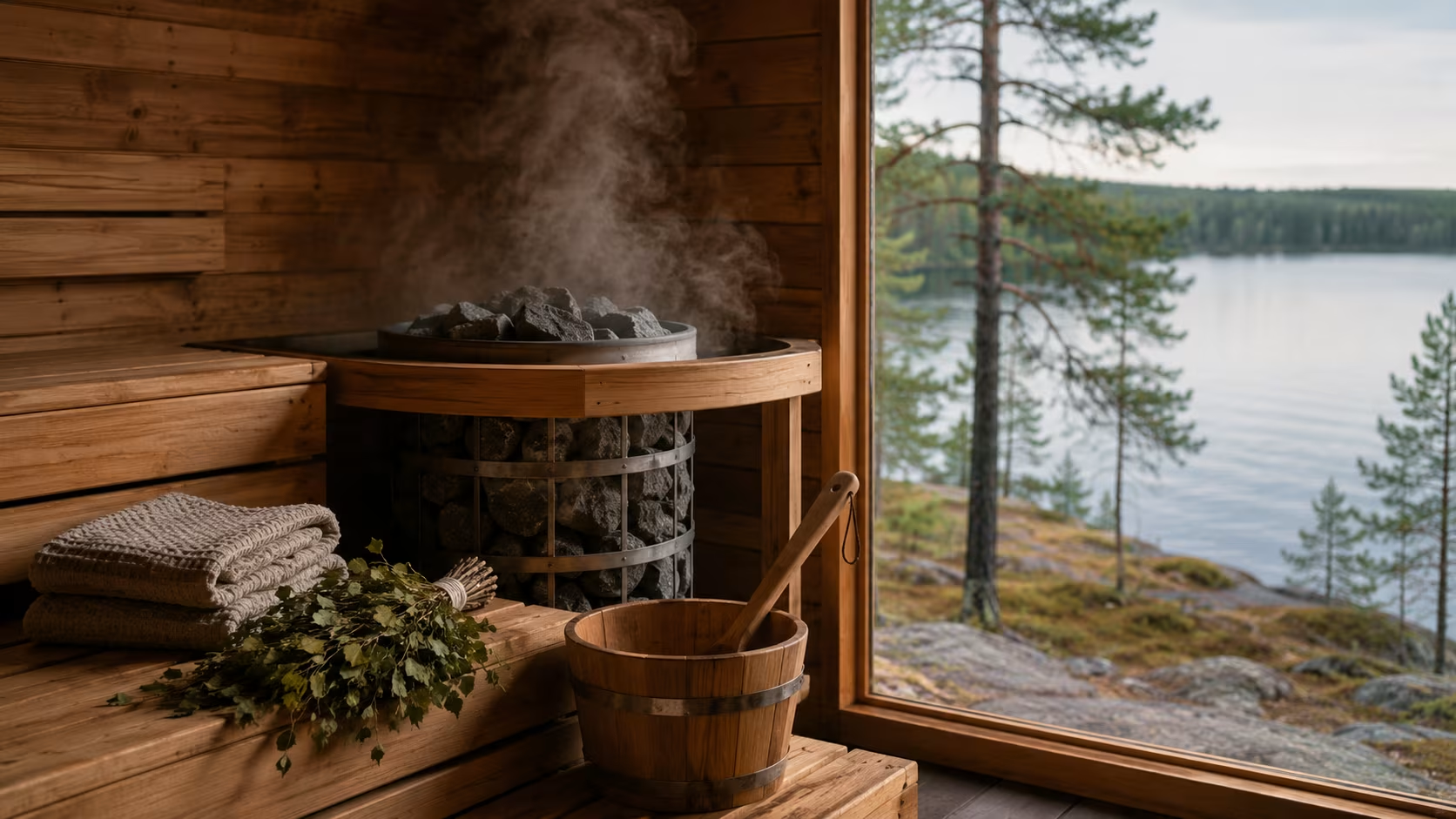
The Finnish research suggests fairly specific dose parameters.
Frequency 2 to 3 sessions per week produces modest benefit; 4+ sessions per week produces substantial benefit. The dose-response is approximately linear up to about 5 to 7 sessions per week, with diminishing additional benefit beyond that.
Duration 15 to 20 minutes per session for traditional sauna; 30 to 45 minutes for infrared. Sessions shorter than 10 minutes don't produce the cardiovascular load that drives the adaptations. Sessions longer than 30 minutes (traditional) or 60 minutes (infrared) increase risks without proportionally increasing benefits.
Total weekly time about an hour to an hour and a half of sauna per week is the dose associated with the largest cardiovascular benefits in the research.
This is a meaningful time commitment. Most people aren't going to do this. But for people who do incorporate regular sauna at this dose — even at the lower end of the range — the cardiovascular effects appear real and significant.
For those who can't access sauna at this frequency, even 1 to 2 sessions per week appears to produce some benefit relative to no sauna, just smaller in magnitude. The dose-response is graded; you don't have to hit the high frequency to get something.
Mental health and sleep effects
Several mental health effects of sauna have been documented.
A 2016 study by Janssen and colleagues at the University of Wisconsin found that a single hyperthermia session (whole-body heating) produced significant improvement in depression symptoms in participants with major depressive disorder, with effects persisting for several weeks. The study used a specific medical hyperthermia device rather than a traditional sauna, but the implication is that the heat exposure itself may have antidepressant effects.
Subsequent studies have explored sauna for depression with smaller effect sizes than the original Janssen study but generally positive. The mechanism may involve the heat shock proteins, the immune effects, the autonomic shifts, or some combination.
Sauna is also reported to improve sleep, possibly through the post-session core temperature drop that mimics the natural pre-sleep temperature pattern. A study of sauna use before bed showed improvements in sleep quality. The effect is probably modest but consistent.
Subjective stress reduction is widely reported and consistent across cultures and populations. The combination of forced relaxation (you can't usefully do anything in a sauna), parasympathetic activation after the session, and the social aspects in many cultures all probably contribute.
For people with depression or anxiety, sauna may have a role as a supplementary practice. It's not a replacement for established treatment but may be a useful addition for some patients.
Safety: who should be careful
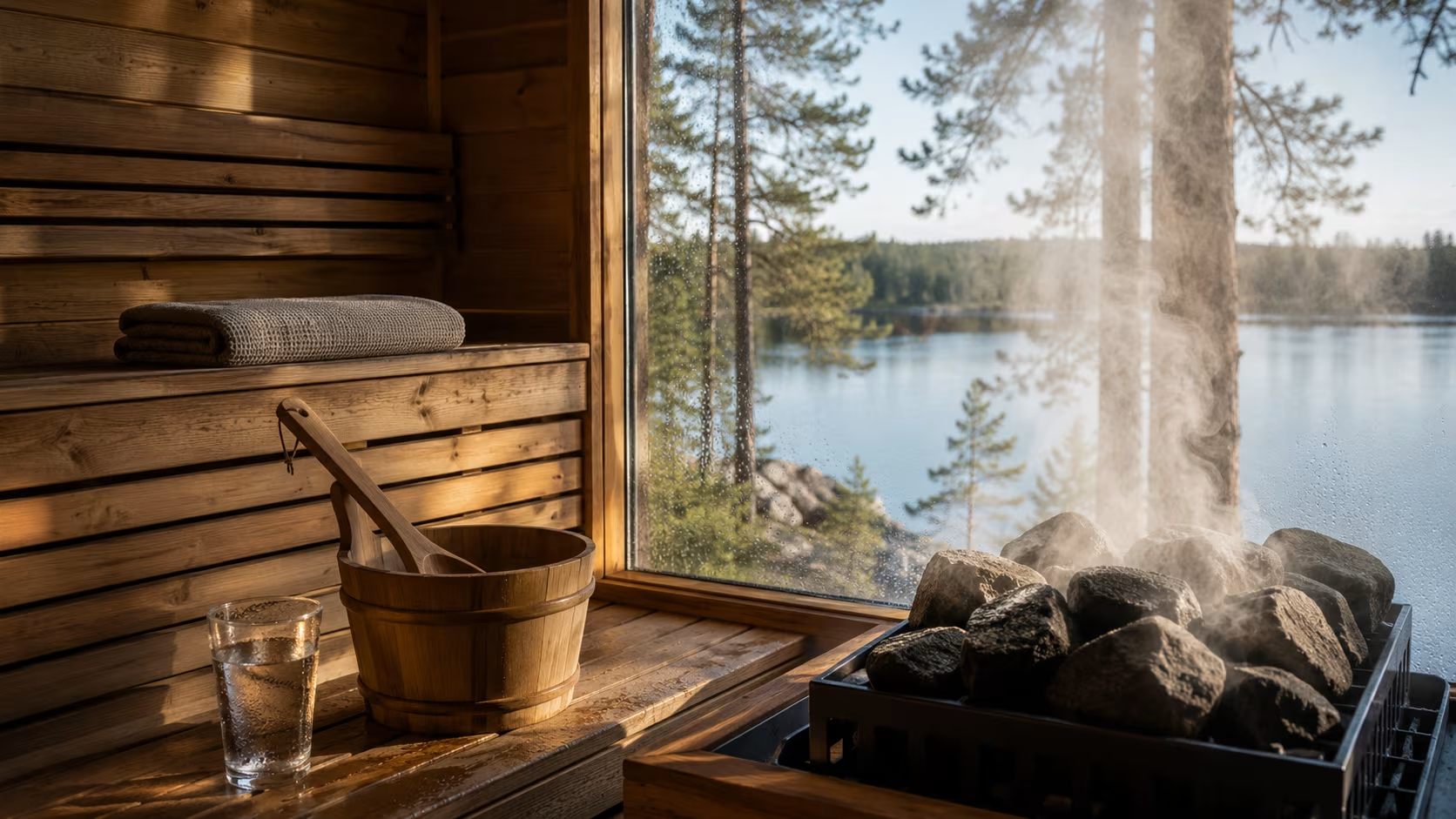
Several populations should be cautious or avoid sauna.
Cardiovascular disease
Active coronary artery disease, recent cardiac events, certain arrhythmias, severe valve disease, and uncontrolled hypertension are reasons for medical clearance before sauna use. The cardiovascular load is real and can trigger events in vulnerable individuals.
Pregnancy
Generally avoided in the first trimester due to elevated maternal temperature being associated with neural tube defects. After the first trimester, brief mild sauna use may be permissible but should be discussed with the obstetrician. Most prenatal guidelines recommend caution.
Severe respiratory disease
Acute respiratory illness, severe COPD, or unstable asthma may be exacerbated by the heat and potentially the dry air of traditional sauna.
Recent surgery, open wounds, or skin infections. Common sense exclusions.
Severe dehydration
Adequate hydration before sauna is essential. Starting a session already dehydrated significantly increases risks.
Alcohol intoxication
Sauna use after drinking is dangerous. The combination of alcohol's vasodilating effects and the heat-induced vasodilation can produce severe hypotension and syncope. Several deaths occur each year in Finland from alcohol-related sauna incidents.
Multiple sclerosis
Heat can worsen MS symptoms in some patients. Trial use to assess tolerance is appropriate.
Children
The thermoregulatory capacity of young children is different from adults. Sauna use in children, where culturally appropriate, should be brief and at lower temperatures than adults use.
Some medications
Diuretics, anticholinergics, and several other classes affect thermoregulation. Discuss with prescriber.
For everyone, the basic safety guidelines: hydrate before, during (water available in the sauna or just outside), and after. Don't go in alone if you have any health concerns. Get out at the first sign of dizziness, nausea, chest pain, or feeling unwell. Cool down gradually after the session. Never combine sauna with alcohol or other intoxicants.
Practical guidelines
How to actually incorporate sauna into a routine.
If you have access to a regular sauna (gym, club, home), aim for 2 to 4 sessions per week of 15 to 20 minutes each. Build up gradually if new to sauna — start with 5 to 10 minutes and add time over a few weeks.
Drink 16 to 20 ounces of water before going in. Have water available during longer sessions. Drink another 16 to 20 ounces after.
Cool down gradually after the session. Sit or stand in a cooler area for 5 to 10 minutes. Don't rush back into normal activity, especially anything cardiovascular like driving or stairs.
Cycle if doing rounds: 15 minutes in, 5 to 10 minutes cooling, 15 minutes in, etc. Up to three rounds for an experienced sauna user. Two rounds is plenty for most.
Add cold exposure between rounds if interested. The contrast of hot-cold is a traditional Finnish practice and produces interesting cardiovascular effects. The cold exposure should be brief (a quick cold shower or cold plunge for 30 to 60 seconds).
Time your sauna away from major exercise sessions if training adaptation is critical. Otherwise, post-exercise sauna is fine for general recovery.
Listen to your body. Some days the heat feels great; other days it feels too much. Honor that. The point is regular practice over time, not maxing out every session.
If sleep is the goal, time the session a few hours before bed. The post-sauna temperature drop that follows the session can support sleep onset.
For the cardiovascular benefits documented in the Finnish research, consistency over years is what matters. Two sessions a week for ten years probably produces more benefit than seven sessions a week for two months.
Sources
Laukkanen, T., Khan, H., Zaccardi, F., & Laukkanen, J. A. (2015). Association between sauna bathing and fatal cardiovascular and all-cause mortality events. JAMA Internal Medicine, 175(4), 542–548.
Laukkanen, T., Kunutsor, S., Kauhanen, J., & Laukkanen, J. A. (2017). Sauna bathing is inversely associated with dementia and Alzheimer's disease in middle-aged Finnish men. Age and Ageing, 46(2), 245–249.
Laukkanen, J. A., Laukkanen, T., & Kunutsor, S. K. (2018). Cardiovascular and other health benefits of sauna bathing: A review of the evidence. Mayo Clinic Proceedings, 93(8), 1111–1121.
Janssen, C. W., Lowry, C. A., Mehl, M. R., Allen, J. J., Kelly, K. L., Gartner, D. E., Medrano, A., Begay, T. K., Rentscher, K., White, J. J., Fridman, A., Roberts, L. J., Robbins, M. L., Hanusch, K. U., Cole, S. P., & Raison, C. L. (2016). Whole-body hyperthermia for the treatment of major depressive disorder: A randomized clinical trial. JAMA Psychiatry, 73(8), 789–795.
Hannuksela, M. L., & Ellahham, S. (2001). Benefits and risks of sauna bathing. American Journal of Medicine, 110(2), 118–126.
Scoon, G. S., Hopkins, W. G., Mayhew, S., & Cotter, J. D. (2007). Effect of post-exercise sauna bathing on the endurance performance of competitive male runners. Journal of Science and Medicine in Sport, 10(4), 259–262.
Pilch, W., Pokora, I., Szyguła, Z., Pałka, T., Pilch, P., Cisoń, T., Malik, L., & Wiecha, S. (2013). Effect of a single Finnish sauna session on white blood cell profile and cortisol levels in athletes and non-athletes. Journal of Human Kinetics, 39(1), 127–135.
Frequently Asked Questions
Traditional sauna or infrared — which is better?
The traditional Finnish sauna research is stronger, with the cardiovascular outcome data largely from this format. Infrared has accumulating evidence but a smaller research base. For most people, the difference probably matters less than consistency. Use the type you'll actually use regularly.
How hot and how long?
Traditional sauna: 80 to 100°C (175 to 210°F) for 15 to 20 minutes per session. Infrared: 50 to 65°C (120 to 150°F) for 30 to 45 minutes. The research showing cardiovascular benefits used 4 or more sessions per week.
Will sauna help me lose weight?
The immediate scale change after a session is water loss that returns when you rehydrate. Real fat loss from sauna alone is minimal. The cardiovascular benefits are real and significant, but weight loss isn't the right reason to use a sauna.
Can I use sauna right after lifting?
Probably wait. Combined cold plunge research suggests post-workout temperature interventions can affect adaptation. The data on heat post-workout is less clear, but a conservative approach is to separate sauna from training by a few hours when training adaptation matters.


0 Comments
Leave a comment
Your email won't be published. Required fields are marked with *.