


Cold water immersion went from athletic recovery technique to wellness fad sometime around 2018. Now there are dedicated cold plunge tubs in residential garages across America, podcast hosts evangelizing morning ice baths, and influencer claims about brown adipose tissue activation, dopamine surges, and metabolic transformation.
Some of this is supported by research. Some of it isn't. The interesting truth is that cold immersion does have measurable effects, the effects depend significantly on context (when, how long, how cold), and the application that's gotten the most popular attention — daily cold plunge for general wellness — has weaker evidence than its proponents suggest.
Here's a careful look at what the research actually shows about cold water immersion, the doses that have been studied, the mechanisms involved, and how to think about it for different goals.
The temperature and duration that matter
The cold plunge research uses fairly specific parameters that the wellness press doesn't always communicate clearly.
The temperature range that produces measurable effects is roughly 50 to 59°F (10 to 15°C). This is cold enough to produce significant cardiovascular response and the metabolic effects associated with cold exposure, but warm enough to be tolerated for the durations that matter. Colder water produces faster onset of effects but isn't necessarily more effective; the research doesn't show better outcomes from very cold (under 40°F) immersion than from the moderate-cold range.
Duration ranges from about 5 to 15 minutes per session in most of the research. Shorter durations produce some effects but the research base for very brief exposure (under 3 minutes) is smaller. Longer durations beyond about 20 minutes don't add measurable benefit and increase the risk of hypothermia in colder water.
Frequency varies by goal. For recovery between hard exercise sessions, immediate post-exercise immersion is studied. For general adaptation effects, 3 to 5 sessions per week appears to be the productive range based on the work of researchers like Søberg and others. Daily exposure isn't well-studied as an optimum and may produce diminishing returns.
The "polar bear plunge" extreme — very cold water for very brief exposure — has its own tradition but less specific research support. The typical wellness recommendation of 3 to 5 minutes at 50°F a few times a week is reasonable based on what's been studied.
What happens physiologically when you go in
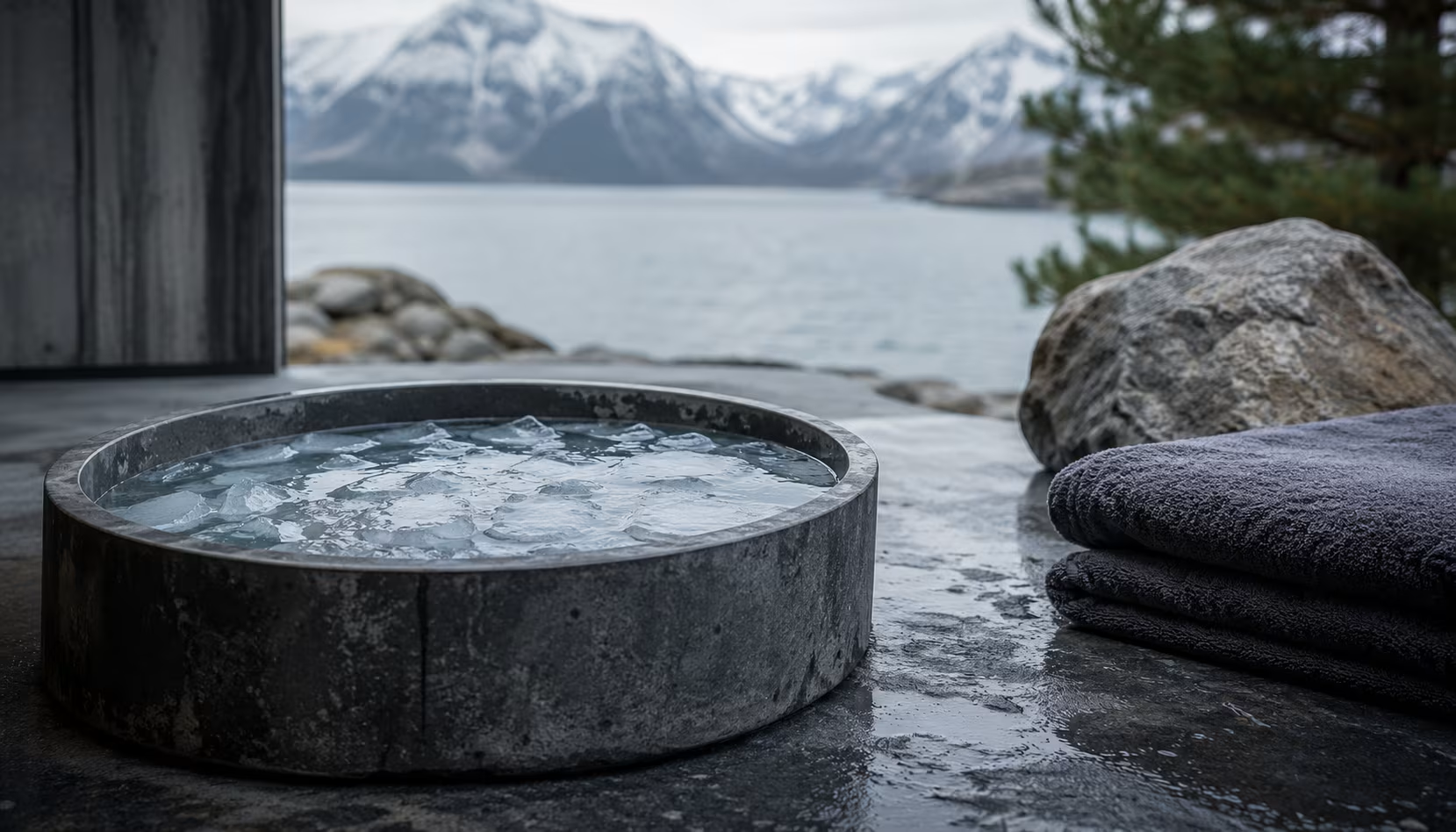
The cold shock response is the body's response to sudden cold water exposure, and it's substantial.
Within the first 30 seconds, several things happen rapidly. Heart rate spikes (sometimes by 30 to 50 percent above baseline). Blood pressure rises sharply as peripheral blood vessels constrict and blood is shunted toward the core. Breathing becomes rapid and gasping. Catecholamines (adrenaline and noradrenaline) surge — by 200 to 300 percent in some measurements. Cortisol rises.
Over the next minute or two, the system begins to adapt. The breathing slows. The shivering response activates if temperatures are cold enough. The cardiovascular system finds a new steady state at elevated heart rate.
If the immersion is sustained for several minutes, additional changes occur. Core body temperature begins to drop slightly (the body initially preserves core temperature by shunting blood inward, but extended exposure overwhelms this). Brown adipose tissue, if present, begins to increase its metabolic activity. Heat production through shivering accelerates.
After exit from the water, the cardiovascular system gradually returns to baseline. Catecholamines remain elevated for an extended period — the dopamine elevation in particular has been measured at 250 percent of baseline an hour after a cold plunge. The body continues to generate heat actively for some time as core temperature returns to normal.
The cold shock response is what makes cold plunge feel so dramatic, and it's also what produces the cardiovascular risks for vulnerable people. The acute changes are large enough to trigger arrhythmias or events in people with significant cardiovascular disease.
Cold immersion for muscle soreness
The most established use of cold water immersion is for reducing perceived muscle soreness after intense exercise.
Multiple meta-analyses, including a 2012 Cochrane review by Bleakley and colleagues, have found that cold water immersion in the 5 to 20 minute range, done within an hour or two after intense exercise, reduces delayed-onset muscle soreness compared to passive recovery. The effect sizes are moderate but consistent across studies.
The mechanism is partly inflammatory. Cold immersion reduces local muscle temperature, reduces blood flow to the area, and reduces the inflammatory response that contributes to soreness. The reduction in inflammation is measurable in both cellular markers and subjective soreness ratings.
For athletes in tournament situations, multi-day events, or training schedules where rapid recovery between sessions matters, cold immersion has a defensible role. The reduced soreness allows higher quality work in the next session, even if the total adaptive response over weeks may be slightly reduced (more on this below).
The studies showing the soreness benefit have used cold water immersion (10 to 15°C) for 10 to 20 minutes within 1 to 2 hours after exercise. Cold showers or partial immersion don't produce the same effects. Contrast therapy (alternating hot and cold) also reduces soreness but through somewhat different mechanisms.
The training adaptation problem
Here's where the picture gets interesting and where most popular cold plunge advice gets wrong.
Several studies in the past decade have shown that cold immersion immediately after resistance training reduces the muscle protein synthesis response and, over training cycles, reduces strength and hypertrophy gains compared to the same training without the cold immersion.
A particularly clean 2015 study by Roberts and colleagues followed two groups of resistance-trained men through 12 weeks of strength training. One group did 10 minutes of 10°C cold water immersion within 15 minutes of every workout. The other group did 10 minutes of low-intensity cycling. The cold immersion group had significantly smaller gains in muscle mass and strength than the active recovery group.
The mechanism appears to be that the inflammatory response that the cold suppresses is part of how muscle adapts to training. The local inflammation activates satellite cells and signals the muscle protein synthesis pathways that drive hypertrophy. Suppress that signaling immediately after training, and you suppress some of the adaptation.
The implication: if hypertrophy or strength is your goal, cold immersion immediately after lifting is counterproductive. The benefit (reduced soreness) comes at the cost of reduced adaptation. The trade-off is rarely worth it for most lifters.
The window of concern appears to be the first few hours after training. Cold immersion 4 to 6 hours after a workout, or on a non-training day, doesn't seem to interfere with adaptation. So the practical guidance is to separate cold immersion from training sessions when training adaptation is the priority.
For endurance athletes, the effect on adaptation is less clear. Some studies have shown blunted endurance training adaptations from frequent post-training cold immersion; others haven't. The picture is muddier for endurance training than for resistance training.
For general wellness — people who aren't training for strength gains and don't need to maximize hypertrophy — the adaptation concern is less relevant.
Mood, alertness, and the brown fat question
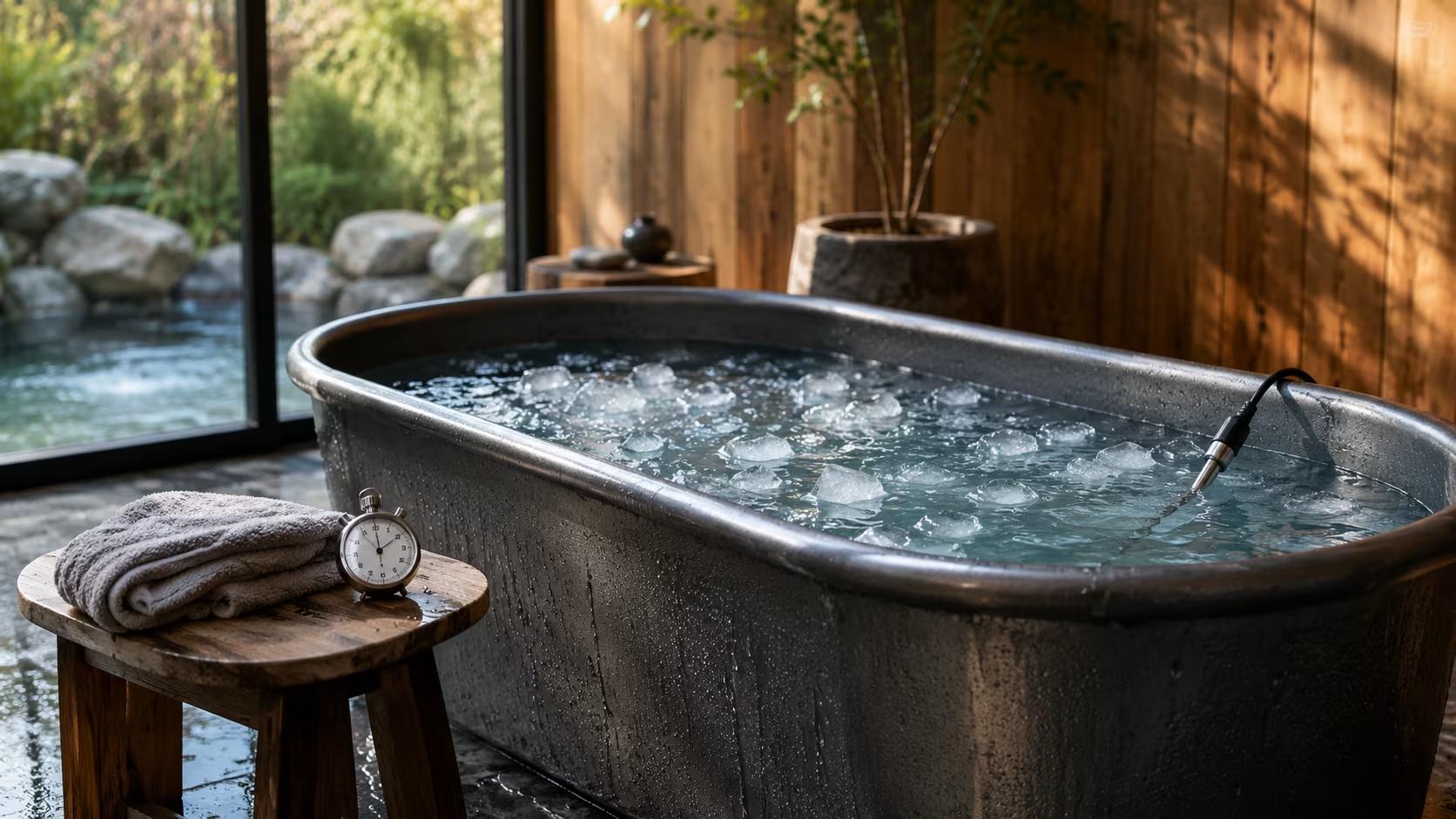
The mood effects of cold plunge are widely reported and have some research support.
A 2008 case study by Shevchuk proposed that cold showers might be useful for depression, based on the theoretical basis of cold-induced sympathetic activation and increased noradrenaline. The case study was preliminary and not a controlled trial, but it sparked interest in the potential mood effects.
Subsequent research has shown that cold immersion produces substantial increases in catecholamines and dopamine, with effects persisting for hours. A study by Šrámek and colleagues found dopamine elevations of 250 percent above baseline an hour after cold plunge, with effects still detectable several hours later.
The subjective experience for many people who do cold plunge regularly is a sustained period of alertness, focus, and elevated mood after the session. This is consistent with the catecholamine response and probably explains the appeal of the morning cold plunge for many people.
Whether this translates to clinically meaningful mood improvement in depression or anxiety isn't well-established. The research in clinical populations is limited. The acute mood elevation is real; whether it's sustainable as a treatment for mood disorders is unknown.
The brown adipose tissue (BAT) story has gotten more attention than the evidence supports. BAT is a specialized fat tissue that produces heat through uncoupled mitochondrial respiration. Cold exposure activates BAT in adults who have it, and BAT activation increases energy expenditure.
The metabolic implications have been overstated. The amount of BAT that adults retain is small (less than 100 grams for most). The energy expenditure increase from BAT activation is measurable but modest — perhaps 100 to 200 additional calories per day in the most cold-acclimatized individuals. This is real, but it's not going to produce dramatic metabolic transformation.
The Wim Hof method specifically has gotten attention for combining cold exposure with breath techniques. Some research on Hof and his trained students has shown unusual physiological responses, though the practical applications for ordinary people are unclear. The breathwork component (cyclic hyperventilation) has its own effects that are partly independent of the cold.
Cardiovascular and metabolic effects
The cardiovascular effects of regular cold immersion are mixed and depend significantly on the population.
For healthy adults, regular cold immersion appears to produce some cardiovascular adaptations. Resting heart rate may decrease slightly. Vascular function (measured by flow-mediated dilation) may improve in some studies. The cold pressor test response — the cardiovascular reactivity to a cold stimulus — becomes blunted with regular exposure, which suggests adaptation.
For people with elevated cardiovascular risk, the picture is different. The acute cardiovascular response to cold immersion is substantial, and in someone with significant coronary artery disease or arrhythmia history, this response can trigger events. Several case reports document cardiac events during or shortly after cold plunge in vulnerable individuals.
The metabolic effects are real but smaller than the popular discussion suggests. Cold-induced thermogenesis through brown adipose tissue activation does increase daily energy expenditure modestly. Insulin sensitivity may improve with regular cold exposure in some studies, though the effect sizes are smaller than what's achieved with regular exercise.
Cold acclimatization — the process of becoming more cold-tolerant with regular exposure — is well-documented. People who do cold plunge regularly develop physiological adaptations that make the experience easier and produce subtle changes in metabolic function. This is one area where the wellness claims are mostly correct, even if the magnitudes are smaller than sometimes claimed.
Safety: who should not do this
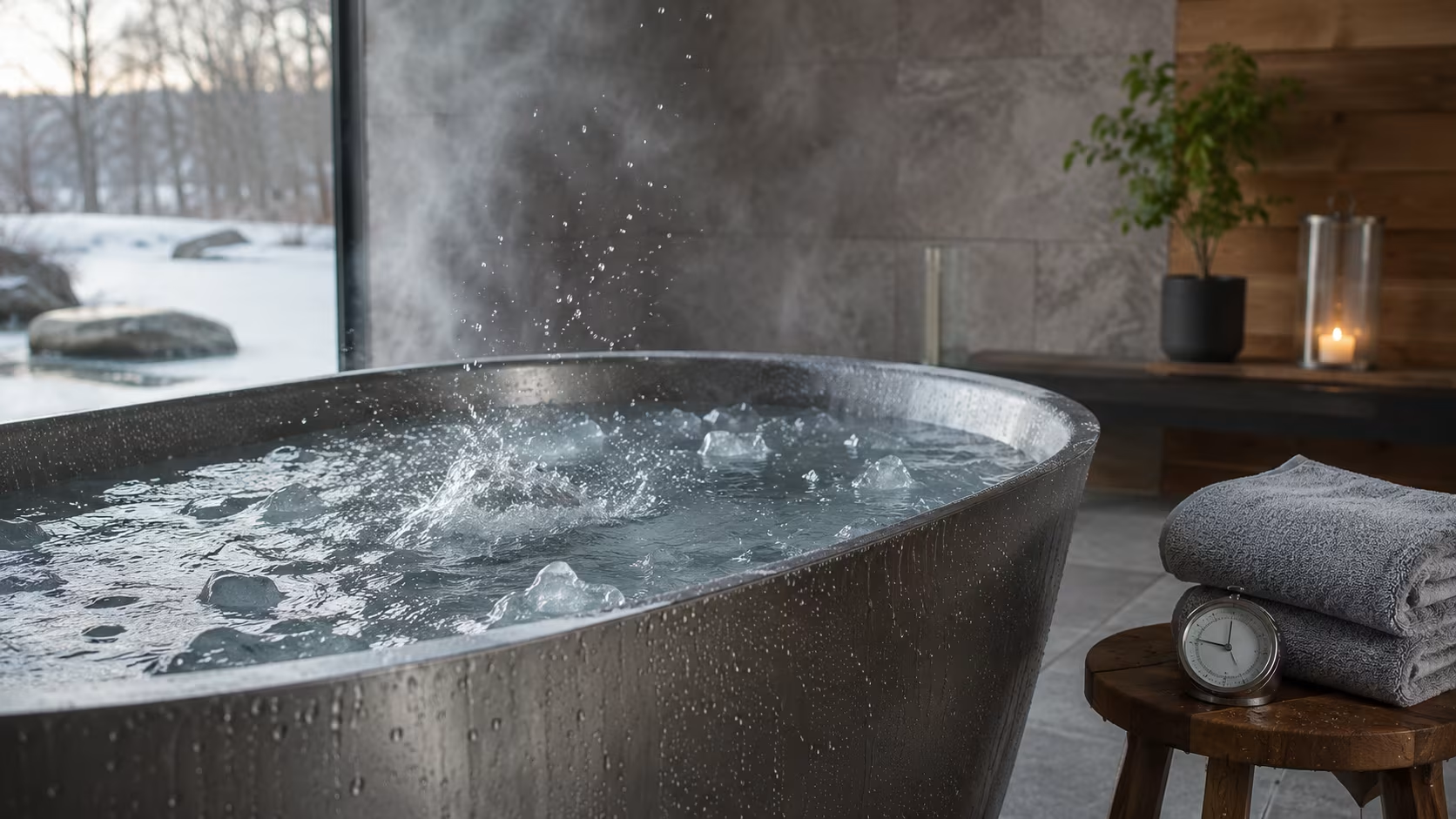
Several populations should be cautious or avoid cold immersion entirely.
Cardiovascular disease
Coronary artery disease, recent cardiac events, certain arrhythmias, uncontrolled hypertension, and aortic stenosis are all reasons to consult a cardiologist before cold immersion. The acute cardiovascular load is significant.
Raynaud's phenomenon
People with Raynaud's experience exaggerated vasospasm in the fingers and toes in response to cold. Cold immersion can produce extended discomfort and possible tissue damage in this population.
Pregnancy
Cold immersion during pregnancy hasn't been well-studied. The acute physiological responses (catecholamine surge, blood pressure spike) make it generally inadvisable, especially in later pregnancy.
Certain medications
Beta-blockers, some blood pressure medications, and several psychiatric medications affect the body's response to cold. Discuss with your prescriber before starting cold practice.
Hypothyroidism
People with poorly managed hypothyroidism may have impaired thermogenic responses to cold, increasing the risk of hypothermia.
Open wounds, recent surgery, or skin infections. Common sense exclusions.
Children
The thermogenic capacity of children is different from adults, and the practice should be approached cautiously if at all.
For everyone: never cold plunge alone, especially when starting. The cold shock response can produce involuntary gasping and aspiration of water, which is a drowning risk. Have a buddy. Use a tub designed for the purpose with a clear exit. Don't drink alcohol before plunging. Get out at the first sign of severe shivering, confusion, or chest pain.
The most catastrophic outcomes from cold plunge involve people with undiagnosed cardiac conditions who have an event during their first few sessions. A medical check before starting an intensive cold practice, especially for people over 40 or with risk factors, is worth the time.
Practical protocols for different goals
Different goals support different protocols.
For post-endurance recovery
Within 1 to 2 hours after a hard run or ride. 10 to 15°C water for 10 to 15 minutes. Useful between sessions during high-volume training periods.
For post-resistance training recovery
Wait at least 4 to 6 hours after the workout, or save it for non-training days. Same temperature and duration parameters. Skip it if hypertrophy or strength gains are the priority.
For mood and alertness
Morning cold plunge, 5 to 10 minutes at 10 to 15°C. The catecholamine response provides several hours of elevated alertness. Avoid late-day plunges that might interfere with sleep.
For general adaptation and metabolic effects
3 to 5 sessions per week at 10 to 15°C for 10 minutes each. The frequency matters more than the individual session length for adaptation.
For Wim Hof-style practice
This is a specific method that combines breath work with cold exposure. The full method includes cyclic hyperventilation followed by breath holds, with cold exposure layered in. It produces unusual physiological responses and has its own learning curve. If interested, work through the official Wim Hof Method materials or with a certified instructor rather than freelancing.
For general wellness
A few sessions per week at moderate temperature (15°C) for 5 to 10 minutes is enough to get most of the documented benefits without significant risk. Daily long sessions aren't necessary and may produce diminishing returns.
The wellness culture around cold plunge sometimes treats more as better. The research doesn't support this. Moderate doses appropriate to your goals produce most of the benefit; pushing beyond that adds risk and discomfort without proportional gain.
Sources
Bleakley, C., McDonough, S., Gardner, E., Baxter, G. D., Hopkins, J. T., & Davison, G. W. (2012). Cold-water immersion (cryotherapy) for preventing and treating muscle soreness after exercise. Cochrane Database of Systematic Reviews, (2), CD008262.
Roberts, L. A., Raastad, T., Markworth, J. F., Figueiredo, V. C., Egner, I. M., Shield, A., Cameron-Smith, D., Coombes, J. S., & Peake, J. M. (2015). Post-exercise cold water immersion attenuates acute anabolic signalling and long-term adaptations in muscle to strength training. Journal of Physiology, 593(18), 4285–4301.
Šrámek, P., Šimečková, M., Janský, L., Šavlíková, J., & Vybíral, S. (2000). Human physiological responses to immersion into water of different temperatures. European Journal of Applied Physiology, 81(5), 436–442.
Buijze, G. A., Sierevelt, I. N., van der Heijden, B. C., Dijkgraaf, M. G., & Frings-Dresen, M. H. (2016). The effect of cold showering on health and work: A randomized controlled trial. PLOS ONE, 11(9), e0161749.
Hayward, J. S., Eckerson, J. D., & Kemna, D. (1984). Thermal and cardiovascular changes during three methods of resuscitation from mild hypothermia. Resuscitation, 11(1-2), 21–33.
Tipton, M. J., Collier, N., Massey, H., Corbett, J., & Harper, M. (2017). Cold water immersion: kill or cure? Experimental Physiology, 102(11), 1335–1355.
Saanijoki, T., Tuominen, L., Tuulari, J. J., Nummenmaa, L., Arponen, E., Kalliokoski, K., & Hirvonen, J. (2018). Opioid release after high-intensity interval training in healthy human subjects. Neuropsychopharmacology, 43(2), 246–254.
Frequently Asked Questions
What temperature and how long is the right dose?
The studies showing benefit have used water between 50 and 59°F (10 to 15°C) for 5 to 15 minutes. Colder than that adds discomfort without proportionally more benefit; warmer than 60°F doesn't produce the same effects. Three to five sessions per week appears to be the productive frequency.
Should I cold plunge after lifting?
Probably not, if hypertrophy is your goal. Cold immersion immediately after resistance training reduces the muscle protein synthesis response and blunts gains over training cycles. Wait at least 4 to 6 hours after a lifting session, or save the cold for non-lifting days.
What about for endurance recovery?
More defensible. Cold immersion within an hour after endurance training reduces perceived soreness and may speed recovery for the next session. The effects on long-term endurance adaptation are less clear, but the short-term recovery benefit between hard sessions appears real.
Is daily cold plunge safe?
For most healthy adults, yes, at moderate temperatures and durations. People with cardiovascular conditions, uncontrolled hypertension, or arrhythmias should consult their physician first — the cold shock response produces a sudden cardiovascular load that can be dangerous in vulnerable people.


0 Comments
Leave a comment
Your email won't be published. Required fields are marked with *.