


In the traditional eight-limbed yoga of Patanjali, pranayama — the regulation of breath — is the fourth limb, sitting between the physical postures and the practices of inward attention. The Yoga Sutras describe it as the gateway from the body to the mind, the technique that prepares the system for the contemplative work that follows.
In a typical modern Western yoga class, pranayama gets a couple of minutes of attention at the start or the end, often as a brief breathing exercise that the teacher cues without much instruction. The asana — the postures — gets the lion's share of the time. This is roughly backwards. Of all the practices in the yoga tradition, breath work has accumulated the most direct empirical support, the clearest physiological mechanisms, and the most reliable acute effects on measurable markers of nervous system function.
Here's what the research actually shows about specific pranayama techniques, what's happening physiologically, and how to integrate breath work into a practice in a way that uses what we know.
Why breath affects everything else
The breath is the only autonomic function you can both observe and control. Your heart beats without your conscious involvement. Your digestion proceeds whether you attend to it or not. The breath is unique: it happens automatically, but you can intervene at any moment, change its rate, depth, and pattern, and through that intervention reach into the autonomic nervous system in ways no other voluntary action allows.
This is why every contemplative tradition that has explored what humans can do with their attention has ended up working with the breath. It's not mystical. It's the practical entry point to systems that are otherwise out of reach.
The mechanism is several layers deep. The vagus nerve, which carries most of the parasympathetic outflow to the heart and digestive system, is sensitive to breath patterns through its connections in the medulla. Slow exhalation activates parasympathetic tone; rapid breathing engages sympathetic activation. The intercostal stretch receptors that fire during inhalation send signals through the autonomic centers that affect heart rate, blood pressure, and arousal. The chemoreceptors that monitor blood gas levels respond to changed CO2 levels from altered breathing patterns and shift autonomic activity accordingly.
Each of these mechanisms is studied. Each operates on different time scales. Together, they explain why structured breathing produces measurable effects on the nervous system that simple "calm down" instructions don't.
The autonomic nervous system in plain terms
The autonomic nervous system runs the unconscious parts of physiology — heart rate, blood pressure, digestion, sweating, pupil dilation, immune activity. It has two main branches, traditionally framed as opposites though they often work in coordination.
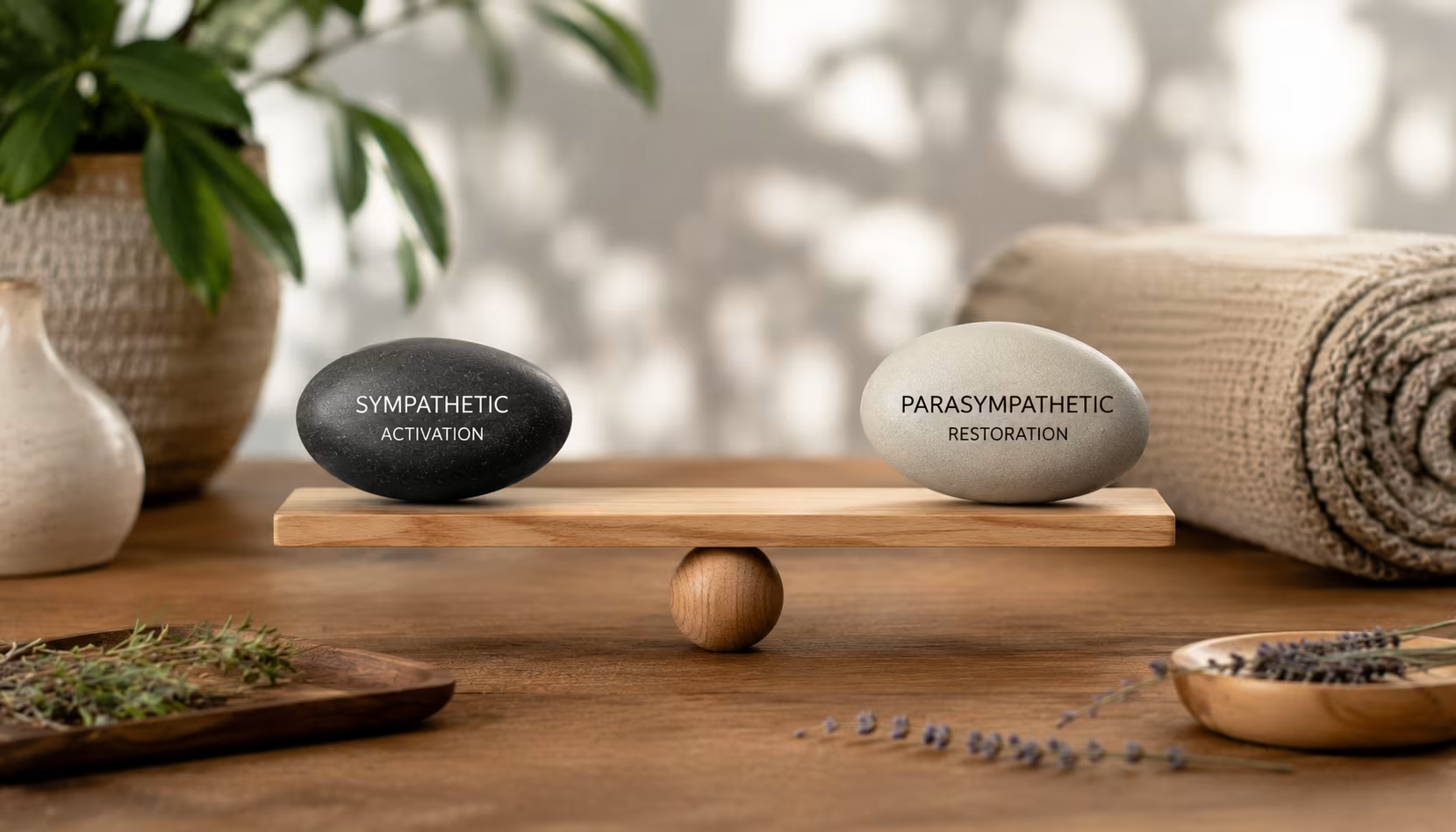
The sympathetic branch is the activating system. It speeds up the heart, increases blood pressure, dilates pupils, releases glucose, and prepares the body for action. The classic name is "fight or flight," though the sympathetic system is on more of the time than that framing suggests. It's running at low levels constantly, ramping up under demand and ramping down during rest.
The parasympathetic branch is the recovery system. It slows the heart, lowers blood pressure, supports digestion, and runs the maintenance functions of the body. The classic name is "rest and digest." Its main carrier is the vagus nerve.
Modern stress research uses heart rate variability (HRV) as a marker of autonomic balance. High HRV — meaning the heart rate varies meaningfully between beats — generally indicates strong parasympathetic tone and good autonomic flexibility. Low HRV indicates sympathetic dominance and reduced flexibility. HRV has become one of the most studied physiological markers of stress and recovery, in part because it's measurable with consumer devices and responds to interventions in ways that can be tracked.
This matters because most of the well-studied effects of pranayama show up in HRV measurements. Specific breath patterns reliably shift HRV in specific directions. The findings are consistent across labs and across traditions.
Slow breathing: the foundation everything builds on
Before getting to the named techniques, the single most important pattern to know is simple: breathe slowly, with extended exhalation, through the nose, for about ten minutes.
A 2018 study by Russo and colleagues, summarizing the research, identified roughly 6 breaths per minute as the optimal rate for several physiological outcomes — including heart rate variability, blood pressure regulation, and parasympathetic activation. This is much slower than normal resting breathing (12 to 18 breaths per minute) and corresponds to a 10-second cycle: 4 seconds in, 6 seconds out, with no deliberate hold.
The longer exhale matters more than the longer inhale. Exhalation activates the parasympathetic system through vagal mechanisms; inhalation slightly inhibits parasympathetic outflow. A breath pattern with the exhale longer than the inhale shifts the system toward calm. A pattern with equal inhale and exhale is more neutral.
Nasal breathing matters too. The nose filters, warms, and humidifies the air, but more importantly for autonomic effects, it produces nitric oxide that affects vascular tone and oxygen uptake. Mouth breathing during slow practice loses some of these benefits. If you can't breathe through the nose due to congestion, gentle mouth breathing is fine; if you can, nasal is better.
This basic pattern — 6 breaths per minute, longer exhale, nose breathing — is the backbone of every more complex pranayama technique. If you only do one breath practice, this is the one. Ten minutes a day produces measurable changes in HRV within weeks for most people. The cumulative effects on perceived stress, sleep quality, and emotional regulation show up in similar timeframes in the studies.
Alternate nostril breathing (Nadi Shodhana)
Alternate nostril breathing is one of the most-studied pranayama techniques and consistently produces effects beyond what equivalent slow breathing produces.
The basic technique: sit comfortably. Use the right hand to control the nostrils — thumb to close the right, ring finger to close the left. Close the right nostril and inhale through the left. Close the left nostril, open the right, and exhale through the right. Inhale through the right. Close the right, open the left, exhale through the left. This is one cycle. Continue for 5 to 20 cycles.
What the research shows: Telles and colleagues, in a series of studies over the last two decades, have measured effects on heart rate variability, blood pressure, and autonomic markers from alternate nostril breathing compared to equivalent unstructured slow breathing. The alternate nostril practice consistently produces larger parasympathetic shifts, lower blood pressure responses, and improved performance on attention tasks measured immediately after practice.
The mechanism is debated. The traditional explanation involves the "nadis" — energy channels in classical yoga — which doesn't translate to modern physiology. The current scientific best guess involves the nasal cycle, which is the natural alternation of dominant nasal airflow between sides that occurs every few hours throughout the day. This nasal cycle has been correlated with shifts in lateralized brain activity, sympathetic-parasympathetic balance, and even cognitive performance differences. By deliberately alternating nasal flow, the practice may reset or modulate this cycle in ways that produce broader autonomic effects.
The point is not to take any of this as settled science. The point is that the technique reliably produces effects, the effects are measurable, and they exceed what you'd get from just doing slow breathing alone for the same duration. For most practitioners, 10 minutes of alternate nostril breathing is a more efficient use of breath practice time than 10 minutes of unstructured slow breathing.
Ujjayi: the everyday breath of yoga
Ujjayi is the breath used during most asana practice, particularly in vinyasa and Ashtanga lineages. The technique: slightly constrict the back of the throat as you breathe, producing a soft, audible whisper-like sound on both inhale and exhale. Some teachers describe it as the sound of the ocean or the sound you make when you fog up a window.
The mechanism is partly mechanical. The slight throat constriction adds resistance to the breath, slowing it down and forcing engagement of the diaphragm and intercostal muscles. This produces deeper, slower breathing that has the same kind of parasympathetic effects as other slow breathing patterns, with the additional benefit that the audible sound serves as a continuous focus for attention.
In practice, ujjayi during asana acts as a kind of biofeedback. When the breath gets ragged or quiet, you've moved past the edge of what your current capacity can handle and need to back off. When the breath stays smooth and audible, you're working in a sustainable range. This is why most flow yoga lineages emphasize ujjayi as the breath of practice — it self-regulates the intensity.
Outside of asana, ujjayi can be used as a standalone breath practice. Sit comfortably, breathe with the slight throat constriction for 10 to 15 minutes, focus on the sound. The acute effects on autonomic markers are similar to other slow breathing practices, with the added cognitive component of sustained sound-focused attention.
The most common error: making the throat constriction too tight, producing a forced or strained sound. The correct version is gentle — just enough to make the breath audible, no more. If you feel any strain in the throat, you're doing it too hard.
Bhramari: the humming breath
Bhramari is the humming breath. The technique: inhale normally, then on the exhale, hum at a comfortable pitch, keeping the lips lightly closed. The hum should be sustained for the length of the exhale.
This is one of the more unusual pranayama techniques and one with surprising research support for specific effects. The vocalization during exhalation produces vibration that increases nasal nitric oxide production substantially — a 2002 study by Lundberg and colleagues found that humming during exhalation increased nasal NO levels 15-fold. Nitric oxide produced in the sinuses contributes to vascular and immune effects when inhaled, and the bhramari technique exploits this in a way that simple breathing doesn't.
The vibration also produces a kind of vagal stimulation that some practitioners report as immediately calming. The auditory feedback of the hum gives the mind something to attend to, which makes the practice work as a brief informal meditation.
Bhramari is often recommended for people who find seated meditation difficult — the sound and the vibration give the attention something physical to land on, which can be easier than attending to a more abstract object. It's also commonly taught in Indian traditions for reducing anger and irritability, claims that are difficult to study rigorously but consistent enough across teachers to be worth taking seriously.
A typical practice: 5 to 10 cycles of inhale then humming exhale, sustained over 5 to 10 minutes total. Doable nearly anywhere in private. The practice is mildly social-distance-requiring, since humming for ten minutes in an open office is a different proposition than nasal slow breathing.
Bhastrika and Kapalabhati: the energizing techniques
Most pranayama techniques are calming. A few are explicitly activating. Bhastrika and kapalabhati are the main two.
Bhastrika (bellows breath) involves rapid, forceful inhalations and exhalations through the nose, with active engagement of the diaphragm. The breath rate is much faster than normal — perhaps 30 to 60 breaths per minute — and is sustained for 30 seconds to a few minutes, often followed by a long calm breath at the end.
Kapalabhati (skull-shining breath) is similar but emphasizes forceful exhalations with passive inhalations. The exhale is sharp and active, the inhale happens almost automatically as the diaphragm relaxes.
Both techniques produce sympathetic activation — increased heart rate, increased oxygen uptake, raised energy levels, sharper alertness. The traditional framing describes them as cleansing or invigorating practices, and the modern physiological reading is consistent: they shift the autonomic system toward activation in ways that the calming techniques don't.
Used appropriately, these techniques are useful before tasks requiring alertness, in the morning to wake up, or before more strenuous physical practice. Used inappropriately, they can produce hyperventilation symptoms — lightheadedness, tingling in the hands and face, anxiety, in extreme cases syncope. The lightheadedness comes from changed blood CO2 levels and is rapid onset.
Cautions: people with cardiovascular disease, hypertension, glaucoma, anxiety disorders, or any condition that makes sympathetic activation problematic should avoid these techniques or work with a qualified teacher. They are not appropriate before sleep, not appropriate for general use as a calming practice, and not appropriate for self-experimentation by people in fragile mental states.
For most practitioners interested in calming and recovery effects, the slower techniques are more useful. The activating techniques have their place but it's a smaller place than some traditions suggest.
Box breathing and the modern adaptations
Box breathing — equal-length inhale, hold, exhale, hold, often described as 4-4-4-4 — is a modern technique with origins in tactical and military training. It became popular in the wellness press in the 2010s as a stress management technique.
The pattern is technically simple: 4 seconds in, 4 seconds hold, 4 seconds out, 4 seconds hold, repeat. The cycle takes 16 seconds, producing a breath rate of about 3.75 per minute — slower than the 6-per-minute optimum for HRV but with the addition of the breath holds.
The effects are real but more modest than the marketing suggests. The slow rate produces parasympathetic effects similar to other slow breathing. The breath holds add a slight CO2 retention component that some practitioners report as additionally calming. The structure makes the practice easy to remember and execute under stress.
For pre-stress preparation (before a presentation, before a difficult conversation, in the moment before action) box breathing is a defensible technique. Three or four cycles can produce a measurable shift in arousal in 60 to 90 seconds. For longer recovery practice, the equal exhale-to-inhale ratio is less optimal than a longer-exhale pattern, and the holds may be unnecessary complication compared to simple coherent breathing at 6 breaths per minute.
The 4-7-8 breath, popularized by Andrew Weil, follows similar logic with different ratios — 4 second inhale, 7 second hold, 8 second exhale. The longer exhale shifts the technique toward parasympathetic effects more strongly than box breathing. It's been studied less than the classical pranayama techniques but follows similar mechanistic logic.
These modern adaptations aren't competitors to traditional pranayama. They're simplified versions of the same basic principles, with the advantage of being easy to teach in 30 seconds. For people who won't engage with the traditional terminology and structure, they're useful entry points to the same physiological territory.
Building a daily breath practice
A practice that uses what's known and stays manageable:
Morning, 5 to 10 minutes
Slow nasal breathing at roughly 6 breaths per minute, with longer exhale than inhale. Sit comfortably, eyes closed if that's available, breath through the nose. This is the foundation. It primes the system for the day, shifts HRV in a useful direction, and serves as a brief moment of attention before the day's demands begin.
Mid-day, 2 to 3 minutes if useful
Box breathing or 4-7-8 to reset between meetings or before a stressful task. Quick, doable at a desk, no special setup required.
Evening, 10 to 15 minutes
Alternate nostril breathing or longer slow breathing as part of a wind-down before bed. The parasympathetic activation here actively supports sleep onset, and the practice serves as a transition from day mind to sleep.
Once a week, longer session
A 20 to 30 minute practice that includes one of the more involved techniques — either a longer alternate nostril session or, if you have a teacher and the appropriate context, some bhastrika followed by an extended slow breath session. The longer practice produces deeper effects and reinforces the daily shorter practices.
Avoid the activating techniques (bhastrika, kapalabhati) without a teacher's guidance, and never use them before bed. Treat the breath holds in box breathing with respect — if you feel lightheaded, stop. The breath is a powerful tool and worth a small amount of caution.
The cumulative effect of a few months of daily breath practice is the best-supported effect of yoga. The autonomic shifts compound. Sleep improves. Reactivity to stress decreases. These changes are real and reproducible across studies. They don't depend on any particular spiritual orientation — they're physiological responses to specific breathing patterns. Anyone who breathes can do them.
Sources
Russo, M. A., Santarelli, D. M., & O'Rourke, D. (2017). The physiological effects of slow breathing in the healthy human. Breathe, 13(4), 298–309.
Telles, S., Singh, N., & Balkrishna, A. (2011). Heart rate variability changes during high frequency yoga breathing and breath awareness. BioPsychoSocial Medicine, 5(1), 4.
Telles, S., Verma, S., Sharma, S. K., Gupta, R. K., & Balkrishna, A. (2017). Alternate-nostril yoga breathing reduced blood pressure while increasing performance in a vigilance test. Medical Science Monitor Basic Research, 23, 392–398.
Lundberg, J. O., Settergren, G., Gelinder, S., Lundberg, J. M., Alving, K., & Weitzberg, E. (1996). Inhalation of nasally derived nitric oxide modulates pulmonary function in humans. Acta Physiologica Scandinavica, 158(4), 343–347.
Bernardi, L., Sleight, P., Bandinelli, G., Cencetti, S., Fattorini, L., Wdowczyc-Szulc, J., & Lagi, A. (2001). Effect of rosary prayer and yoga mantras on autonomic cardiovascular rhythms: comparative study. BMJ, 323(7327), 1446–1449.
Pal, G. K., Velkumary, S., & Madanmohan. (2004). Effect of short-term practice of breathing exercises on autonomic functions in normal human volunteers. Indian Journal of Medical Research, 120(2), 115–121.
Brown, R. P., & Gerbarg, P. L. (2005). Sudarshan Kriya yogic breathing in the treatment of stress, anxiety, and depression: Part I—neurophysiologic model. Journal of Alternative and Complementary Medicine, 11(1), 189–201.
Frequently Asked Questions
What's the difference between pranayama and just deep breathing?
Pranayama is a structured set of breath techniques developed over centuries, each with specific patterns of inhalation, retention, and exhalation. Deep breathing usually means slow diaphragmatic breathing without the structure. The structure matters: different patterns produce different physiological effects, and the techniques most studied for autonomic effects use specific ratios.
How long do you need to practice pranayama before noticing anything?
Acute effects from a single 10-minute session are measurable in lab studies — heart rate variability shifts within minutes. Subjective effects on stress and mood usually appear after a few weeks of daily practice. The kind of trait-level change yoga teachers describe takes months to years.
Can pranayama replace meditation?
It overlaps with meditation in producing some autonomic shifts, but the cognitive and emotional training of meditation is somewhat different. Most contemplative traditions treat them as complementary practices, with breath work preparing the system for sustained attention. Doing both is more useful than choosing one.
Is alternate nostril breathing actually different from regular breathing?
It produces measurably different effects. Studies have shown that alternate nostril breathing increases heart rate variability and shifts autonomic balance toward parasympathetic dominance more than equivalent unstructured slow breathing. The exact mechanism is debated — possibly involving the nasal cycle and its connection to lateralized brain activity — but the effect is reproducible.


0 Comments
Leave a comment
Your email won't be published. Required fields are marked with *.