


The recovery nutrition industry generates billions of dollars in annual revenue. The marketing implies that without specific timing, specific products, and specific protocols, your training is wasted and your recovery compromised. The actual evidence on recovery nutrition is much simpler. The basics work; the elaborate add-ons mostly don't.
Here's what the research actually supports about eating for recovery, and what to ignore.
The three things that matter most
Strip away the supplement industry and the recovery nutrition picture is straightforward. Three things matter for most recovery purposes:
Adequate total daily protein, distributed across the day rather than all in one meal.
Sufficient total daily calories with enough carbohydrate to replenish glycogen.
Adequate hydration before, during, and after training.
Get these right and you've handled 90 percent of what nutrition can do for recovery. Everything else — specific timing windows, specific supplements, specific food combinations — is either marginal or irrelevant for most people.
Total daily protein
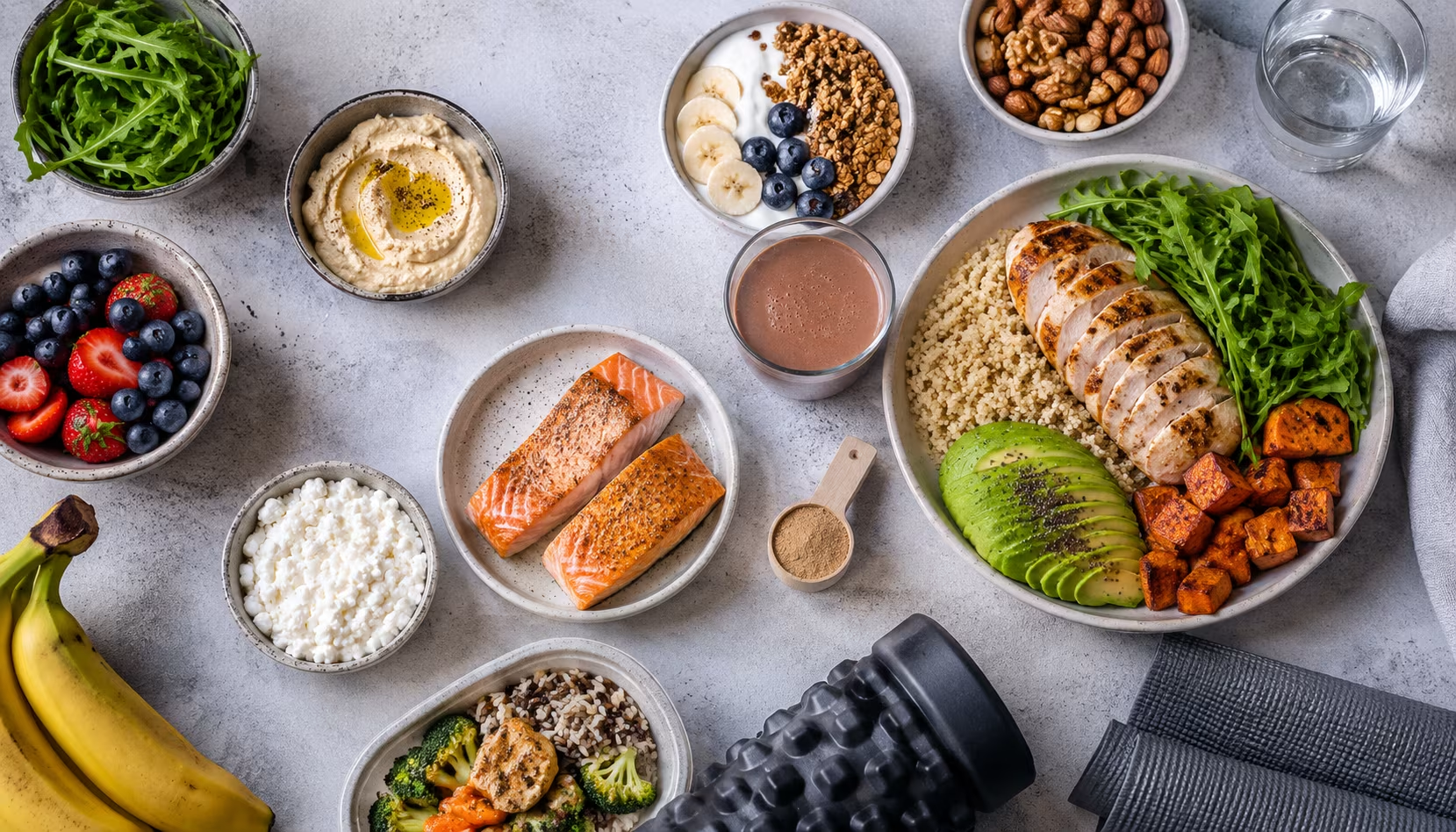
The single most important nutritional variable for recovery from any kind of training is total daily protein intake.
For active adults, the well-supported range is 1.6 to 2.2 grams of protein per kilogram of body weight per day. A 70 kg (154 lb) active adult would aim for roughly 110 to 155 grams of protein daily.
This is more than the standard RDA (0.8 g/kg) but the RDA is set for sedentary populations. Studies in trained populations consistently show better recovery, better adaptation, and better body composition outcomes at the higher end of this range.
The distribution matters somewhat. Several meals of 25 to 40 grams of protein each, spread across the day, support muscle protein synthesis better than one or two large protein-heavy meals. Three to five protein-containing meals daily is the practical structure.
The source matters less than the total. Animal proteins (meat, fish, eggs, dairy) are complete proteins with high digestibility and full amino acid profiles. Plant proteins (legumes, grains, soy) can also fully support recovery if the total intake is adequate, with attention to combining different sources to ensure complete amino acid profiles.
For older adults (over 60), the protein needs are at the higher end of the range or slightly above. Age-related anabolic resistance — the reduced muscle protein synthesis response to a given amount of protein — means more protein is needed to achieve the same response.
For the actual question of whether you're eating enough protein, count for a few days. Most active adults underestimate what they're eating. If you're eating 100 grams of protein on a 2,500 calorie diet, that's only 16 percent of calories from protein, below what most active people benefit from.
Carbohydrate and glycogen replacement
Carbohydrate's role in recovery is to replace muscle glycogen — the stored form of carbohydrate that fuels intense exercise.
A typical adult has about 400 to 500 grams of muscle glycogen plus another 100 grams in the liver. Hard training depletes this. Endurance training of 90+ minutes can deplete most of it. Strength training depletes glycogen less dramatically but still meaningfully.
For glycogen replacement, total daily carbohydrate matters most, and the body is generally efficient at restoring glycogen stores within 24 hours given adequate carbohydrate intake. The active adult benefits from 3 to 7 grams of carbohydrate per kilogram of body weight daily, with the higher end for endurance athletes and the lower end for general fitness.
Timing matters more for athletes training multiple times per day or doing two-a-day sessions. For these populations, carbohydrate within 30 to 60 minutes after the session, with continued carbohydrate intake over the next several hours, accelerates glycogen replacement compared to delayed intake.
For most recreational athletes training once a day with at least 24 hours between sessions, normal eating throughout the day handles glycogen replacement adequately. The supplement industry's emphasis on immediate post-workout carbohydrate is largely irrelevant for this population.
The carbohydrate sources don't matter much for replacement. Higher-glycemic carbs (white rice, fruit juice, sports drinks) replace glycogen slightly faster than lower-glycemic carbs (oats, sweet potato, beans), but the difference disappears within 24 hours.
For low-carbohydrate diets (under 100 g/day) in athletes, the trade-offs change. Performance in high-intensity work generally suffers; recovery from lower-intensity endurance work may be similar. Most people can train fine on low-carb diets but performance ceilings are lower for high-intensity work.
Timing: the actual evidence
The "anabolic window" — the supposedly narrow time window after training when nutrition matters most — has been studied extensively and turns out to be much wider than the supplement marketing suggests.
A 2013 meta-analysis by Schoenfeld and colleagues examined the evidence for post-workout protein timing and concluded that the anabolic window was effectively 4 to 6 hours, not the 30 to 60 minutes commonly claimed. As long as protein is consumed within this wider window, the differences between earlier and later intake are small.
Total daily protein matters far more than exact timing within the day. An athlete eating 150 grams of protein distributed across the day will recover well whether they had a protein shake immediately after training or waited an hour to eat a regular meal.
The exception: athletes who fast extensively before training (training in a fully fasted state with no food for many hours before). For these athletes, post-workout nutrition matters more because the body is in a more depleted state. For most people who eat normally before training, the post-workout timing is less critical.
For carbohydrate, timing matters more for repeated same-day sessions and less for normal daily training. If you train at 6 PM and again at 6 AM, post-evening-workout carbohydrate matters. If you train at 6 PM and again at 6 PM the next day, normal eating handles it.
The practical implication: stop worrying about the post-workout window. Eat your normal balanced meals at normal times, ensure total daily protein and calories are adequate, and the recovery nutrition is handled. The supplement industry has a financial interest in making recovery nutrition seem complicated; for most people, it isn't.
Hydration done right

Adequate hydration matters for recovery, and most people overcomplicate this.
The basic rule: drink to thirst and check urine color. Pale yellow urine throughout the day indicates adequate hydration. Dark yellow indicates underhydration. Completely clear and frequent urination indicates overhydration (which is wasteful but rarely problematic).
Total daily fluid needs vary by body size, climate, and activity. A rough range for adults is 2 to 4 liters per day from all sources (water, other beverages, food moisture). Athletes in hot conditions or doing heavy training need more.
For exercise hydration:
Before 16 to 20 ounces of fluid in the 2 hours leading up to the session.
During 4 to 8 ounces every 15 to 20 minutes for sessions over an hour. Sessions under an hour rarely require fluid intake during.
After 16 to 24 ounces for every pound of body weight lost during the session. Weighing before and after training quantifies the actual losses.
For sessions over 90 minutes or in hot conditions, electrolyte replacement matters. Sodium is the most important electrolyte to replace. Sports drinks, electrolyte tablets, or salty foods accomplish this. Pure water replacement after heavy sweating can produce hyponatremia (low blood sodium) in extreme cases.
The "drink half your body weight in ounces" rule that circulates online has no scientific basis but won't cause harm if followed. The "drink whenever you feel thirsty" approach works for most people.
Coffee and tea count toward hydration despite the popular myth that they're net dehydrating. The diuretic effect of caffeine is small and is offset by the fluid in the beverage. Alcohol is an exception — alcoholic drinks don't count toward hydration and actively dehydrate.
Anti-inflammatory eating: useful and overstated
The anti-inflammatory diet has become a wellness trend, with claims about reduced soreness, faster recovery, and improved performance from specific dietary patterns.
Some of this is real. Diets rich in fruits, vegetables, fish, and whole foods do produce lower baseline inflammation than diets dominated by processed foods. The mechanisms involve omega-3 fatty acids, antioxidants, and fiber's effects on the gut microbiome.
For chronic inflammation related to lifestyle and disease, dietary patterns matter substantially. The Mediterranean dietary pattern in particular has strong evidence for reducing inflammatory markers and various disease outcomes.
For acute exercise-induced inflammation, the picture is more nuanced. The inflammatory response to training is part of how the body adapts to training. Aggressively suppressing it (through high-dose anti-inflammatory drugs, large doses of antioxidant supplements, or extreme dietary patterns) can blunt training adaptation.
The practical implication: a generally healthful diet supports recovery. Going to extreme lengths to "fight inflammation" through specific foods or supplements often produces marginal or negative effects.
Some specific foods with reasonable evidence for anti-inflammatory effects in athletic contexts: tart cherry juice (modest evidence for reduced soreness), turmeric/curcumin (some evidence at adequate doses), omega-3-rich fish (fish twice a week or supplementation produces measurable effects). These are reasonable additions but not transformative.
Ginger, green tea, blueberries, and various other "anti-inflammatory superfoods" have some research support but the effect sizes are modest. Eating these foods because you enjoy them is fine; eating them because they'll dramatically transform your recovery is unrealistic.
Supplements with real evidence
A few supplements have substantial evidence and are reasonable for active adults.
Creatine
The single most well-studied performance and recovery supplement. Creatine monohydrate, 3 to 5 grams daily, has substantial evidence for improvements in strength, power, muscle mass, and recovery from intense training. Costs $10 to $20 per month. The "loading phase" some products recommend is unnecessary; daily 3 to 5 grams reaches saturation in 3 to 4 weeks. Side effects are minimal for most people.
Vitamin D
Many people are deficient, especially in winter months at higher latitudes. Vitamin D affects muscle function, immune function, and recovery. A blood test before supplementing is ideal; without testing, 1,000 to 2,000 IU daily is reasonable for most adults.
Omega-3 fatty acids (EPA/DHA)
Modest evidence for various recovery and inflammation benefits. Either 2 to 3 servings of fatty fish weekly or 1 to 2 grams of fish oil supplementation daily.
Caffeine
Well-studied performance enhancer for endurance and intense exercise. 3 to 6 mg per kg body weight 30 to 60 minutes before exercise produces measurable performance benefits. Most coffee provides this naturally.
Beta-alanine
Modest evidence for endurance performance improvement, particularly for high-intensity efforts of 1 to 4 minutes. 3 to 5 grams daily produces measurable carnosine increases over weeks. Less essential than creatine.
Tart cherry concentrate
Some evidence for reduced soreness and improved sleep quality. Not transformative but reasonable for athletes during heavy training periods.
These five supplements cover most of what's actually evidence-supported. The total monthly cost is modest. Anyone making more elaborate supplement spending decisions is probably wasting money.
What to skip
A long list of recovery supplements with weak evidence relative to their marketing.
BCAAs (branched-chain amino acids)
When total protein is adequate, BCAA supplementation adds little. The amino acids in question are present in any protein source. The popularity of BCAAs is largely a marketing achievement.
Glutamine
Some evidence for specific medical applications (severe burns, surgery recovery) but minimal evidence for athletic recovery in healthy adults eating adequate protein.
Most "recovery powder" blends
Often a mix of protein, BCAAs, and various other ingredients at concentrations too low to matter. Buy whey protein and creatine separately if you want them.
Most "anti-inflammatory" supplement stacks
Often a mix of antioxidants and herbal extracts at doses below what would produce documented effects.
Glucosamine and chondroitin
Mixed evidence at best for joint pain and recovery. Not actively harmful but unlikely to make a meaningful difference.
Most plant-based "superfoods." Spirulina, chlorella, wheatgrass, and many others have weak evidence relative to their cost and marketing.
Detox products of any kind
No evidence for any effect beyond placebo. The body's detoxification systems work fine without supplemental help.
Most testosterone boosters
Tribulus, ZMA, fenugreek, etc. — generally weak evidence for healthy adult males. The supplements that actually raise testosterone significantly are prescription medications with significant effects and risks, not over-the-counter products.
HMB (β-hydroxy β-methylbutyrate)
Initial promising research has not been replicated as strongly. Some specific applications (older adults, beginners) show modest effects.
Most pre-workout blends
Usually a mix of caffeine and other stimulants. The caffeine is the active ingredient in most cases. A cup of coffee is cheaper.
The supplement industry exists to sell products. The financial incentive to oversell research is built in. Default to skepticism, prioritize the few well-evidenced supplements, and put the money you save into food, sleep, and an occasional professional massage.
Sources
Schoenfeld, B. J., Aragon, A. A., & Krieger, J. W. (2013). The effect of protein timing on muscle strength and hypertrophy: a meta-analysis. Journal of the International Society of Sports Nutrition, 10(1), 53.
Morton, R. W., Murphy, K. T., McKellar, S. R., Schoenfeld, B. J., Henselmans, M., Helms, E., Aragon, A. A., Devries, M. C., Banfield, L., Krieger, J. W., & Phillips, S. M. (2018). A systematic review, meta-analysis and meta-regression of the effect of protein supplementation on resistance training-induced gains in muscle mass and strength in healthy adults. British Journal of Sports Medicine, 52(6), 376–384.
Burke, L. M., Hawley, J. A., Wong, S. H., & Jeukendrup, A. E. (2011). Carbohydrates for training and competition. Journal of Sports Sciences, 29(sup1), S17–S27.
Kreider, R. B., Kalman, D. S., Antonio, J., Ziegenfuss, T. N., Wildman, R., Collins, R., Candow, D. G., Kleiner, S. M., Almada, A. L., & Lopez, H. L. (2017). International Society of Sports Nutrition position stand: safety and efficacy of creatine supplementation in exercise, sport, and medicine. Journal of the International Society of Sports Nutrition, 14(1), 18.
Owens, D. J., Allison, R., & Close, G. L. (2018). Vitamin D and the athlete: Current perspectives and new challenges. Sports Medicine, 48(1), 3–16.
Bell, P. G., Walshe, I. H., Davison, G. W., Stevenson, E. J., & Howatson, G. (2015). Recovery facilitation with Montmorency cherries following high-intensity, metabolically challenging exercise. Applied Physiology, Nutrition, and Metabolism, 40(4), 414–423.
Phillips, S. M., & Van Loon, L. J. (2011). Dietary protein for athletes: from requirements to optimum adaptation. Journal of Sports Sciences, 29(sup1), S29–S38.
Frequently Asked Questions
How much protein do I need for recovery?
Total daily protein matters more than exact post-workout amounts. Most active adults benefit from 1.6 to 2.2 grams of protein per kilogram of body weight per day, distributed across 3 to 5 meals. The post-workout 'anabolic window' is wider than supplement marketing suggests — within a few hours is fine.
Are recovery shakes worth it?
For convenience, yes. For superiority over food, no. A protein shake with carbohydrate after a workout is a fine option when food isn't practical. A real meal containing similar protein and carbohydrate produces the same effects.
Do I need carbs after a workout?
If you trained hard and will train hard again within 24 hours, yes — carbs after the session help replenish glycogen faster. For most recreational training with at least a day between hard sessions, normal eating throughout the day handles glycogen replacement adequately.
What about supplements like BCAAs and creatine?
BCAAs add little when total protein is adequate, which it usually is. Creatine has substantial evidence for performance and recovery benefits, is cheap, and is the one supplement most active adults could reasonably take. Most other recovery supplements have weaker evidence than the marketing suggests.





0 Comments
Leave a comment
Your email won't be published. Required fields are marked with *.