


The foam roller showed up in physical therapy clinics in the 1980s as a tool for awareness work and gentle self-mobilization. By the late 2000s, it had migrated to the gym floor, picked up a brand identity, and acquired some grand claims along the way: it breaks up adhesions, releases fascia, lengthens muscles, prevents injury, accelerates recovery, improves performance.
Most of those claims have now been studied. The picture that emerges is interesting but more modest than the marketing suggests. Foam rolling does some things reliably. It doesn't do other things at all. And the mechanism by which it helps is almost certainly not what most people are told.
Here's what the research actually shows, and what to make of it if you've been spending five minutes a day on a foam roller for the last decade.
The fascia myth
The phrase "myofascial release," used by physical therapists since the 1960s, refers to a specific manual therapy technique with hands. The idea was that fascia — the connective tissue that wraps around and through muscles — could become restricted, and that sustained gentle pressure could release these restrictions.
Foam rolling borrowed the language, and somewhere along the way the marketing started suggesting that a piece of high-density foam could do the same thing. This deserves a closer look.
The fascia is real and it does adapt and remodel. But it is also remarkably tough. The work of Werner Klingler and others measuring the actual mechanical properties of fascia has shown that the forces required to permanently deform it are substantial — on the order of 9 to 18 newtons per square centimeter for the relatively delicate superficial fascia, and considerably higher for the deeper sheets. A typical foam roller, even pressed into hard, generates a fraction of those forces.
What the foam roller does generate is a strong sensory input. The nervous system gets a message that something is happening to a muscle — pressure, motion, temperature, slight stretch — and it responds. Protective tension drops. Pain thresholds shift. Local blood flow increases. These are real, measurable effects. They're just not "fascial release" in any literal sense.
This matters because if you understand the mechanism, you'll do it differently. You don't need to grind into a tight spot until your eyes water. You need enough sensory input, sustained long enough, for the nervous system to register and respond. That's a much gentler, more deliberate process than what most people do.
What foam rolling reliably does
Three effects show up consistently in the literature.
Short-term increase in range of motion
Multiple meta-analyses, including a substantial 2019 review by Wiewelhove and colleagues that pooled 21 studies, have found that 60 to 120 seconds of foam rolling per muscle group reliably increases range of motion in the targeted joints. The effect is moderate in size, lasts roughly 10 to 30 minutes, and importantly does not produce the strength deficit that static stretching can produce. This makes foam rolling useful as a pre-workout warmup tool when range of motion matters.
Reduction in delayed onset muscle soreness (DOMS)
Studies by Pearcey and others have shown that foam rolling after eccentric exercise reduces the perceived soreness in the following 24 to 72 hours, with corresponding improvements in functional measures like vertical jump and sprint times during the recovery period. The effect isn't huge, but it's reproducible. The mechanism is uncertain — possibly some combination of increased blood flow, neural inhibition of pain signals, and effects on muscle stiffness.
Subjective sense of feeling better
This is harder to measure but worth acknowledging. People who foam roll consistently report feeling looser, less stiff, and more aware of their bodies. This effect may be partly placebo, partly real changes in tissue tone, and partly the fact that anyone spending five minutes lying on a piece of foam is also spending five minutes paying attention to their body, which has its own value.
These three effects are real and modest. They're worth the time foam rolling takes for most active people. They are also basically the entirety of what's been demonstrated.
What it doesn't do
A longer list, drawn from systematic reviews.
Foam rolling does not improve athletic performance in any meaningful, sustained way. Acute effects on jump height or sprint speed have been studied and are either zero or trivial. If you're rolling before training to "activate" the muscles, the activation isn't measurable.
It does not prevent injuries. The injury prevention claim is widespread but not supported. The studies that have tried to show injury reduction with foam rolling protocols have generally come up empty. The reasons most athletes get hurt — training error, sleep deprivation, sudden load increases — aren't addressed by rolling.
It does not break up scar tissue. The forces, again, aren't there. Mature scar tissue is highly remodeled and requires either time, hands, or surgical intervention to change. Foam rolling on top of a scar produces the same neural effects as foam rolling anywhere else but doesn't restructure the tissue.
It does not increase muscle length permanently. The range of motion gains are short-term and related to neural changes, not actual lengthening of the muscle or its connective tissue. To get a permanent change in resting length, you need consistent loaded work in the new range — strength training at end-range. Rolling alone won't do it.
It does not "release toxins" from the muscles. There are no toxins to release. The muscles are not full of stored bad substances waiting to be expressed by foam.
The honest summary: foam rolling is useful, but it's not magic, and most of what's claimed for it goes beyond what the evidence supports.
Pre-workout: range of motion without strength loss
Here's where foam rolling has a clear, evidence-based use case.
Static stretching before a strength or power session is well-known to slightly reduce subsequent strength and power output. The effect is small but real, and it's why most strength coaches moved away from pre-workout static stretching about two decades ago. They replaced it with dynamic warmups, which produce range of motion gains without the strength penalty.
Foam rolling fits into the same niche, with similar effects. A 2014 study by MacDonald and colleagues compared foam rolling, static stretching, and a control condition. Both interventions improved range of motion. Static stretching reduced subsequent maximal strength. Foam rolling did not. This pattern has been replicated several times since.
So if your warmup looks like five minutes on a stationary bike followed by some dynamic mobility, adding 30 to 60 seconds of foam rolling on the muscles you're about to work — quads before squats, lats before pulling, glutes before deadlifts — is probably a small positive addition. It increases the range of motion you can access during the work, doesn't reduce your strength, and acts as a mental transition into the session.
What it doesn't do at this stage is prepare you for hard work in any meaningful physiological sense. The actual warmup for strength training is the early sets of the working exercise, done with submaximal weight. Don't substitute foam rolling for those.
Post-workout: soreness and recovery
The DOMS reduction effect is most pronounced when foam rolling is done within an hour or two after a session that produces significant eccentric loading — heavy lifting, downhill running, plyometric work. Pearcey and colleagues' 2015 study had subjects perform 10 sets of 10 back squats with 60 percent of one-rep max, followed by 20 minutes of foam rolling immediately after and at 24, 48, and 72 hours. The rolled group reported significantly less soreness, less pressure-pain sensitivity, and better performance on functional tests across the recovery period.
The protocol that's been studied is more rolling than most people do — 20 minutes is a long time on a roller — but the principle scales. Five to ten minutes covering all the muscles you trained, done within an hour after the session, will produce some of the same effect.
The mechanism here is less about the tissues themselves and more about the nervous system's pain processing. The sensory input from rolling appears to reduce the central sensitization that contributes to DOMS. This is the same mechanism that probably underlies the temporary relief from massage after a hard workout.
A practical note: if you're really sore and want relief, gentle and longer is better than aggressive and brief. The pain-pressure relationship isn't linear. Pressing harder doesn't produce a bigger effect, and very aggressive rolling on already-sore tissue can produce small areas of bruising that delay recovery. Light to moderate pressure, sustained for a minute or two per area, is the right dose.
Vibrating rollers, lacrosse balls, and the gear question
The basic dense foam roller, available for $20 to $40, does most of what you need. The studies showing benefits used standard rollers. Anything beyond this is upgrades, not requirements.
Vibrating rollers have been studied directly. A 2019 systematic review by Cheatham and Stull found that vibration adds a small additional benefit on top of standard rolling for range of motion and pain perception, but the effect size is modest enough that the cost difference (vibrating rollers run $100 to $200) probably isn't justified for most people. If you're going to spend that much, spend it on a session with a good massage therapist instead.
Lacrosse balls and small massage balls are useful for areas a roller can't reach well — feet, glutes, the areas around the shoulder blades. The same principles apply: enough pressure for sensation, sustained long enough for the nervous system to respond, not so aggressive that you end up with a bruise.
The "softer is better" rule mostly holds for sensitive areas. The first time you try a lacrosse ball on the glute, do it lying on a soft surface so you can control the pressure. The "harder is better" intuition gets people hurt with this kind of tool.
Specialty rollers with bumps, ridges, or sleeve patterns mostly haven't been shown to do anything that smooth rollers don't do. Some people prefer them subjectively. The textured surface produces a slightly different sensation, which may matter for adherence — if a textured roller is what you'll actually use, that's the right roller for you. The technical effects are similar.
How to actually do it
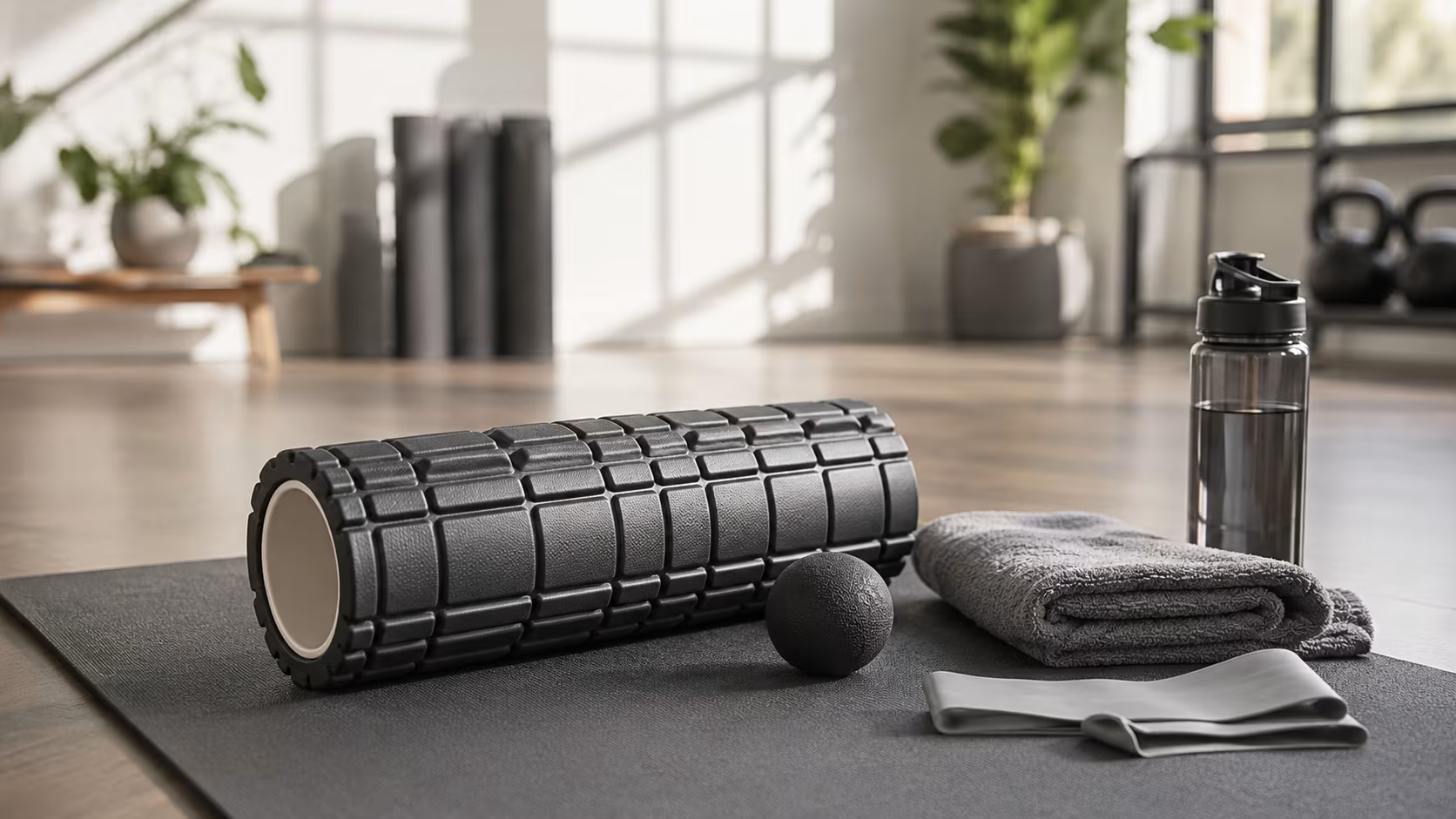
The basic protocol that has the best evidence behind it.
Choose a position that lets you control how much body weight is on the roller. For larger muscles like the quads and glutes, lying with your full weight on the roller is the standard starting point. For smaller or more sensitive areas like the calves or the IT band, you can offload some weight by supporting yourself on a hand or the opposite leg.
Find a tender spot in the muscle. Don't grind across it; that's where the bruising comes from. Stop on it, breathe, and let the pressure sit. Sustained pressure produces the neural response. Bouncing around looking for the next tender spot doesn't.
Hold for 30 to 60 seconds per spot, depending on tolerance. If it's intolerable, you're pushing too hard. Reduce the pressure. Sensation should be a clear "I notice this" feeling, not a "make it stop" feeling.
Move on. After working a few spots in a muscle, do a slow roll across the whole length of it, just to integrate. Then move to the next muscle.
Total time 5 to 10 minutes for a basic full-body protocol, longer if you're targeting specific areas. More than this isn't necessary unless you're a high-volume athlete or have specific recovery needs.
The biggest mistakes most people make rolling too fast (no time for the nervous system to register), pressing too hard (creates bruising and protective guarding), and rolling areas that aren't supposed to be rolled (more on this in a moment).
Who should be more careful
A few populations and situations where foam rolling needs adjustment.
People with osteoporosis or low bone density should avoid pressure on the spine, especially the thoracic spine, where vertebral fracture risk is highest. Foam rolling the lats by lying sideways with the arm extended is fine. Lying supine on a roller and rolling up and down the spine is not.
People on blood thinners or with a tendency to bruise easily should use lighter pressure than they think they need. The bruising risk is real even with normal-looking pressure.
Pregnant women in the second and third trimesters should avoid lying supine on the roller for extended periods (vena cava compression) and should be cautious about rolling the lower abdomen and front of the hips.
People with deep vein thrombosis history or recent surgery should consult their physician before rolling the affected area.
Areas to avoid in general: the front of the neck (carotid arteries), the kidneys (in the small of the back), the joints themselves rather than the surrounding muscle, areas of acute inflammation or skin breakdown, the IT band itself if it's painful (the IT band is a tendon and doesn't respond well to direct pressure; the muscles attaching to it might).
The IT band point is worth dwelling on. The popular practice of foam rolling the lateral thigh was based on a misunderstanding. The IT band is a thick fibrous structure that doesn't deform under foam roller pressure and doesn't need to. What's usually painful in that area is the underlying muscle, particularly the vastus lateralis. Roll the muscle, not the band.
Sources
Wiewelhove, T., Döweling, A., Schneider, C., Hottenrott, L., Meyer, T., Kellmann, M., Pfeiffer, M., & Ferrauti, A. (2019). A meta-analysis of the effects of foam rolling on performance and recovery. Frontiers in Physiology, 10, 376.
Pearcey, G. E., Bradbury-Squires, D. J., Kawamoto, J. E., Drinkwater, E. J., Behm, D. G., & Button, D. C. (2015). Foam rolling for delayed-onset muscle soreness and recovery of dynamic performance measures. Journal of Athletic Training, 50(1), 5–13.
MacDonald, G. Z., Button, D. C., Drinkwater, E. J., & Behm, D. G. (2014). Foam rolling as a recovery tool after an intense bout of physical activity. Medicine and Science in Sports and Exercise, 46(1), 131–142.
Cheatham, S. W., & Stull, K. R. (2019). Comparison of three different density type foam rollers on knee range of motion and pressure pain threshold: A randomized controlled trial. International Journal of Sports Physical Therapy, 13(3), 474–482.
Schleip, R., & Müller, D. G. (2013). Training principles for fascial connective tissues: Scientific foundation and suggested practical applications. Journal of Bodywork and Movement Therapies, 17(1), 103–115.
Behm, D. G., & Wilke, J. (2019). Do self-myofascial release devices release myofascia? Rolling mechanisms: A narrative review. Sports Medicine, 49(8), 1173–1181.
Hendricks, S., Hill, H., Hollander, S. D., Lombard, W., & Parker, R. (2020). Effects of foam rolling on performance and recovery: A systematic review. Journal of Bodywork and Movement Therapies, 24(2), 151–174.
Frequently Asked Questions
Does foam rolling break up fascia?
Almost certainly not. The forces required to physically deform fascia are higher than what a foam roller produces — measurements suggest you'd need pressures equivalent to deep tissue manipulation by a strong therapist. What actually happens is mostly neural: the nervous system reduces protective tone in response to the stimulus.
How long should I foam roll a muscle?
The studies showing benefit used 60 to 120 seconds per muscle group, divided across multiple positions. Less than 30 seconds total seems to do little. More than 120 seconds doesn't seem to add much. The sweet spot is about a minute per major muscle, two minutes if it's a particularly large or sore area.
Should I foam roll before or after a workout?
Before, if you want a small short-term increase in range of motion without losing strength. After, if you want help with delayed onset muscle soreness. The mechanisms are different and so are the protocols. Doing both isn't necessary unless you enjoy it.
Is foam rolling supposed to hurt?
Mild to moderate discomfort is normal. Sharp pain isn't. The 'no pain no gain' framing is wrong here — pressing harder doesn't produce a bigger effect, and chasing pain can produce bruising that delays the very thing you're trying to recover from.





0 Comments
Leave a comment
Your email won't be published. Required fields are marked with *.