


The post-workout meal has been one of the most-marketed nutrition concepts of the past 25 years. Supplements built entire categories around the "anabolic window" (the supposed 30-minute period after training when muscle was uniquely receptive to protein and carbs). That model has largely fallen apart under newer evidence. The protein synthesis window is much wider than 30 minutes. The carb urgency is overblown for most training. What you ate before your session matters as much as what you eat after.
This doesn't mean the post-workout meal is useless. It still matters, just for different reasons than the marketing suggested. This is a guide to what actually matters, what to ignore, and how to structure post-training nutrition without overthinking it.
What the "Anabolic Window" Research Actually Said
The phrase comes from early studies in the 1990s and 2000s showing that muscle protein synthesis was elevated post-training and that consuming protein during this period produced greater synthesis than fasting. The supplement industry compressed this into a 30-minute window after which "you missed it."
The newer evidence is more nuanced. Phillips and colleagues' work in the 2010s, and Schoenfeld's 2013 meta-analysis, showed that the muscle protein synthesis response is elevated for 24–48 hours after a stimulating training session in trained individuals. The window is much wider, and the dose-response is more about total daily intake than precise timing within the day.
Aragon and Schoenfeld's 2013 review concluded that total daily protein intake is the dominant variable. Timing matters in marginal situations (fasted training, very long gaps before the next meal, extreme volume), but for most healthy adults training in a fed state, the urgency is overblown.
Total Daily Protein Beats Timing
The number that matters most is 1.6–2.2 grams of protein per kilogram of body weight per day, spread across 3–5 meals. For a 70 kg person, that's 112–154 g per day.
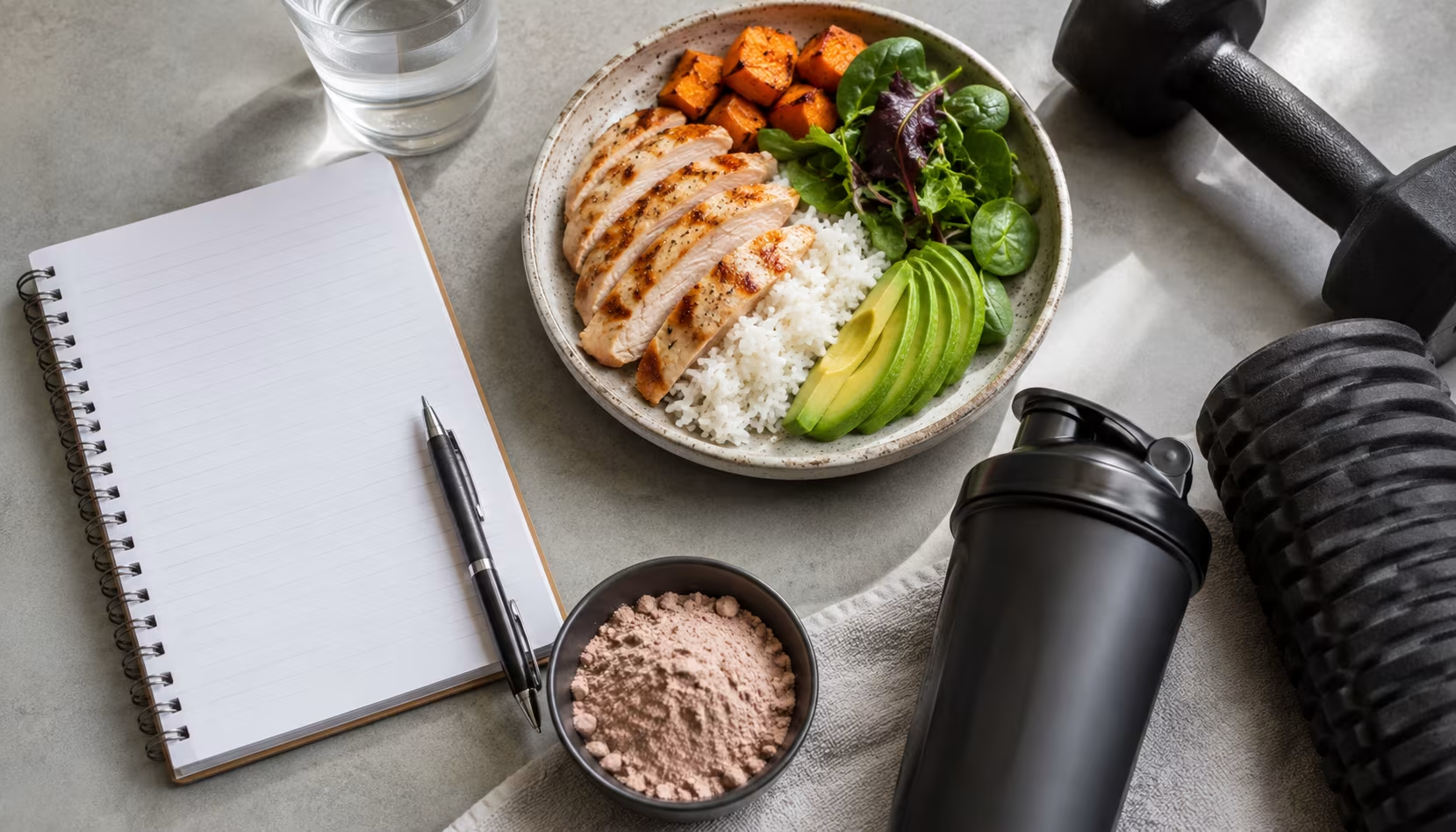
A reasonable distribution:
- Breakfast: 25–35 g
- Lunch: 25–35 g
- Post-workout meal: 25–35 g
- Dinner: 25–35 g
- Optional pre-bed snack with casein or cottage cheese: 25–35 g
The total adds up to comfortably hit the daily target. The post-workout meal is one of 3–5 protein servings; it isn't categorically more important than the others.
The 30-Minute Rule for Specific Situations
The window is wider than 30 minutes for almost everyone, except in three situations where eating soon after still matters:
Fasted training
If you trained without eating beforehand, muscle protein breakdown is elevated during the session. Replacing protein within 30–60 minutes restores positive net protein balance. The "rush to eat" after a 6 AM fasted lift is not a marketing invention.
Two-a-days
If you'll train again within 6–8 hours, prioritize fast glycogen and protein replenishment immediately after the first session. Endurance athletes doing morning + evening sessions, or athletes in tournaments with multiple games per day, benefit from rapid post-session refueling.
Older adults (60+)
Anabolic resistance is real with aging. The muscle response to a given protein dose is blunted. Older trainees benefit from slightly higher protein doses (30–40 g vs 25 g) and from prompt post-workout feeding.
For everyone else: eating within 1–2 hours after training is enough. Don't rush home before the session is even cool to drink a shake.
Protein: Dose and Source
The post-workout protein target is 20–30 g for adults under 60 and 30–40 g for adults over 60. These doses provide roughly 2.5–3 g of leucine, the amino acid that triggers muscle protein synthesis.
Practical options for hitting this dose:
- Whey protein shake (1 scoop, 25 g protein): fast absorption, convenient, well-studied
- Greek yogurt (1 cup, ~20 g protein): casein-dominant, slower release, good if your next meal is hours away
- 3 large eggs + 1 slice of toast with peanut butter: 25 g protein from solid food, plus carbs and fat
- Chicken breast (4 oz / 115 g) with rice: 28 g protein, well-rounded with carbs
- Cottage cheese with fruit: 25 g protein, casein-based
Whey isn't categorically better than the other options. It's faster, which matters in narrow situations. For most people, eat whichever protein source is easy and tastes good enough that you'll do it consistently.
For plant-based recovery, take a slightly larger dose (35–40 g) of a pea+rice blend or soy isolate to hit the leucine threshold. Or combine sources: a smoothie with pea protein, tofu, and oats gets you there.
Carbohydrates: When Speed Actually Matters
Carbohydrate priorities depend on what you did and what's coming next.
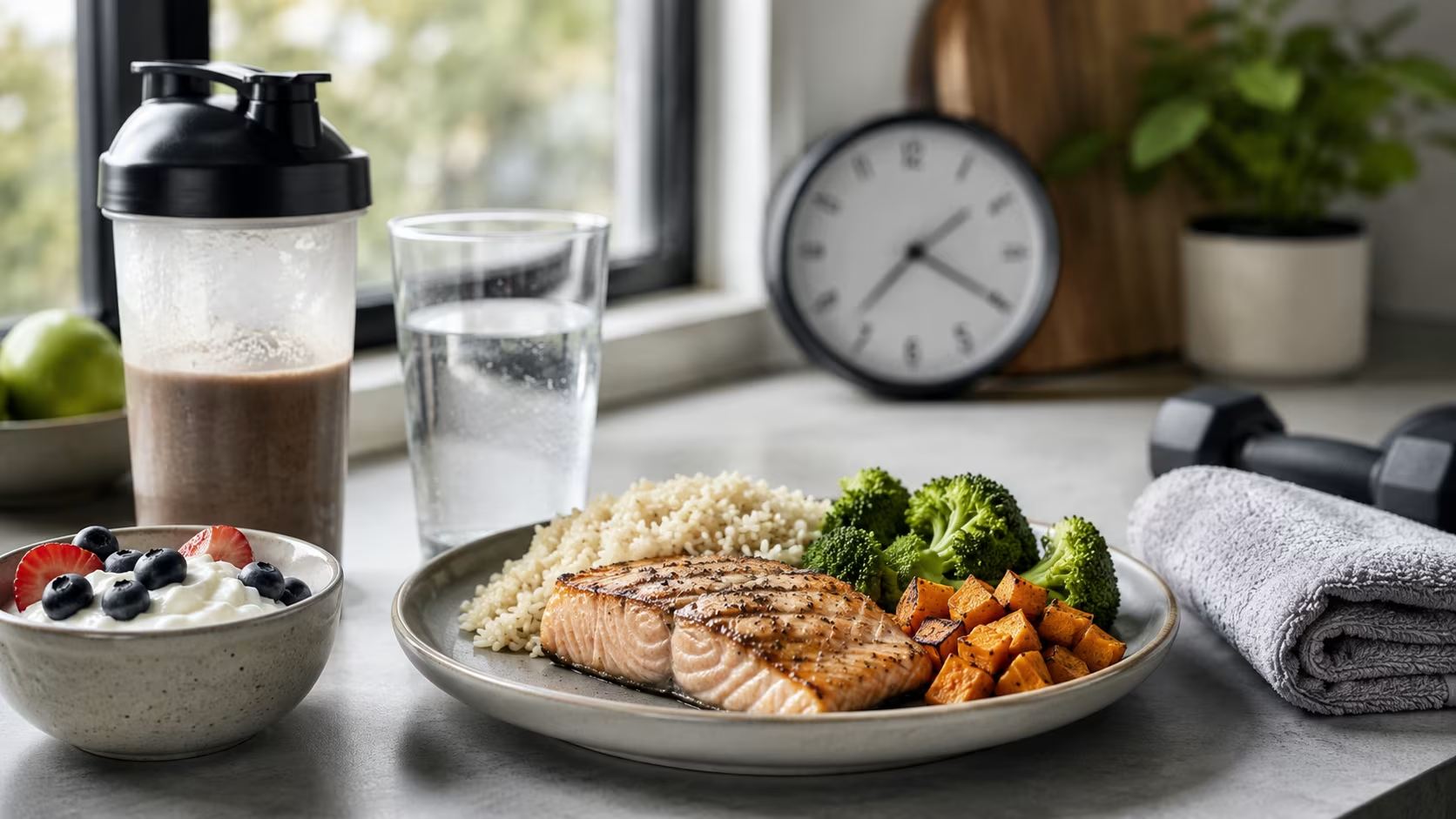
Glycogen replenishment is fast in the first 30–60 minutes after exercise because muscle insulin sensitivity is heightened and the glucose transporter GLUT4 is upregulated. Rapid post-workout carb intake at this point can resynthesize glycogen at roughly twice the rate of carbs eaten later.
This matters if:
- You have another hard training session within 8 hours
- You did a long endurance session that significantly depleted glycogen
- You're in a high-volume training block (2+ hard sessions per day for several days)
This doesn't matter much if:
- You trained for less than 60 minutes
- Your next session is 24+ hours away
- You're training to maintain rather than to build performance
For typical strength sessions of 45–90 minutes, getting carbs in your next meal (not necessarily within 30 minutes) is sufficient. 40–80 g of carbs in the meal after training is a reasonable target.
Sources: rice, potatoes, oats, fruit, bread, pasta. The "fast vs slow carb" debate after training is mostly noise; the high insulin sensitivity post-exercise blunts the glycemic response of even higher-glycemic foods.
Fluid and Sodium Replacement
Replace fluid losses gradually rather than dramatically. The rule of thumb:
Drink 125–150% of the body weight lost during training. A 1 kg loss = 1.25–1.5 L of fluid replaced over the following 2–4 hours.
For sessions under 60 minutes in moderate conditions, weight loss is usually under 0.5 kg and water alone is fine. For longer sessions, heat, or known heavy sweaters, an electrolyte-containing drink replaces lost sodium more effectively. Sodium is the dominant electrolyte lost in sweat; supplementing with a pinch of salt in water or a properly formulated sports drink covers it.
"Hyperhydration" (drinking far in excess of losses) does not improve recovery and risks hyponatremia in extreme cases (rare in routine training, more common in marathon and ultra contexts).
Practical Post-Workout Meals
Five real-world options at different time commitments:
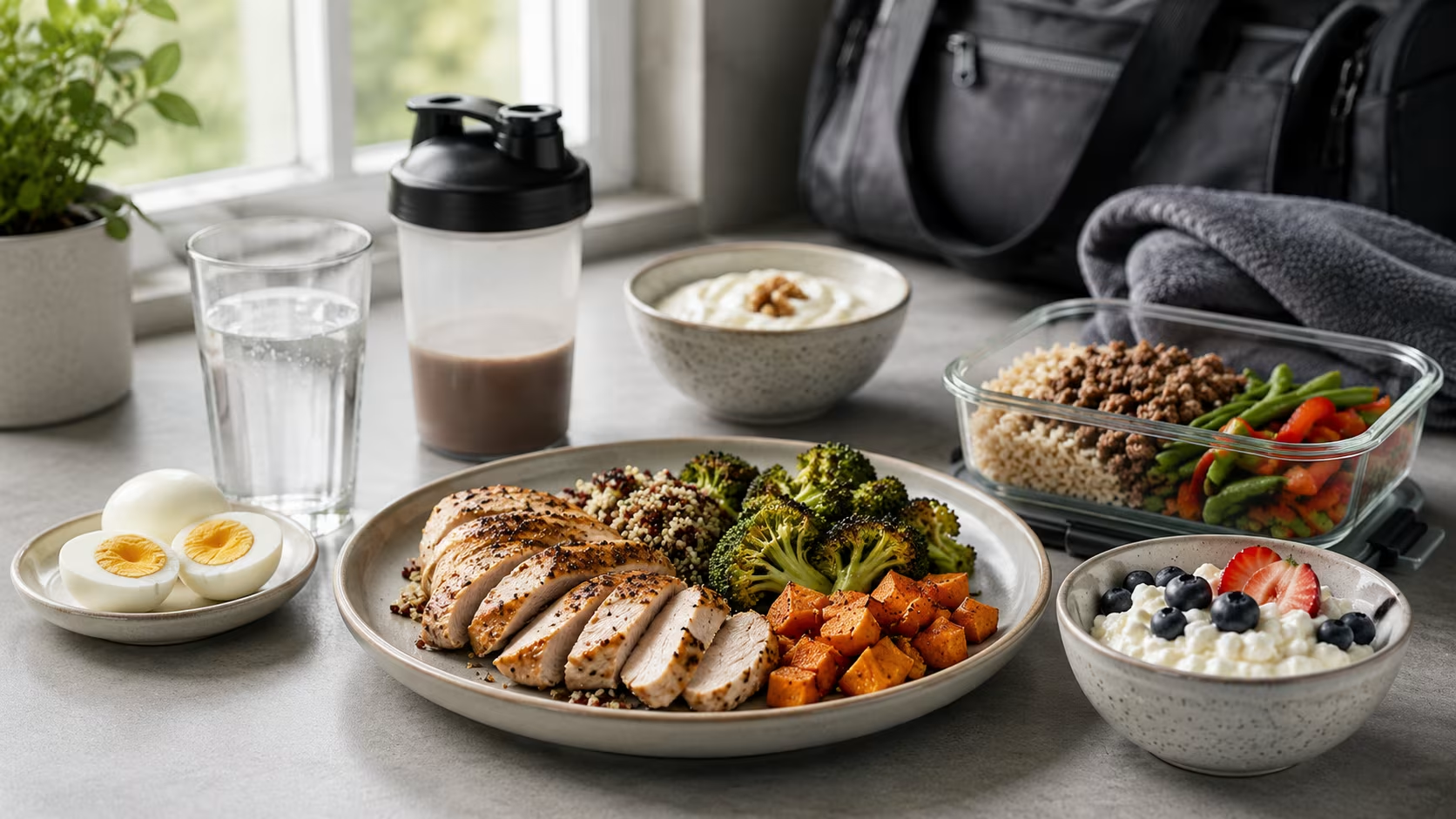
Quick (under 5 minutes to prepare)
- Whey protein shake + a banana
- Greek yogurt + granola + berries
- Chocolate milk + a piece of fruit
Medium (10–15 minutes):
- Two eggs + toast + avocado + a piece of fruit
- Tuna + crackers + a piece of fruit
- Cottage cheese + oats + honey + nuts
Full meal (20+ minutes)
- Chicken breast + rice + roasted vegetables
- Salmon + sweet potato + greens
- Tofu stir-fry with rice and vegetables
- Steak + potatoes + salad
All of these provide 25–35 g of protein, adequate carbs, and the micronutrients that come with real food. The post-workout meal is the right time of day to anchor a substantial whole-food meal: the appetite is there, the body is primed, and the glycemic response is favorable.
What to Skip
A few common post-workout choices add nothing or actively work against recovery:
Specialty "recovery formulas" with proprietary blends
typically protein + carbs + a handful of overpriced filler. A whey shake plus a banana provides the same physiology at half the cost.
Alcohol within 1–2 hours post-training
measurably impairs muscle protein synthesis and dehydrates further. A beer at lunch four hours after a morning workout is fine. A beer right after lifting actively slows recovery.
Very low-protein meals as "recovery"
the smoothie with banana, oat milk, and a tablespoon of peanut butter has maybe 5 g of protein. Not enough to trigger synthesis. Add 20–30 g of protein (Greek yogurt, protein powder, or eggs) or save it for between meals.
Branched-chain amino acid (BCAA) supplements alone
BCAAs are already in whey, eggs, meat, and yogurt at adequate ratios. Taking them separately as a "muscle preservation" supplement doesn't add anything if you're hitting your protein target. The marketing for BCAAs has outlived the evidence.
Frequently Asked Questions
Is there really an anabolic window?
Not the strict 30-minute window the 2000s-era supplement industry sold. Muscle protein synthesis is elevated for 24+ hours after a hard training session, and total daily protein matters more than timing within minutes. That said, eating within 2 hours post-workout is reasonable for practical reasons (hunger, recovery, and consistency).
How much protein should I eat after a workout?
20–30 grams for most adults under 60, 30–40 grams for older adults. The protein should be high-quality (whey, eggs, lean meat, fish, or a plant blend with adequate leucine). This dose triggers the same muscle protein synthesis response as larger doses; eating 60+ grams in one sitting doesn't add more.
Do I need carbs after lifting?
Carbs matter most after sessions that significantly deplete glycogen: long endurance work, high-volume lifting, or two-a-day training. After a typical strength session, getting carbs in your next meals is enough; the rush to consume them within an hour is overblown.
Are chocolate milk and recovery drinks worth it?
Chocolate milk has a roughly 3:1 to 4:1 carb-to-protein ratio that works well as a post-workout drink and is much cheaper than commercial recovery powders. The branded recovery drinks aren't doing anything special chemically: they're a convenience-and-marketing product.
Should I eat right after a fasted morning workout?
Yes. Protein within 60 minutes is sensible after a fasted session because your muscle protein breakdown rate was elevated during training. A 20–30 g protein meal plus carbs is the standard post-fasted recommendation.





0 Comments
Leave a comment
Your email won't be published. Required fields are marked with *.