


For most of fitness culture's history, the pelvic floor went unmentioned in athletic contexts. The Kegel — named for Arnold Kegel, who developed the exercise in 1948 — entered the cultural vocabulary as a postpartum thing, occasionally an older-woman thing, never an athlete thing. Then research started catching up to what athletes were quietly experiencing. CrossFit athletes leaking during double-unders. Marathoners losing control on long runs. Olympic gymnasts requiring pads. Female athletes weren't reporting these issues at any rate proportional to how widely they were happening.
The data emerged. A 2018 study of CrossFit athletes found 84% experienced urinary leakage during specific exercises. Studies of elite trampolinists have reported rates above 80%. Marathon runner studies range from 30% to over 50% depending on training intensity and parity. The pelvic floor isn't a women's-health side note for athletes. It's a major performance and quality-of-life issue that fitness culture has been late to address.
Male athletes are at the other end of the same problem. Hypertonic pelvic floor — too much tension, not too little — causes pain, urinary symptoms, and sexual dysfunction that often gets misdiagnosed for years before someone thinks of the floor. Cycling, heavy lifting, and chronic bracing patterns can drive the condition.
The popular intervention — do more Kegels — is wrong half the time and incomplete the rest. This piece walks through what the pelvic floor actually does in athletic contexts, why Kegels aren't always the answer, and what coordinated work looks like.
What the Pelvic Floor Is and What It Does
The pelvic floor is a hammock of muscles spanning the bottom of the pelvis — running from the pubic bone in front, around the urethra and (in women) vagina, around the anus, and back to the tailbone. Three layers, multiple muscles in each. The deepest layer, called the levator ani, does most of the postural and support work.
The pelvic floor has five functional jobs:
Support
Holds pelvic organs against gravity and intra-abdominal pressure. Without adequate function, the bladder, uterus, or rectum can prolapse — drop downward through the floor.
Sphincteric
Controls the urethra and anus. Failure produces urinary or fecal incontinence.
Sexual
Contributes to arousal, orgasm, and the sexual response in both sexes.
Stability
Coordinates with the diaphragm, transverse abdominis, and multifidus to form what's sometimes called the deep core canister. Pelvic floor activation is part of how the body braces against load.
Lymphatic and circulatory
Pelvic floor movement assists venous return and lymph flow from the pelvis.
The first three get most attention. The fourth — stability and bracing — is what makes the pelvic floor central to athletic performance and to athletic dysfunction.
The Two Failure Modes
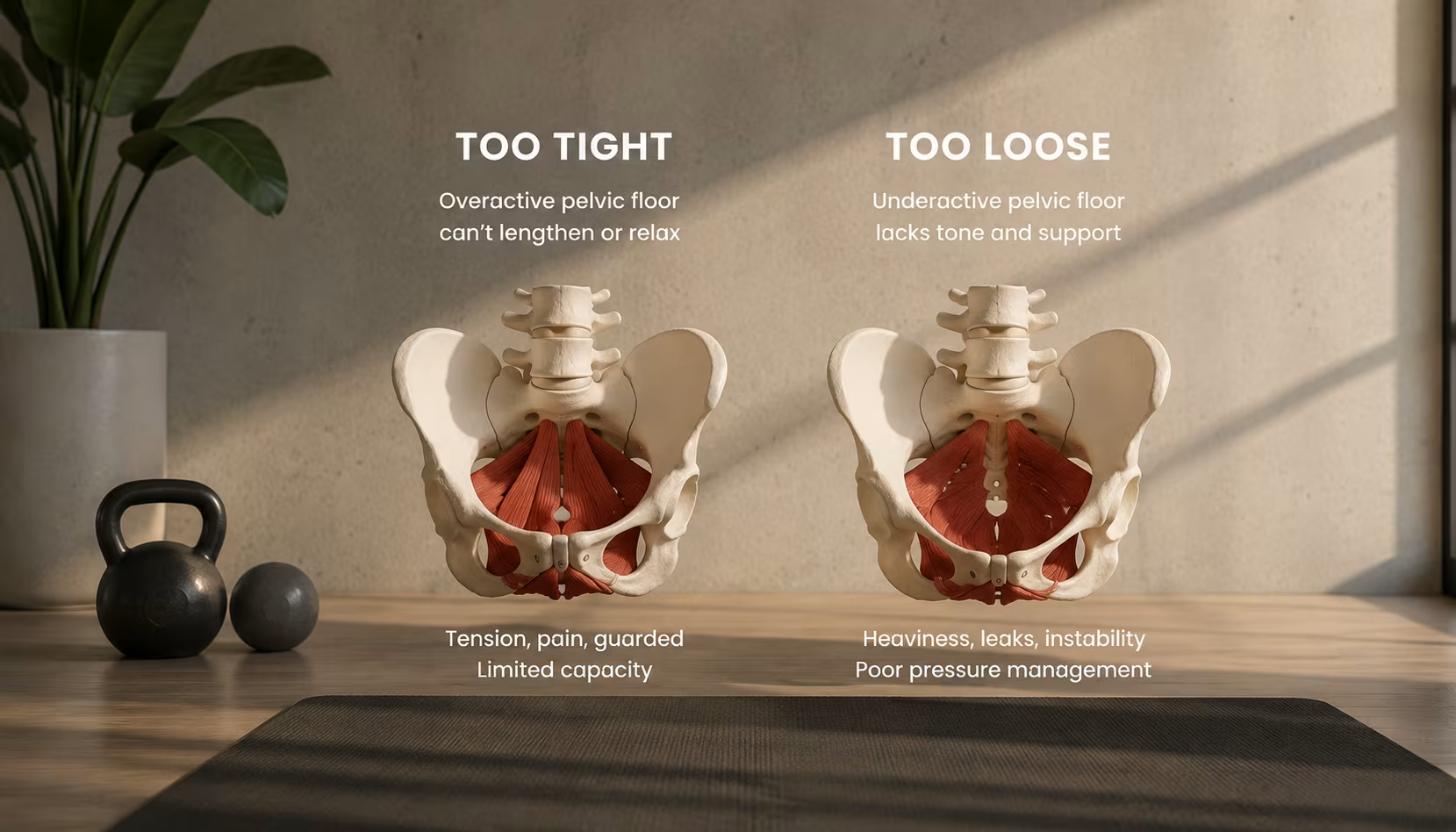
The pelvic floor can fail in two opposite ways:
Hypotonic (weak, low-tone)
The classic postpartum presentation. Muscles don't generate adequate force. Symptoms: stress incontinence (leakage with sneezing, jumping, lifting), pelvic organ prolapse, sense of heaviness or "falling out," weak orgasm. The intervention here is strengthening — Kegels help.
Hypertonic (overactive, high-tone)
Muscles are chronically tense, often unconsciously gripped, can't fully relax. Symptoms: chronic pelvic pain, painful intercourse, urinary urgency or hesitancy, constipation, low back pain, sometimes "tight" feeling in the perineum. The intervention here is the opposite — release work, breath, relaxation. Kegels can make this worse.
The clinically tricky bit the symptoms overlap. Both hypotonic and hypertonic pelvic floors can produce urinary urgency, for example. A hypertonic floor that's working hard to compensate may also leak, mimicking weakness. Without proper assessment, "do more Kegels" guesses wrong about half the time.
A practical self-check can you contract the pelvic floor, hold it for 8–10 seconds, and then fully release? If you can contract but can't release — the muscles stay tense between attempts — you may be on the hypertonic end. If you can't generate meaningful contraction at all, hypotonic. Many people show features of both at different muscle layers, which is why specialist assessment helps for stubborn cases.
Why Athletes Have More Issues, Not Fewer
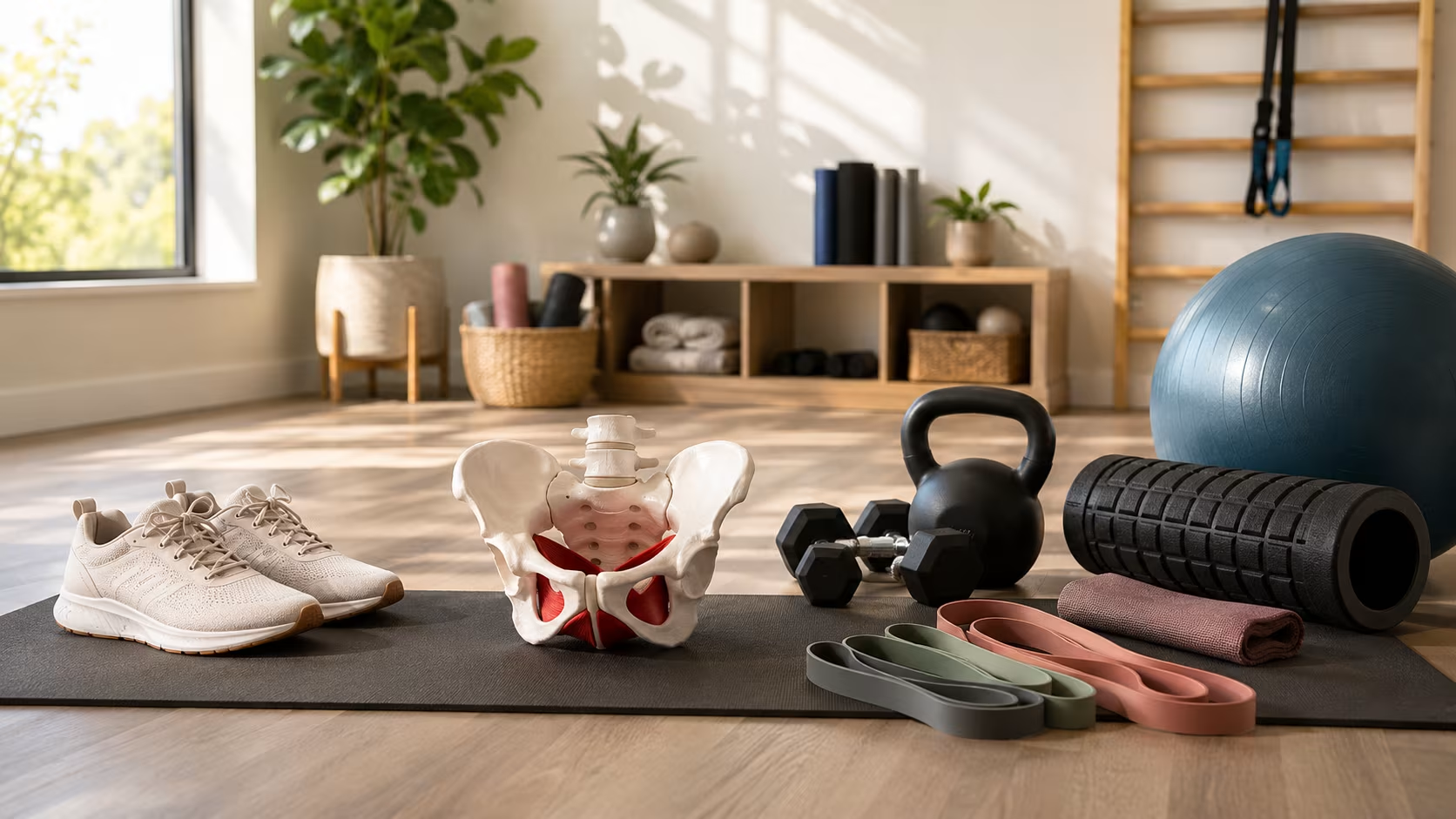
The intuitive assumption is that fit, active people have stronger pelvic floors than sedentary people. The evidence shows something different — athletes have similar or higher rates of pelvic floor dysfunction than non-athletes, particularly in sports involving repeated high intra-abdominal pressure.
Several factors:
Chronic bracing
Lifting, gymnastics, jumping sports all train chronic intra-abdominal pressure. The pelvic floor compensates. Over years, this can produce hypertonicity — the floor stays partially contracted as a default, losing the capacity to fully relax.
Insufficient recovery between high-pressure efforts
Repeated max-effort lifts without adequate down-regulation keep the system in a sympathetic-dominant state where pelvic floor relaxation is impaired.
Impact loading
Running, especially heel-strike running, and jumping send repeated downward force through the pelvic floor. Over time, this can outpace the floor's ability to support and recover.
Poor breathing patterns
Many athletes breathe chest-up during effort, which limits the diaphragm's downward action. The pelvic floor and diaphragm normally move together — when the diaphragm doesn't move, the pelvic floor's coordination is disrupted.
Birth-related contributors that don't fully resolve
Postpartum return to high-pressure sport without adequate rehabilitation is a common pattern producing persistent dysfunction.
Sport-specific demands
Cycling produces sustained perineal pressure that can contribute to hypertonicity. Heavy lifting with breath-holding (Valsalva) repeatedly maximizes intra-abdominal pressure. Running's repetitive impact is a different stress profile from lifting.
The combination of these factors means the question for athletes isn't whether to think about the pelvic floor. It's how to think about it.
The Coordination Problem
The pelvic floor isn't a single muscle to be strengthened. It's a participant in a coordinated system involving the diaphragm above, the transverse abdominis around the abdomen, and the multifidus along the spine. The four together form what some clinicians call the "deep core canister."
During normal breathing:
- Inhale: diaphragm descends, abdominal wall expands outward, pelvic floor descends slightly
- Exhale: diaphragm rises, abdominal wall draws inward, pelvic floor elevates slightly
Under load:
- Inhale and brace: the canister pressurizes from above (diaphragm down) and walls (TVA active), with the pelvic floor providing the floor of the pressure container
- Exhale and effort: pressure can be sustained, but pelvic floor coordinates to maintain support
Coordination failures show up as:
- The diaphragm doesn't descend properly (chest breathing)
- The TVA doesn't activate or activates without coordinating with breath
- The pelvic floor doesn't engage at the right moment (during the high-pressure phase of a lift)
- The pelvic floor over-engages chronically (resting hypertonicity)
- The pelvic floor can't relax between efforts
Strong individual muscles in this system don't help if the coordination is off. Athletes with strong abs and weak pelvic-floor-and-diaphragm coordination still leak during deadlifts. The intervention is the coordination, not strength alone.
When Kegels Help and When They Don't
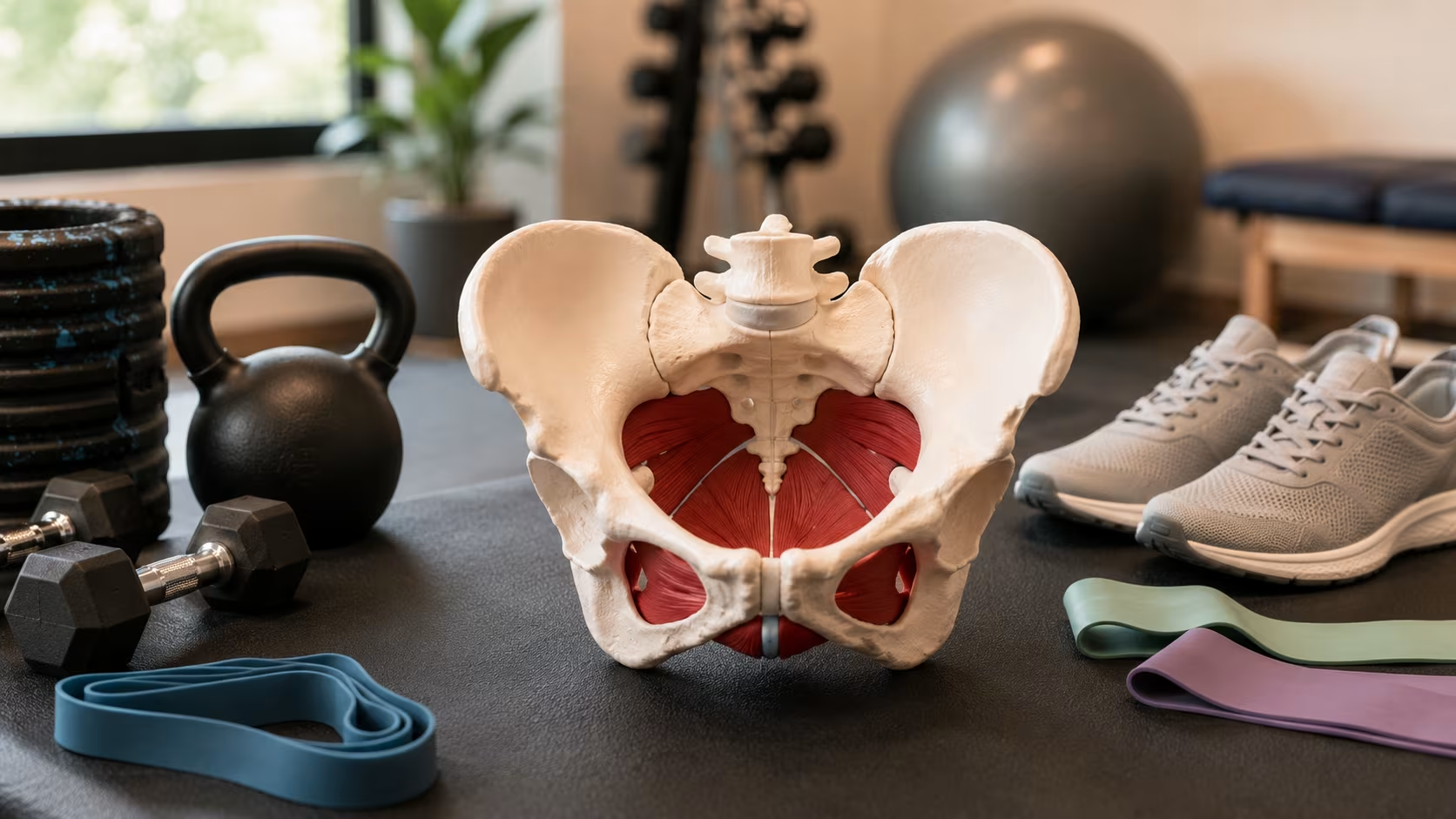
A Kegel is a voluntary contraction of the pelvic floor — the same muscles you'd use to stop urinating mid-stream. The original protocol involved sets of contractions held for several seconds, repeated several times daily.
Kegels work for:
Stress urinary incontinence in mostly-hypotonic floors
Multiple meta-analyses show pelvic floor muscle training (PFMT) is the first-line conservative treatment for stress incontinence, with effect sizes that match or exceed surgical interventions for many women. The work has to be done correctly and consistently — and the underlying issue has to be hypotonic in nature.
Postpartum recovery in the first few months
Specifically guided pelvic floor training in the first 6 months postpartum reduces persistent dysfunction at 12 months and beyond.
Some sexual dysfunction
Modest improvements in arousal and orgasm in women with hypotonic floors.
Mild pelvic organ prolapse
Reduces symptoms in stage 1–2 prolapse in many women.
Kegels don't help (or actively hurt) when:
The floor is hypertonic
Adding tension to a chronically tense muscle worsens the problem. This is one of the more common errors in self-prescribed Kegel practice.
The problem is coordination, not strength
Maximal contraction practice doesn't teach the floor when to engage during a clean and jerk.
Form is poor
Many people doing "Kegels" are actually contracting glutes, inner thighs, or breath-holding. Without feedback (specialist assessment, biofeedback, mirror, or someone qualified to check), the contraction may not be hitting the target muscles.
Done excessively without rest
Like any muscle, the pelvic floor needs recovery between training stimuli. Hundreds of Kegels daily can produce hypertonicity rather than strength.
A reasonable starting point if you're not sure: do not start a Kegel protocol on your own. Get one session with a pelvic floor physical therapist to confirm what your floor is actually doing and what it needs.
What Coordinated Training Looks Like
Pelvic floor training for athletes typically goes beyond isolated contractions. Several approaches with evidence:
Breath-coordinated contractions
Practice contracting the pelvic floor on exhale, relaxing on inhale. Build awareness of the coordinated movement before adding load.
Floor-aware bracing
During lifting, learn to brace the abdominal wall while simultaneously engaging — not over-engaging — the pelvic floor. The pelvic floor lifts slightly with the brace, not maximally contracts.
Reverse Kegels
Specifically practice relaxing and slightly bearing-down the pelvic floor (the action you'd use to start urinating, not stop). Critical for hypertonic floors and for everyone's overall coordination.
Dynamic engagement under load
Activate the pelvic floor at key moments in athletic movement — the bottom of a squat, the start of a deadlift pull, the impact phase of a jump. Specific to the sport.
Position changes
Practice pelvic floor work in standing, half-kneeling, squatting, and lying positions. Strength in one position doesn't fully transfer to others.
Awareness without contraction
Some practitioners need to learn what the relaxed state feels like before they can train coordinated activation. This requires reversing decades of habit for athletes who chronically grip.
The specific protocol varies by individual. Hypotonic presentations benefit from more strength and endurance work. Hypertonic presentations benefit from more release work, breath, and gentle coordination. Mixed presentations need both at different muscle layers.
Breath as the Foundation
The diaphragm and pelvic floor work as a coordinated pair. Training the breath is training half of pelvic floor function automatically.
A useful baseline practice:
360-degree breathing
Lying on your back, place hands on lower ribs and belly. Inhale and feel the breath expand the lower ribs laterally, the belly outward, and the lower back into the floor. Exhale and feel the abdomen draw inward, the ribs come together, the pelvic floor lift slightly. Practice 5 minutes daily for several weeks before adding loaded work.
Crocodile breathing
Lying face down with forehead on the back of the hands. Breathe into the lower back and sides. Feel the floor of the pelvis (in this position, what would be the top) expand and contract with breath. Builds awareness of the back-and-bottom expansion that chest-dominant breathers often miss.
90/90 breathing
Lying on back with feet on a wall or chair, knees and hips both bent 90 degrees. Inhale through the nose, expanding sides and back. Exhale through the mouth, drawing the abdomen inward. The position deactivates lumbar extensors and helps engage proper bracing patterns.
These aren't sexy. They're foundational. Athletes who skip them and go straight to "I'll fix my pelvic floor with squats" usually don't.
Specific Athletic Contexts
A few sport-specific considerations:
Running
Pelvic floor loaded by repeated impact. Heel-striking with poor coordination is harder on the floor than midfoot or forefoot striking with good coordination. Strength work for the gluteus medius and adductors complements pelvic floor work because of how the hips coordinate landing forces.
Heavy lifting
Bracing technique matters enormously. The standard powerlifting Valsalva can be appropriate at maximal loads with good coordination, but the same maneuver done without pelvic floor awareness — especially repeatedly at submaximal loads — can drive dysfunction. Learning to brace with active pelvic floor coordination rather than passive breath-holding is the skill.
Olympic lifting and CrossFit
Multiple high-pressure efforts in short succession. Recovery time between sets often inadequate for pelvic floor down-regulation. The combination of frequency, impact, and Valsalva makes these populations particularly affected.
Gymnastics and trampoline
Repeated max-effort jumps with limited control over landing forces. Highest documented rates of urinary incontinence in athletes.
Cycling
Saddle pressure on the perineum can contribute to hypertonicity. Saddle fit matters substantially. Numbness, tingling, or pain during or after rides warrant cycling-specific consultation alongside any pelvic floor work.
Rowing
Repeated catch-and-drive cycles with strong intra-abdominal pressure. Coordination work pays off.
Throwing sports
Asymmetric trunk demands can produce uneven pelvic floor patterns. Worth checking if symptoms develop.
Postpartum return to sport
A separate substantial topic. Most major sports medicine bodies recommend a graduated return-to-running protocol starting at 12–16 weeks postpartum, with pelvic floor assessment as part of the process. The "back to CrossFit at 6 weeks" approach commonly produces problems that take years to resolve.
When to See a Specialist
A pelvic floor physical therapist is the right resource for:
- Persistent leakage during training, despite trying basic interventions
- Pelvic pain or pressure during or after training
- Postpartum return to athletic activity, especially after 6 weeks
- Sensation of "falling out" or heaviness in the pelvis
- Urinary urgency, hesitancy, or frequency that doesn't match other explanations
- Painful intercourse, particularly in athletes with high training loads
- Chronic constipation or evacuation problems
- Symptoms persisting beyond 6–8 weeks of focused self-management
What the specialist provides that self-management can't:
- Internal assessment to characterize the actual functional pattern (essential for distinguishing hypotonic from hypertonic and identifying which muscle layers are affected)
- Biofeedback to confirm correct activation
- Specific exercise progression matched to your presentation
- Coordination work with breath and movement under their observation
- Manual release techniques for hypertonic presentations
- Coordination with sports medicine, OB-GYN, urology if needed
Out-of-pocket costs vary. In countries with national health systems, pelvic PT is often covered. In the US, many insurance plans cover it; some patients pay $100–200 per session out of pocket if not. For chronic issues, the investment pays back through resolved symptoms more than through any other single intervention.
Sources
Bø, K. (2004). Urinary incontinence, pelvic floor dysfunction, exercise and sport. Sports Medicine, 34(7), 451–464.
Yang, J., Cheng, J. W., Wagner, H., Lohman, E., Yang, S. H., Krishingner, G. A., et al. (2019). The effect of high impact crossfit exercises on stress urinary incontinence in physically active women. Neurourology and Urodynamics, 38(2), 749–756.
Goldstick, O., & Constantini, N. (2014). Urinary incontinence in physically active women and female athletes. British Journal of Sports Medicine, 48(4), 296–298.
Bø, K., & Sundgot-Borgen, J. (2010). Are former female elite athletes more likely to experience urinary incontinence later in life than non-athletes? Scandinavian Journal of Medicine & Science in Sports, 20(1), 100–104.
Dumoulin, C., Cacciari, L. P., & Hay-Smith, E. J. C. (2018). Pelvic floor muscle training versus no treatment, or inactive control treatments, for urinary incontinence in women. Cochrane Database of Systematic Reviews, (10), CD005654.
Hay-Smith, E. J. C., et al. (2011). Comparisons of approaches to pelvic floor muscle training for urinary incontinence in women. Cochrane Database of Systematic Reviews, (12), CD009508.
Bø, K., Artal, R., Barakat, R., et al. (2017). Exercise and pregnancy in recreational and elite athletes: 2016/17 evidence summary from the IOC expert group meeting. British Journal of Sports Medicine, 51(21), 1516–1525.
Frequently Asked Questions
Do all athletes need to do Kegels?
No. Some athletes — particularly those with hypertonic pelvic floors that are already too tense — get worse with Kegels. The pelvic floor needs the capacity to both contract and relax, and the right exercise depends on which side of that balance is dysfunctional. Self-prescribed Kegels for everyone is one of the worse generic recommendations in the fitness world.
Why do female athletes leak during running and lifting?
Exercise-induced urinary incontinence is common in female athletes — studies of CrossFit, gymnastics, running, and trampoline populations have reported prevalence ranging from 25% to over 80% depending on the sport. The cause is typically pelvic floor coordination failing under high intra-abdominal pressure, not necessarily weakness. Kegels alone often don't fix it; coordinated breath, core, and pelvic floor training does.
Can men have pelvic floor problems?
Yes. Hypertonic pelvic floor in men shows up as chronic pelvic pain, urinary urgency, and erectile dysfunction in some cases. Pelvic floor physical therapy for men is a real specialty. The condition is underrecognized because it's culturally framed as a women's issue.
Should I do Kegels during pregnancy?
Conditional yes for most pregnant women, but the work should include relaxation, not just contraction. Labor requires the pelvic floor to lengthen and release, which a Kegel-only practice doesn't train. Coordinated breath-pelvic-floor work is more useful than maximal contractions alone.
How do I find a pelvic floor physical therapist?
Look for credentials like CAPP-Pelvic, BCB-PMD, or pelvic-health certification. The American Physical Therapy Association maintains a directory of pelvic health-trained physical therapists. Many countries have similar professional bodies. In the US, you can typically self-refer; some insurance requires a physician referral.





0 Comments
Leave a comment
Your email won't be published. Required fields are marked with *.