

A 29-year-old recreational runner came to her physician eight months into a training cycle for her first marathon. Her pace had plateaued for twelve weeks despite increasing mileage, she felt exhausted by mile six of her long runs (previously manageable at mile nine), and she'd been assuming she was overtrained. Her hemoglobin was borderline normal at 11.8 g/dL, but her serum ferritin (a marker of stored iron) was 8 ng/mL, well below the 20–30 ng/mL threshold that many sports medicine clinicians use for athletes. She was iron-depleted, not yet anemic, and it was meaningfully impairing her performance.
Iron deficiency is the world's most prevalent nutritional deficiency, affecting an estimated 30–40% of women globally and disproportionately impacting women who are premenopausal (due to menstrual losses), pregnant, or physically active (due to foot-strike hemolysis, sweat iron losses, and elevated erythropoiesis demand from training). What's underappreciated is that the functional effects of iron depletion (reduced athletic performance, fatigue, impaired concentration) appear before hemoglobin drops into the anemic range.
This article is aimed at active women who suspect or want to understand iron deficiency. It covers the physiology, the dietary strategies, and what testing to request.
What the evidence shows
Iron's primary physiological role is in hemoglobin synthesis: hemoglobin is the protein in red blood cells that carries oxygen from the lungs to working tissues. This is the mechanism behind anemia's fatigue: less hemoglobin means less oxygen delivery per unit of blood volume, which directly reduces aerobic capacity. But iron also functions in myoglobin (the muscle's own oxygen-storage protein), in mitochondrial enzymes involved in ATP production, and in thyroid hormone synthesis, meaning iron's effects on energy and function extend beyond simple oxygen transport.
A 2014 systematic review in the British Journal of Nutrition examining iron supplementation in non-anemic, iron-depleted athletes found statistically significant improvements in VO₂max and submaximal performance markers with supplementation, compared to placebo. The effects were modest in magnitude but consistent across studies, suggesting that sub-anemic iron depletion is a real performance limiter, not just a biochemical curiosity.
Risk factors for iron depletion in active women include:
- Menstrual losses: The average menstrual cycle loses 30–40mg of iron per period; heavy menstrual bleeding can double or triple this.
- Foot-strike hemolysis: Repetitive ground impact (running, jump rope, high-impact aerobics) causes mechanical lysis of red blood cells in the foot capillaries, releasing hemoglobin that is excreted rather than recycled.
- Sweat losses: Small but cumulative, particularly in hot conditions or high-volume training.
- GI blood loss: Low-grade GI bleeding is more common in endurance athletes, possibly from reduced gut blood flow during intense exercise.
- Low dietary heme iron: Vegetarian and vegan diets provide non-heme iron exclusively, which is substantially less bioavailable than heme iron from animal sources.
Testing note
Ask your physician for both a complete blood count (CBC, which includes hemoglobin) AND serum ferritin. Hemoglobin alone misses early-stage iron depletion. Many clinicians use ferritin thresholds of 20–30 ng/mL for athletes, versus the laboratory standard of 10–12 ng/mL that defines clinical iron deficiency. Specify your athletic context when requesting testing.
How to apply it
Step 1: Identify your dietary heme iron sources
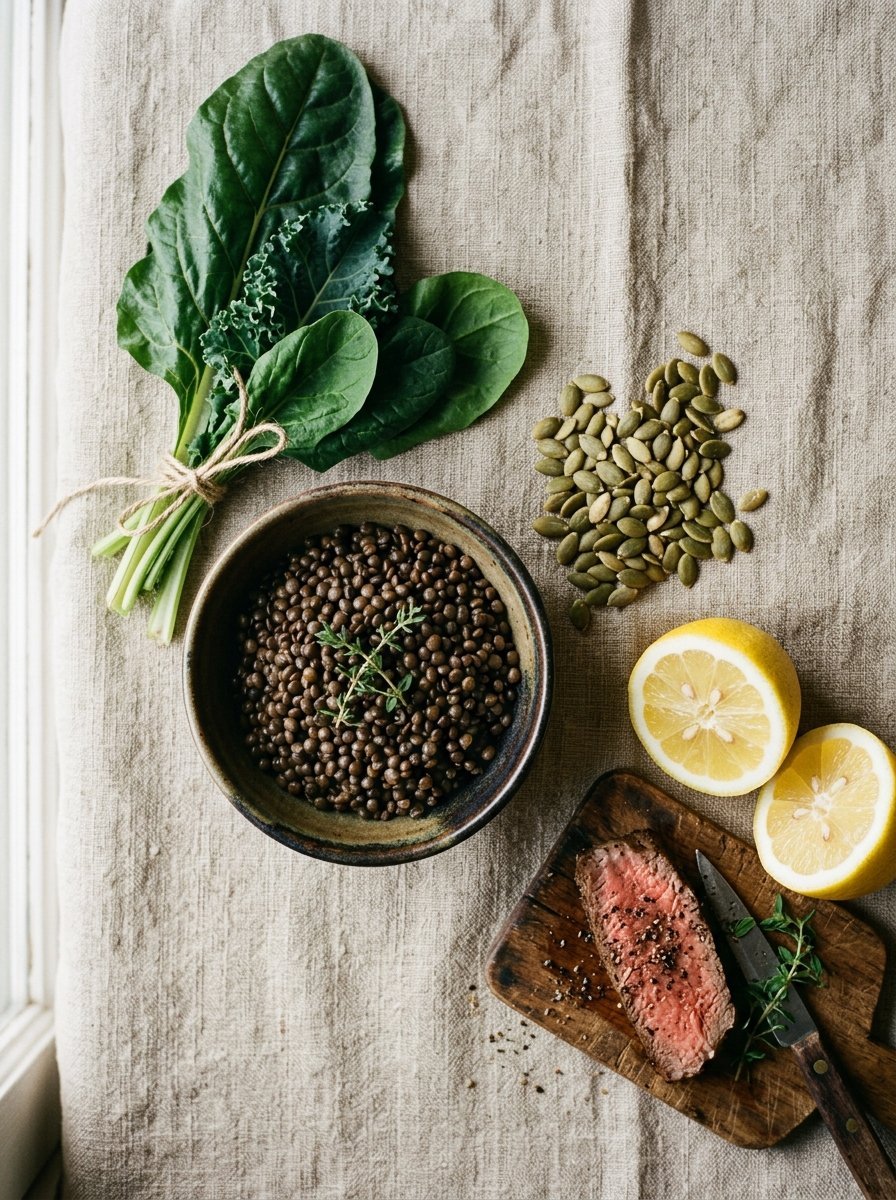
Heme iron (from animal sources) is absorbed at 15–35% efficiency. Non-heme iron (from plant sources) is absorbed at 2–20% efficiency. For women who eat meat, prioritizing lean red meat (beef, lamb) two to three times per week provides meaningful heme iron. Three ounces of beef provides roughly 2.5–3mg of heme iron, absorbed at much higher rates than the equivalent weight of lentils.
Step 2: Maximize non-heme iron absorption
If you eat mostly plant-based, non-heme iron absorption can be optimized:
- Pair iron-rich plant foods (lentils, tofu, dark leafy greens, pumpkin seeds, fortified cereals) with vitamin C-rich foods at the same meal. Vitamin C reduces ferric iron to ferrous iron, the more absorbable form. A squeeze of lemon juice over lentils, or pairing spinach with bell pepper, can increase non-heme iron absorption by 2–4×.
- High-iron plant foods to emphasize: cooked lentils (6.6mg per cup), firm tofu (3mg per half cup), pumpkin seeds (2.5mg per ounce), dark leafy greens (spinach: 6.4mg per cooked cup), fortified breakfast cereals (check label; some provide 18mg per serving).
Step 3: Reduce absorption inhibitors
Certain compounds compete with iron absorption:
- Calcium (from dairy or supplements) taken simultaneously with iron-rich meals reduces iron absorption by up to 60%. Consider timing calcium-rich foods and iron-rich foods apart.
- Phytates in whole grains and legumes bind non-heme iron. Soaking, sprouting, and cooking legumes reduces phytate content.
- Polyphenols in tea and coffee: drinking tea with a meal can reduce iron absorption by 50–70%. Delay coffee or tea by one hour after iron-rich meals when possible.
Step 4: Know when dietary intervention is insufficient
For ferritin below 15 ng/mL with symptomatic depletion, dietary iron alone rarely restores stores within a training cycle's timeframe. Oral iron supplementation (typically ferrous sulfate or ferrous gluconate, 18–65mg elemental iron every other day; research from Uppsala University suggests alternate-day dosing improves absorption vs. daily) is usually necessary. This requires medical guidance and monitoring.
Beginner version
Start by auditing your diet for the three main absorption inhibitors (coffee/tea timing, calcium timing, and absence of vitamin C at meals) and correct those before adding iron-rich foods.
Common mistakes
Self-supplementing iron without testing
Iron causes organ damage in excess: iron overload (hereditary hemochromatosis affects roughly 1 in 200 people of Northern European descent) can cause organ damage. Supplement only with confirmed deficiency and physician guidance.
Treating fatigue as iron deficiency without ruling out other causes
Thyroid dysfunction, low vitamin D, vitamin B12 deficiency, and sleep disorders all produce similar fatigue patterns. Iron should be one element of an appropriate workup, not an automatic first assumption.
Taking iron supplements with coffee, milk, or calcium
Many people take supplements with their morning coffee and wonder why stores don't improve. Iron supplements should be taken on an empty stomach (for maximum absorption) or with water and a vitamin C source, not simultaneously with absorption inhibitors.
Expecting quick recovery
Restoring ferritin from 8 to 30 ng/mL with oral supplementation typically takes three to four months. Athletic performance improvements follow ferritin recovery with a lag. Patience and re-testing at three months are important.
Ignoring heavy menstrual bleeding
If menstrual losses are consistently high, treating the underlying cause (fibroids, hormonal factors) may be as important as dietary management. A gynecologist can assess.
When to see a professional
Request testing from your physician if: fatigue is unresponsive to rest and sleep changes; athletic performance is declining without an obvious training explanation; you are vegetarian or vegan and experiencing these symptoms; you have heavy menstrual periods. Do not supplement iron without confirmed deficiency: excess iron is not harmless. If diagnosed with iron deficiency, a physician or registered dietitian should monitor your ferritin and hemoglobin at three months to assess response.
Frequently asked questions
What ferritin level should I aim for as an active woman?
Many sports medicine clinicians use a ferritin target of 30–50 ng/mL for athletic women: well above the standard laboratory threshold of 10–12 ng/mL that defines clinical deficiency. This higher target is based on performance data showing functional impairment at sub-anemic levels. It's not a universal clinical standard; discuss the specific target with your physician in the context of your symptoms, training demands, and menstrual history.
Is IV iron infusion better than oral supplements?
IV iron restores stores faster and bypasses absorption inhibitors entirely. It's generally reserved for severe depletion, oral intolerance, or situations requiring rapid recovery, such as important competition in two to three months. It's a medical procedure requiring physician administration and monitoring for infusion reactions, and is not a first-line treatment for mild to moderate deficiency.
Can I improve iron levels through diet alone?
For mild depletion with ferritin in the 15–25 ng/mL range, strategic dietary changes (pairing non-heme iron with vitamin C, reducing absorption inhibitors, adding heme iron sources) can meaningfully improve stores over three to six months. For ferritin below 15 ng/mL with symptoms, dietary intervention alone is generally too slow to restore stores in a useful timeframe, and supplementation alongside dietary changes is usually necessary.
Does cooking with cast iron actually increase the iron in food?
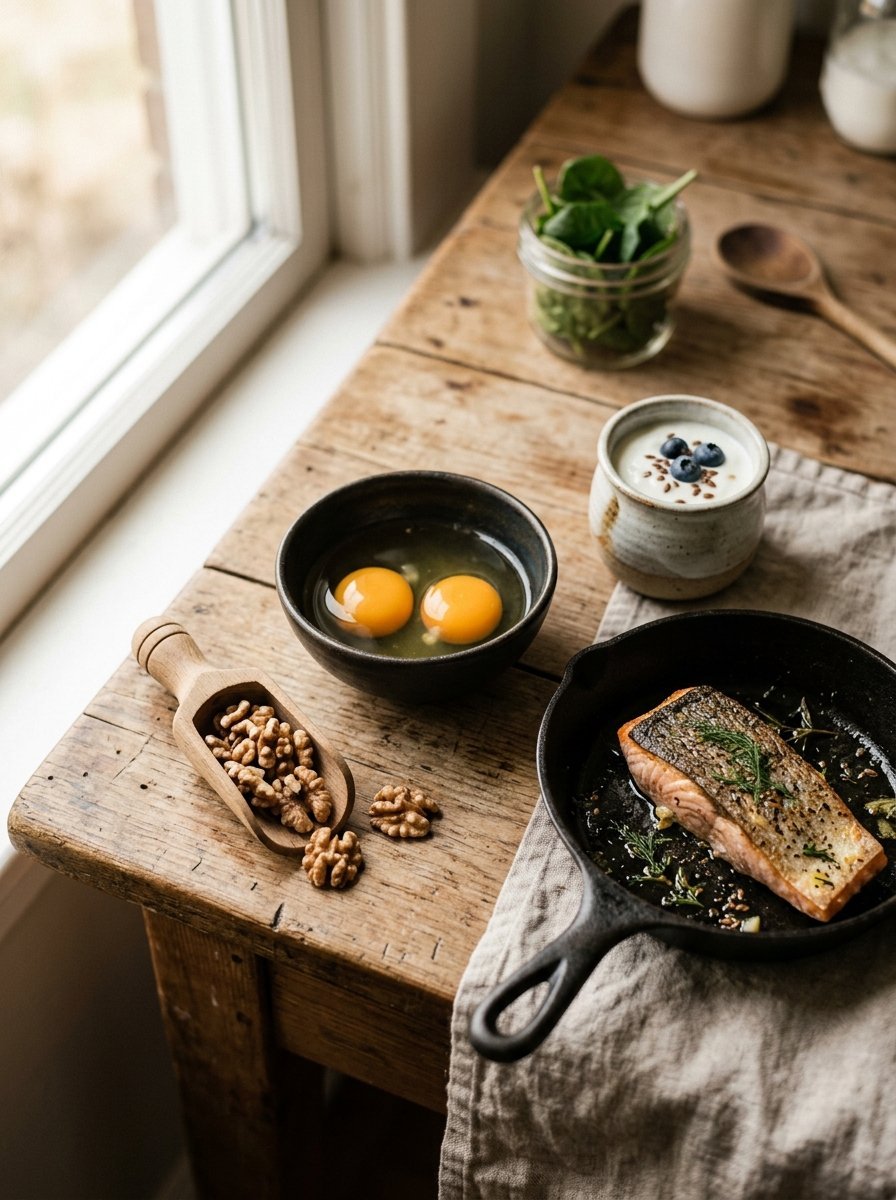
Yes, with a small but real effect. Cooking acidic foods (tomato sauce, citrus-based dishes, lemon rice) in seasoned cast iron leaches measurable amounts of iron into the food. A 1986 study in the Journal of the American Dietetic Association found three to five times greater iron content in some foods cooked this way. It's not a substitute for dietary optimization or supplementation but is a practical adjunct for cast iron cookware users.



0 Comments
Leave a comment
Your email won't be published. Required fields are marked with *.