


Most people read nutrition labels in the order that helps them least: focusing on calories first, then a few specific nutrients, often ignoring the part of the label that actually tells you what the food is. The right approach takes about 30 seconds per product once you know what you're looking for and reliably distinguishes the marketing claim from the actual food.
This is a guide to reading labels in the order that produces the most useful information.
Start With the Ingredient List
The ingredient list is the most useful part of any label. Ingredients are listed by weight from most to least. The first 3–5 ingredients tell you what the food actually is.
Look for:
- A short list with recognizable foods (oats, milk, salt) is generally a sign of less-processed product
- A long list with ingredients you've never heard of typically indicates ultra-processed product, regardless of marketing on the front
- Sugars high on the list mean the product is heavily sweetened, even if marketed as something else (yogurt, granola, breakfast cereal often fall in this category)
- Refined oils early on the list with no other dominant fat sources usually means industrial processing
A practical rule: if "sugar" or any sugar synonym appears in the first 3 ingredients, the product is fundamentally a sweet. This is true whether it's labeled as a granola bar, a sauce, a salad dressing, or a yogurt.
Serving Size: The Most-Manipulated Number
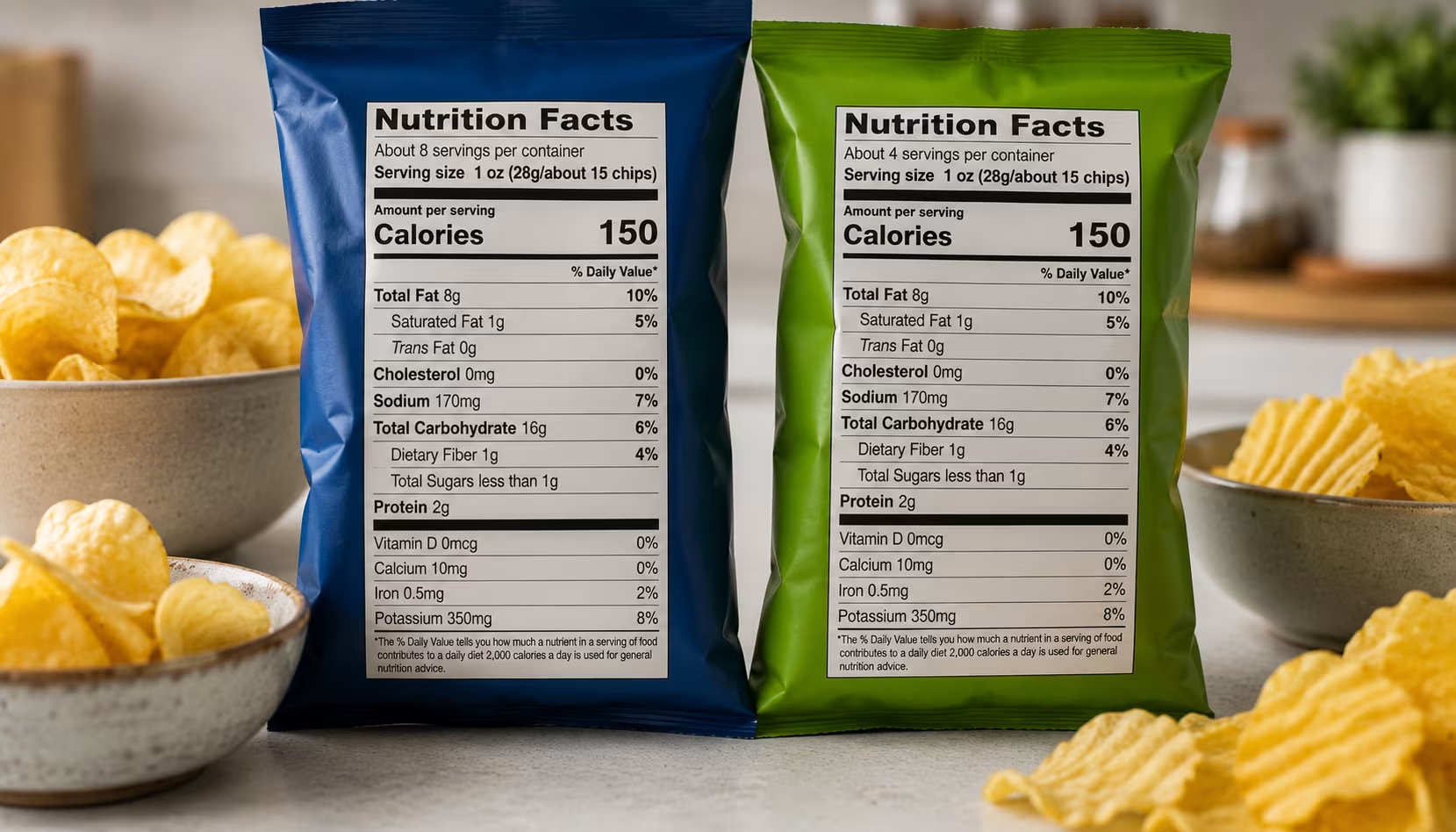
Look at the serving size before any nutrient number on the panel. Manufacturers manipulate serving size to make individual nutrients look smaller.
Common tricks:
- A small bag of chips listed as "2 servings" so the sodium and calorie numbers look reasonable
- A bottle of soda listed as "2.5 servings" when nobody drinks half a bottle
- A serving of granola listed as 30 grams when most adults eat 80–100 g
- A serving of nut butter listed as 1 tablespoon when most people use 2–3
After identifying the serving size, mentally adjust for how much you actually eat. The "10% daily value of sugar" claim on a snack with a 28-gram serving size becomes "25% daily value" if you eat a normal 70-gram portion.
Calories in Context
Total calories per serving matters less than the calorie density (calories per 100 g) for comparing similar products.
- Low density: under 100 kcal/100g (vegetables, fruit, broth, lean fish)
- Medium density: 100–250 kcal/100g (most cooked grains, dairy, lean meats)
- High density: 250–500 kcal/100g (bread, cheese, fatty cuts of meat, dried fruit)
- Very high density: 500+ kcal/100g (nuts, oils, butter, chocolate, chips)
For weight management, the dominant pattern is moderate average calorie density. Single very-high-density foods (olive oil, nuts) are fine in small amounts; the problem is when many high-density foods dominate the diet.
For athletes trying to gain weight, calorie density helps: adding olive oil, nut butter, and dried fruit raises calorie intake without overwhelming the gut.
Macronutrient Quality
Three macros, three questions:
Protein
is there a meaningful amount (5+ g per serving)? Some "protein bars" deliver only 8–10 g, less than a serving of yogurt.
Fat: what kind? Olive oil, nuts, fish oil, avocado are different from palm oil, partially hydrogenated oil, or excess saturated fat. Look at the type of fat dominating the product, not just the total.
Carbohydrate
look at the breakdown of fiber (more is generally better), added sugar (less is better), and complex carbs from whole grains (better than refined).
Ratio-wise, three rules of thumb:
- Protein per 100 g: under 5 = low-protein product. Over 10 = protein-relevant.
- Fiber per 100 g: under 3 = low-fiber. Over 6 = high-fiber.
- Added sugar per 100 g: over 10 = a sweet, regardless of marketing.
Added Sugar vs Total Sugar
The most important nutritional distinction the modern label makes, and the most commonly missed.
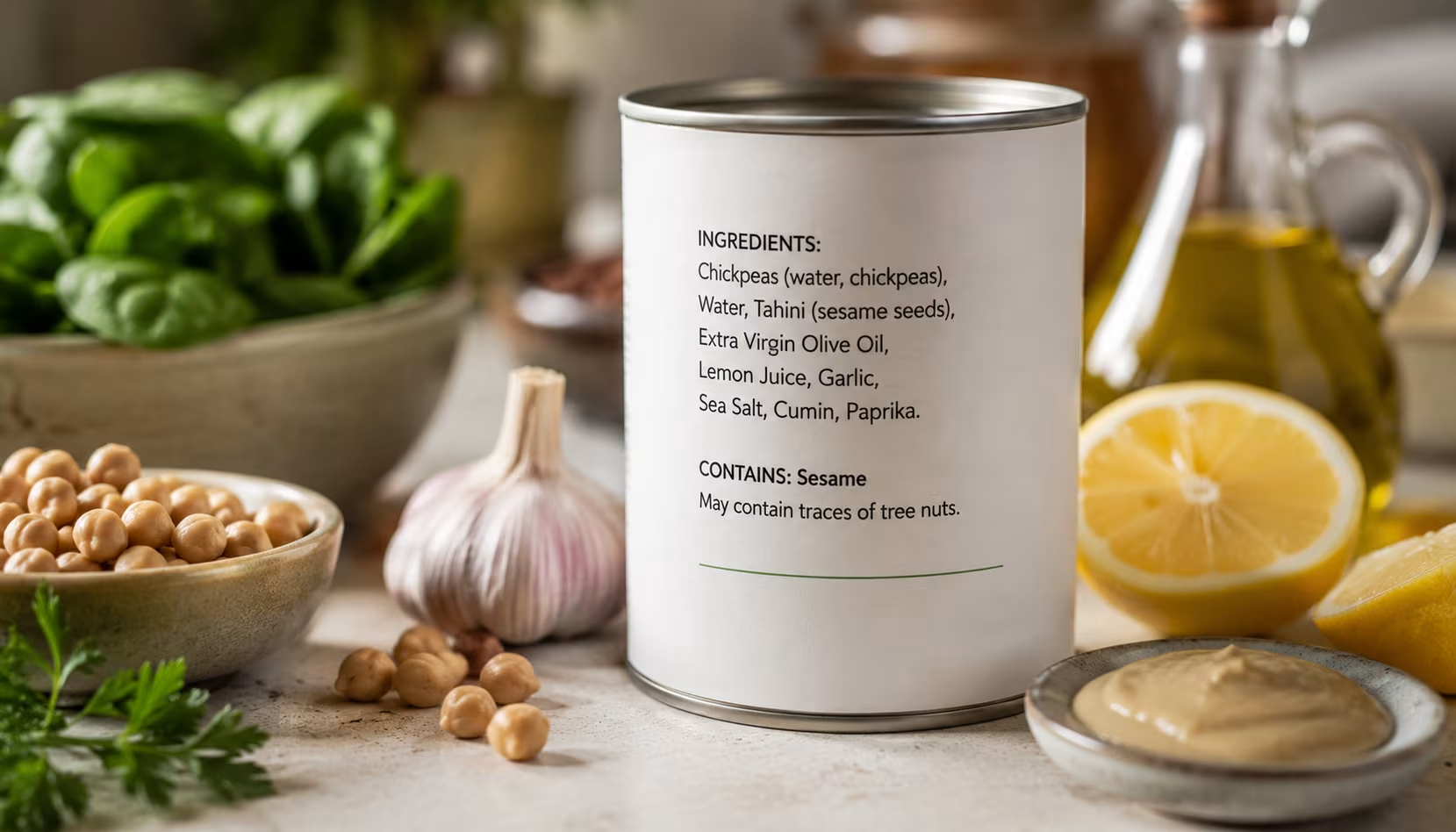
Total sugar includes naturally occurring sugars (milk lactose, fruit fructose) and added sugars. A plain yogurt has 10–12 g of natural milk sugar with no added sugar. A flavored yogurt may have 18–25 g total with 10–15 g added.
Added sugar is what was put in during processing or preparation. This is the relevant number for "limit added sugar" guidance.
US labels separate the two since 2020. EU and UK labels don't yet make the distinction on the panel, so you have to look at the ingredient list: if sugar (or a synonym) appears, there's added sugar regardless of how the front of the package is marketed.
Synonyms for added sugar:
- sucrose, glucose, dextrose, fructose, maltose, lactose (added)
- corn syrup, high-fructose corn syrup
- maple syrup, honey, agave nectar
- fruit juice concentrate, fruit puree concentrate
- maltodextrin (occasionally, depends on processing)
- brown rice syrup
- evaporated cane juice
- coconut sugar, date sugar
The "no high-fructose corn syrup" claim on a package usually means the same amount of sugar from a different source.
Sodium
The other commonly-elevated nutrient in packaged foods.
The 2,300 mg/day public health upper limit translates to roughly 575 mg per meal across 4 meals. Many packaged foods provide 600–1,000 mg per serving, before you add any other food.
Particularly high-sodium product categories:
- Canned soups (often 700–1,200 mg per serving)
- Frozen prepared meals (700–1,500 mg)
- Deli meat (400–600 mg per 60 g)
- Restaurant condiments (high but variable)
- Salty snacks (180–400 mg per small bag)
For active people losing sodium in sweat, the cap is more flexible. For sedentary adults with hypertension or kidney concerns, it's important.
Fiber
Often the most under-consumed macro in Western diets. Average intake is around 15 g/day; the recommended intake is 25–38 g.
Read fiber per serving and per 100 g
A "high-fiber" bread that delivers 1.5 g per slice is mediocre. 5+ g per serving is meaningful.
Sources that genuinely deliver fiber:
- Whole oats (4 g per dry 40 g)
- Beans and lentils (8–15 g per 1 cup cooked)
- Berries (4–8 g per cup)
- Whole vegetables (highly variable; cruciferous, leafy greens, root vegetables are dense sources)
- Whole-grain bread with intact grains visible
- Nuts and seeds (3–10 g per 30 g)
Sources marketed as fiber-rich that often disappoint:
- Mass-market "high-fiber" breakfast cereals (variable; check the label)
- Fiber-enriched yogurts (chicory root inulin is technically fiber but the amount is often modest)
- Granola bars (often less fiber than you'd expect; high in added sugar)
The Marketing Claims to Ignore
Most front-of-package claims tell you less than the ingredient list tells you.
"Made with whole grains"
May contain 10% whole grain and 90% refined flour.
"Natural"
Has no regulatory meaning in the US for most food categories.
"No added sugar"
Applies only to added sugar; the natural sugar content may still be very high (fruit juice, dried fruit).
"Low-fat"
The food may compensate with added sugar.
"Cholesterol-free"
Irrelevant for most foods (plant foods don't contain cholesterol anyway); also dietary cholesterol matters less for blood cholesterol than the marketing implies.
"Heart-healthy"
Varies by product; the American Heart Association certification requires specific criteria but not all "heart-healthy" claims are AHA-certified.
"Gluten-free"
Meaningful for people with celiac or non-celiac gluten sensitivity; otherwise neutral, since the gluten itself is not the relevant variable for most adults.
"Plant-based"
Says nothing about processing level; ultra-processed plant-based foods are still ultra-processed.
"Organic"
Meaningful for pesticide exposure and some environmental considerations; not a marker of nutritional superiority.
The honest answer: the back of the label is where the real information lives. The front is for marketing.
30-Second Label Read
A practical workflow for evaluating any packaged food:
Step 1 (5 seconds): Read the first 5 ingredients
What are they? Is sugar high on the list? Are the dominant ingredients whole foods or processed components?
Step 2 (5 seconds): Check serving size
Adjust your expectations for what you'll actually eat.
Step 3 (10 seconds): Scan the nutrition panel for the relevant numbers
Added sugar, fiber, sodium, protein, and the type of fat.
Step 4 (5 seconds): Compare to alternatives
If buying yogurt, is there a brand with lower added sugar at the same price? If buying bread, is there one with more fiber and fewer ingredients?
Step 5 (5 seconds): Decide
Is this food doing what it claims, or is the marketing better than the food?
Most processed packaged foods don't survive this 30-second check. The ones that do tend to be products with short ingredient lists, meaningful nutritional content, and honest marketing.
Frequently Asked Questions
What should I look at first on a nutrition label?
Start with the ingredient list, not the nutrition facts panel. Ingredients are listed by weight from most to least. The first 3–5 ingredients tell you what the food actually is. The nutrition panel matters second.
How do I tell if a food has added sugar?
In the US since 2020, the label now lists 'Added Sugars' separately from total sugars. In the EU and UK, you have to read the ingredient list: names to watch for include sugar, syrup, dextrose, fructose, maltodextrin, fruit juice concentrate, agave nectar, honey, brown rice syrup.
What does '% Daily Value' mean?
The percentage of the recommended daily intake of that nutrient based on a 2,000-calorie diet. 5% or less is 'low' for that nutrient; 20% or more is 'high.' For nutrients you want more of (fiber, protein, vitamins), aim for higher %DV. For nutrients to limit (saturated fat, sodium, added sugar), aim for lower.
Should I be worried about ingredients I can't pronounce?
Not as a blanket rule. Some unpronounceable ingredients are harmless additives (e.g., dipotassium phosphate as a stabilizer) and some 'natural' ingredients are highly processed. The more useful question is whether the food contains many added sugars, refined oils, and engineered flavors that crowd out actual nutrients.
What's the worst marketing claim on packaged foods?
"Made with whole grains" is among the most misleading. The product may contain a tiny fraction of whole grain alongside dominant refined flour. "No added sugar" on a fruit juice product simply means no extra sugar was added: the natural sugar content is already extremely high. "Heart-healthy" and "low-fat" similarly say very little about actual nutritional quality.





0 Comments
Leave a comment
Your email won't be published. Required fields are marked with *.