


Caffeine is the most-consumed psychoactive substance in the world and one of the few supplements with consistent, repeatable performance benefits across endurance, strength, and cognitive tasks. The dose-response is well-mapped. The timing question is where most people get it wrong, particularly the trade-off between mid-day caffeine for cognitive or training benefit and the evening sleep quality that determines next-day performance.
This is a guide to using caffeine deliberately rather than habitually.
How Caffeine Works
Caffeine's primary action is adenosine receptor antagonism. Adenosine is a neurotransmitter that accumulates throughout waking hours and binds to receptors that produce drowsiness, slow neural activity, and dilate blood vessels. Caffeine's chemical structure resembles adenosine closely enough that it occupies these receptors without activating them, blocking the drowsy signal without producing wakefulness directly.
Secondary actions include calcium release in muscle fibers (improving contractile force), glycogen-sparing during endurance work, catecholamine release (increased adrenaline and noradrenaline), and fatty acid mobilization. The combined effect produces measurably improved physical and cognitive performance.
The performance effect is mostly perceived as reduced effort rather than direct strength gain: the same wattage feels easier, the same set feels less demanding. This perception advantage translates to genuine performance improvements on the order of 2–5%.
The Half-Life Problem
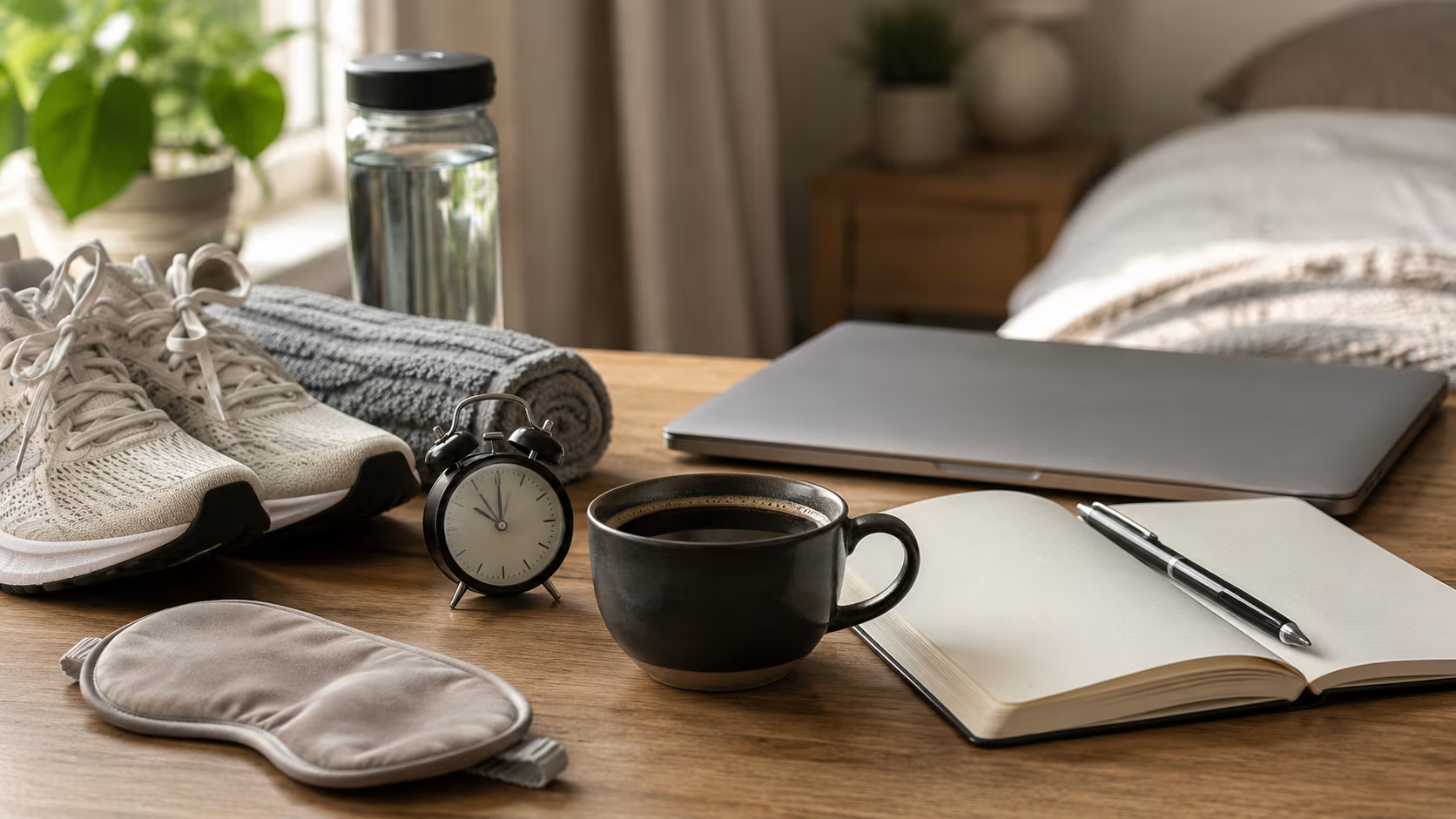
Caffeine's half-life (the time required for blood caffeine to drop by half) averages 5 hours in healthy adults. The variation is substantial:
- Fast metabolizers (about 50% of the population, AA variant of CYP1A2): 3–4 hours
- Slow metabolizers (rare AC and CC variants): 6–10 hours
- Pregnancy: half-life extends to 9–11 hours
- Oral contraceptives: can extend half-life to 7–9 hours
- Smokers: faster metabolism (3–4 hours)
- Some medications (cimetidine, fluvoxamine, ciprofloxacin): dramatically slow caffeine metabolism
For a typical 5-hour half-life, a 200 mg coffee:
- 0 hours: 200 mg
- 5 hours: 100 mg
- 10 hours: 50 mg
- 15 hours: 25 mg
The threshold for measurable effects on sleep is around 100 mg circulating, roughly 5 hours after a 200 mg dose for an average metabolizer.
Optimal Timing for Training
The well-documented optimal protocol:
- Dose: 3–6 mg per kg body weight (typically 200–400 mg for most adults)
- Timing: 30–45 minutes before the session
- Form: anything that delivers the dose (coffee, tea, caffeine pills, pre-workout drinks)
- Empty stomach not required: caffeine absorption is similar with or without food
For shorter sessions or lower-priority training, a smaller dose (2–3 mg/kg) provides most of the benefit with fewer side effects.
For early morning training, the timing question collapses: coffee 30 minutes before a 6 AM session is well clear of bedtime regardless of half-life. The complication is afternoon and evening training.
For an evening session at 6 PM, caffeine taken at 5:30 PM will still have substantial blood levels at 11 PM. If sleep matters, and it almost always matters for training adaptation, the afternoon training window may need to use a smaller dose, or skip caffeine, or accept the sleep trade-off.
Caffeine for Cognitive Work
Cognitive applications use lower doses than physical performance:
- Vigilance and reaction time: improvements documented at 75–200 mg
- Memory consolidation: modest benefits at 200 mg, possibly stronger benefit when caffeine is consumed after learning rather than before
- Sustained attention: consistent benefits across doses 100–400 mg
- Mood elevation: modest, more pronounced at lower doses
The dose-response curve for cognitive work is flatter than for physical work: 100 mg often provides most of the cognitive benefit available, with diminishing returns above 200 mg and increasing anxiety and jitter that can impair performance on demanding tasks.
A reasonable cognitive protocol:
- Morning: 1–2 cups of coffee on waking
- Mid-morning (around 10–11 AM, after the cortisol awakening response peak): a smaller second dose if needed
- Cutoff: 1–2 PM for most people; earlier for those with sleep difficulty
The "post-lunch coffee" common in many work cultures lands well after the cutoff for sleep protection.
The Sleep Trade-Off
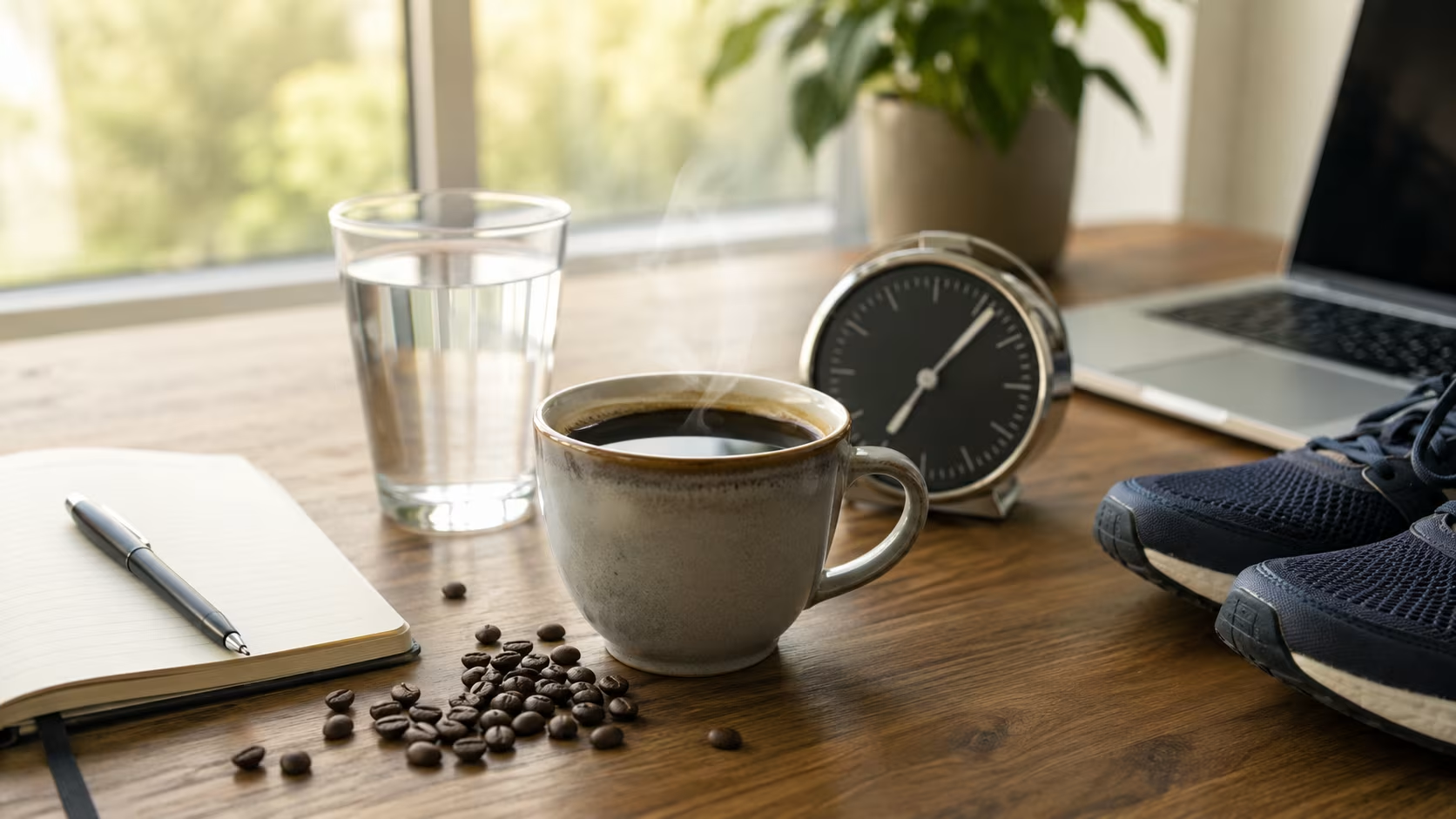
The largest study examining the caffeine-sleep relationship is Drake and colleagues' 2013 randomized double-blind crossover study, which gave subjects 400 mg of caffeine at 0 hours, 3 hours, or 6 hours before bedtime and measured sleep with polysomnography.
Findings:
- All three timings reduced total sleep time
- 6-hour-before-bed dose still reduced total sleep by approximately 1 hour
- Subjects often reported their sleep was fine when objectively it was significantly disrupted
The take-away: subjective experience of "I slept fine after that afternoon coffee" is unreliable. The architectural disruption (reduced slow-wave sleep, more fragmented REM) happens whether you notice it or not, and shows up as next-day cognitive and recovery deficits.
For training-focused individuals, the math usually favors cutting caffeine 8–10 hours before bed:
- Bedtime 10 PM → no caffeine after noon to 2 PM
- Bedtime 11 PM → no caffeine after 1 to 3 PM
- Bedtime midnight → no caffeine after 2 to 4 PM
Slow metabolizers should err earlier; fast metabolizers can sometimes push later. A few weeks of testing different cutoff times against subjective sleep quality and morning energy provides the personal calibration.
Tolerance and Cycling
Habitual caffeine use produces partial tolerance. Within 2–3 weeks of regular consumption, the cardiovascular effects (heart rate, blood pressure rise) attenuate substantially. The ergogenic and cognitive effects appear to be partially preserved even with regular use, but the marginal benefit is usually larger in less-tolerant individuals.
Three approaches to managing tolerance:
1. Steady moderate use
Drink your normal coffee daily, accept reduced absolute benefit, gain reliability.
2. Strategic abstinence
Abstain for 4–7 days before competition or important events to restore sensitivity.
3. Cycling protocols
Alternating high and low caffeine periods, e.g. 5 days on, 2 days off.
The trade-off: abstinence produces 24–48 hours of withdrawal (headache, fatigue, irritability) that can outweigh the eventual sensitivity benefit. Most non-elite athletes find steady moderate use is the practical choice.
For caffeine cycling to make sense, the planned high-stakes event has to justify several days of withdrawal misery. For weekend recreational racing, it usually doesn't.
Sources Compared
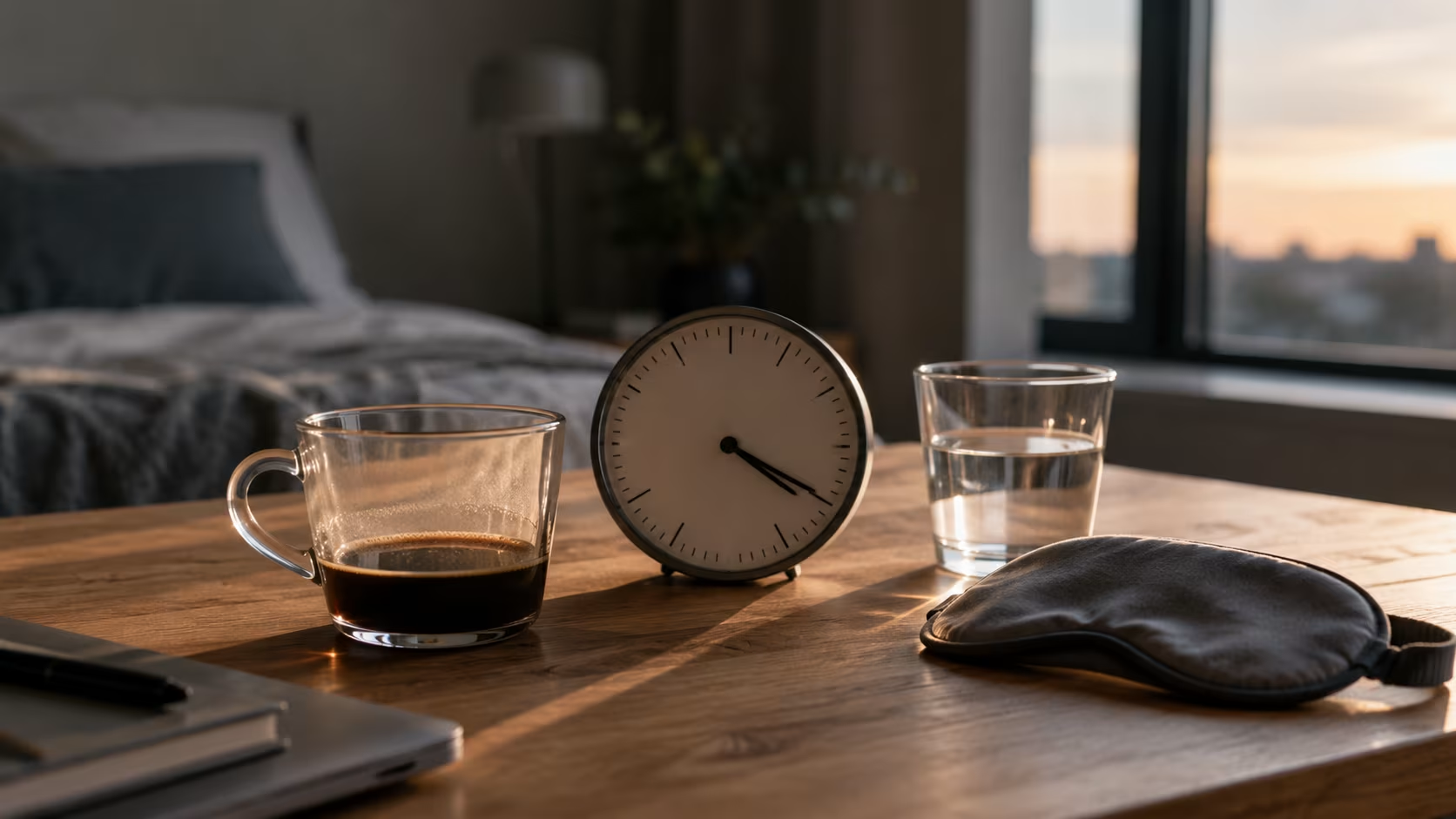
Approximate caffeine content of common sources:
- Espresso shot (30 ml): 60–80 mg
- Drip coffee (240 ml): 95–200 mg (varies widely by bean and brew)
- Cold brew (240 ml): 100–250 mg (typically higher concentration)
- Black tea (240 ml): 40–70 mg
- Green tea (240 ml): 25–45 mg
- Matcha (240 ml): 60–80 mg
- Energy drink (250 ml): 80–160 mg
- Pre-workout (1 scoop): 150–350 mg (highly variable)
- Caffeine pill: 100–200 mg per pill, accurate to dose
- Decaf coffee: 2–5 mg (not zero, but functionally minimal)
For accurate dosing, caffeine pills beat coffee: bag-to-bag variation in coffee caffeine content can range 2-fold. For sustained low-dose intake throughout the day, green tea is gentler than coffee and includes L-theanine, which moderates the stimulant edge.
When to Skip
A few situations where caffeine is more likely to harm than help:
- Within 8 hours of bedtime, especially for slow metabolizers
- During pregnancy beyond 200 mg/day: most obstetric guidelines recommend this limit
- Active anxiety disorder: caffeine can amplify physiological anxiety symptoms
- Cardiac arrhythmias including frequent ectopic beats: discuss with cardiologist
- GERD or significant reflux: coffee specifically is a common trigger
- Pre-event tapering when sleep optimization matters more than acute caffeine boost
- In combination with high-stim pre-workout supplements: easy to accidentally exceed safe doses
The single most common mistake: adding caffeine to fix poor sleep that caffeine is partially causing. This is a self-perpetuating trap. Lowering or earlier-cutting caffeine for 2 weeks is the test: if sleep improves and morning energy improves, the caffeine was net negative.
Frequently Asked Questions
What is the half-life of caffeine?
Around 5 hours for most adults, with significant individual variation. Slow metabolizers (a fraction of the population with specific CYP1A2 gene variants) clear caffeine in 8+ hours; fast metabolizers in 3 hours. A 200 mg coffee at 2 PM still leaves 100 mg circulating at 7 PM in a typical metabolizer.
When should I cut off caffeine to protect sleep?
10 hours before bedtime is the conservative cutoff that protects sleep for most people. 6–8 hours is the popular recommendation that does sometimes affect sleep architecture even in people who fall asleep fine. The closer to bedtime, the more likely caffeine is to reduce slow-wave sleep and REM.
How much caffeine before training is optimal?
3–6 mg per kg of body weight, taken 30–45 minutes before the session. For a 70 kg person that's 210–420 mg, roughly 2–4 cups of coffee. The ergogenic effect plateaus above 6 mg/kg with no additional benefit and increasing side effects.
Does caffeine tolerance reduce performance benefits?
Partially. Habitual caffeine users develop tolerance to the cardiovascular effects within a few weeks but the performance benefit appears to be partially preserved. Brief abstinence (2–4 days) before an important event can restore some sensitivity if you don't mind the withdrawal.
Is caffeine before bed worse than caffeine in the afternoon?
Yes, but afternoon caffeine still measurably affects sleep in most people. A 2013 study by Drake and colleagues found that 400 mg of caffeine taken 6 hours before bed reduced total sleep time by an hour and disturbed sleep architecture even when subjects reported feeling fine. Most people underestimate this effect.
Sources and verification
Check current details with these primary or subject-authority sources before acting on the information.




0 Comments
Leave a comment
Your email won't be published. Required fields are marked with *.