

The average American adult consumes approximately 16 grams of fiber per day. The Institute of Medicine recommends 25 grams daily for women and 38 grams for men. That gap (9–22 grams per day, depending on sex) is one of the most consistent shortfalls in the American diet, and it matters considerably more than most people appreciate.
Fiber isn't glamorous. It doesn't have the marketing support of omega-3s or probiotics or vitamin D. It doesn't have a supplement form that gets premium shelf placement. It's found in foods people already know they should eat: vegetables, whole grains, legumes, fruit. The prescription is so obvious that it gets dismissed. That's a mistake, because the effect sizes in the research on fiber intake are among the largest in nutritional epidemiology, larger than most individual supplements, comparable to some medications for specific endpoints.
This article is not about eating fiber as a vague virtue. It's about understanding what the evidence actually shows, separating the two types of fiber and their distinct mechanisms, and giving you a concrete framework for adding 10–15 grams per day in a way that doesn't require dismantling your eating habits entirely.
What the evidence shows
Fiber comes in two primary forms, and their mechanisms are distinct enough to matter.
Soluble fiber dissolves in water to form a viscous gel in the digestive tract. This gel slows gastric emptying, which attenuates the post-meal rise in blood glucose and extends satiety. It also binds bile acids in the small intestine, interfering with cholesterol reabsorption and reducing circulating LDL, the proposed mechanism behind fiber's cardiovascular benefit. Major sources include oats (beta-glucan), psyllium husk, legumes, apples, and flaxseed.
Insoluble fiber doesn't dissolve and largely passes through the gut intact, adding bulk to stool and accelerating transit time. It's associated with reduced colorectal cancer risk and improved regularity. Major sources include wheat bran, vegetable skins, and most whole grains.
A landmark 2019 meta-analysis in The Lancet (a commissioned review synthesizing data from 185 prospective studies and 58 clinical trials) found a dose-response relationship between dietary fiber intake and cardiovascular disease mortality, stroke, type 2 diabetes, and colorectal cancer. People in the highest fiber intake categories had 15–30% lower incidence of these outcomes compared to those in the lowest categories. The evidence was strongest for intakes in the 25–29g/day range, with some additional but attenuating benefit above that.
Fiber's effect on glycemic control is well-characterized in shorter-term intervention trials. A 2020 systematic review in Nutrition Reviews found that soluble fiber supplementation consistently reduced both fasting glucose and HbA1c in people with type 2 diabetes, with effects comparable to (though not as large as) first-line medications like metformin for some individuals. These trials are generally limited to 8–16 weeks and use isolated fiber sources, which may not fully represent dietary fiber from whole foods.
The microbiome connection is an active research area. Certain fibers (particularly those classified as prebiotics, such as inulin and fructooligosaccharides) selectively feed beneficial bacteria in the colon. Fermentation of these fibers produces short-chain fatty acids (SCFAs), including butyrate, which is the primary energy source for colonocytes (the cells lining the colon) and has demonstrated anti-inflammatory properties in cell studies. Whether probiotic supplementation achieves what dietary fiber does is less clear: the evidence for isolated prebiotic supplements is thinner than for whole-food fiber sources.
How to apply it
The goal for most adults is 25–38g daily. If you're currently averaging around 16g, reaching that target requires adding roughly 10–15 grams per day. This is doable without exotic foods.
Step 1: Find your current baseline
Track your food for two to three days using a free app (Cronometer is good for fiber data specifically; it shows both soluble and insoluble fiber, not just total). Most people are surprised by how low they actually come in.
Step 2: Add, don't subtract
The most sustainable approach is addition rather than substitution. Pick one meal per day where you'll consistently add a high-fiber element:
- Breakfast: Add ½ cup of rolled oats (4g) or 1 tablespoon of ground flaxseed (2g) to whatever you're already eating.
- Lunch: Add ½ cup of canned black beans to a salad or soup (7.5g).
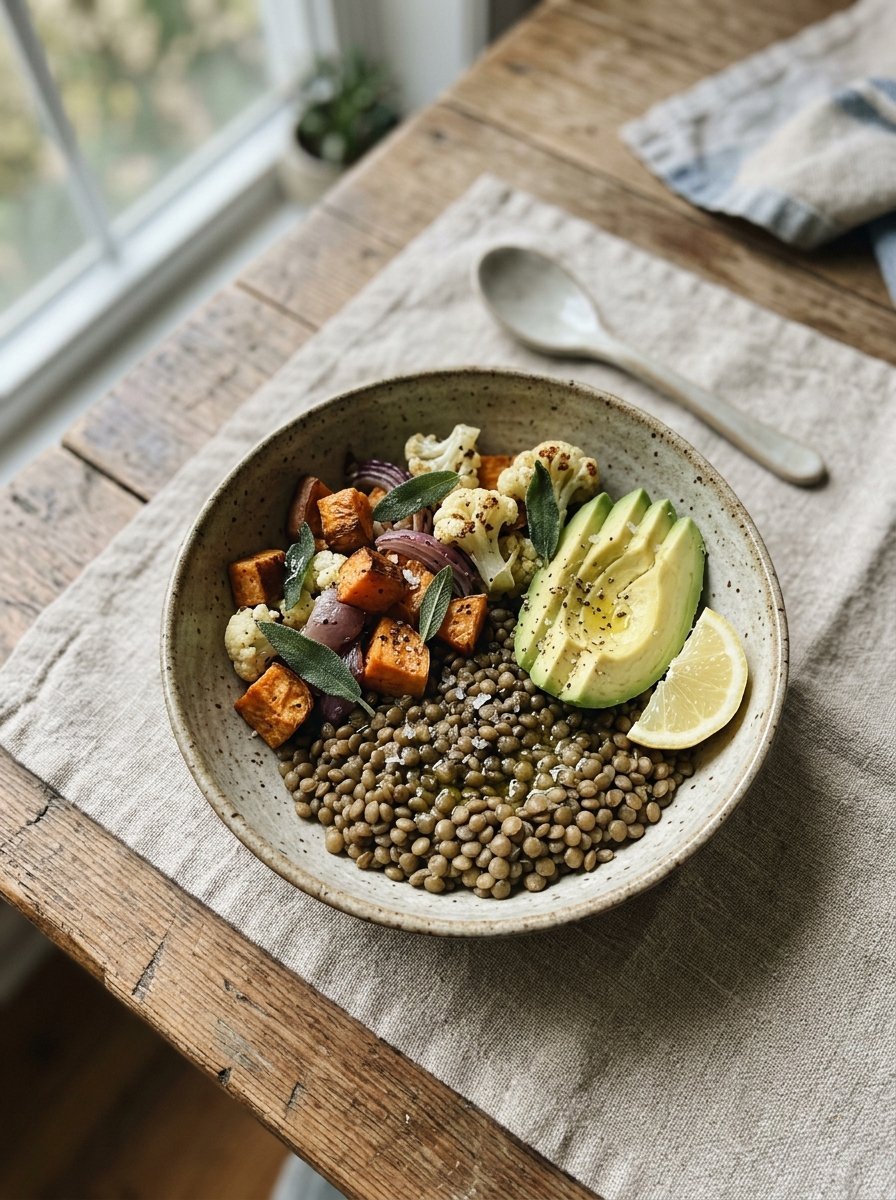
- Dinner: Replace white rice with lentils twice per week (1 cup cooked lentils: 16g).
Step 3: Make the easy swaps
Where substitution is low-friction, do it: choose whole grain bread over white (typically +2–3g per slice), choose apples over juice (+4g per apple vs. 0g for juice), choose almonds over crackers as a snack (+3.5g per ounce of almonds).
Step 4: Increase gradually
This is important. Adding 15–20 grams of fiber suddenly causes bloating, gas, and sometimes significant GI discomfort: your gut microbiome needs time to adapt. A reasonable pace is adding roughly 3–5 grams per week until you reach target. Take two to four weeks.
Beginner target
Aim for 20g/day for the first month. See how your digestion adapts. Many people find this already reduces their afternoon energy slumps and improves satiety between meals noticeably.

Progression
Once 20g is comfortable and consistent, raise the target to 25–30g. At this point, you're likely eating enough legumes, vegetables, and whole grains that the framework becomes intuitive rather than tracked.
Water intake note
Fiber, particularly soluble fiber, requires adequate water to function well. Increasing fiber without increasing water can worsen constipation rather than improve it. Aim for at least 8 cups (2 liters) of water daily when actively increasing fiber intake.
Common mistakes
Relying on fiber supplements as a primary strategy
Psyllium husk supplements are effective for LDL reduction and glycemic control, but they don't deliver the full range of fiber types, phytonutrients, and synergistic food components that whole foods provide. Supplements are a reasonable adjunct for people with genuinely low tolerance for high-fiber foods, not a replacement.
Counting fruit juice toward fruit intake
Juice removes essentially all fiber from the fruit. A glass of orange juice has 0.5g of fiber; a whole orange has 3g. If you're trying to hit a fiber target, juice doesn't count meaningfully.
Adding fiber too quickly
The GI discomfort of sudden high-fiber intake is the most common reason people backslide on dietary changes. The microbiome genuinely needs time to upregulate the enzymes that ferment fiber. Slow down.
Underestimating legumes
A cup of cooked lentils has 16g of fiber. A cup of black beans has 15g. No food group delivers more fiber per calorie. People who exclude legumes from their diet because of bloating are often experiencing the adaptable, temporary effect of an unadapted microbiome, not an intrinsic intolerance.
Ignoring the skin
Much of a vegetable's fiber is in the skin. Peeling cucumbers, zucchini, sweet potatoes, and apples removes a meaningful fraction of their fiber content. Leave the skin on where safe to eat.
When to see a professional
Consult your physician or gastroenterologist before dramatically increasing fiber if you have: irritable bowel syndrome (IBS) where high-FODMAP foods can trigger symptoms (a registered dietitian can help identify which fibers are well-tolerated); Crohn's disease or ulcerative colitis during active flares, where high-residue diets may be contraindicated; or known strictures of the bowel, where bulk-forming fiber can cause obstruction. For people with type 2 diabetes on medication, significant dietary changes can affect blood glucose management. Notify your care team.
Frequently asked questions
Do I need fiber at every meal, or can I eat it all at once?
Total daily intake is the dominant variable for cardiovascular and metabolic outcomes in the epidemiological literature. That said, eating soluble fiber with each meal provides the best glycemic benefit: it blunts each meal's blood glucose rise. Getting fiber at two of three meals is substantially better than none, and more realistic than engineering every eating occasion. Start by anchoring one meal to a high-fiber food and expand from there.
Are fiber supplements as effective as eating high-fiber foods?
For specific endpoints (LDL reduction and stool regularity), psyllium husk supplements are well-studied and effective. They don't replicate the full benefit of varied dietary fiber types, which feed a wider range of gut bacteria and produce a broader mix of short-chain fatty acids. They also don't carry the vitamins, minerals, and phytonutrients that whole food fiber sources provide. Supplements work as an adjunct for people with genuine tolerance issues, not as a replacement.
I have IBS. Is higher fiber going to make things worse?
It depends on fiber type and your IBS pattern. Insoluble fiber (wheat bran, vegetable skins) can worsen diarrhea-predominant IBS. Soluble fiber (oats, psyllium, cooked carrots, squash) is generally better tolerated. A low-FODMAP dietary approach, which restricts specific fermentable fibers rather than all fiber, is the most evidence-backed nutritional intervention for IBS and should ideally be conducted with a registered dietitian's guidance.
I'm eating low-carb. Where do I get fiber?
Very-low-carbohydrate and ketogenic diets sharply limit the primary fiber sources. The best fiber options within these dietary patterns are non-starchy vegetables (broccoli, cauliflower, leafy greens, Brussels sprouts), avocado (about 10g fiber in a whole avocado), nuts and seeds (particularly flaxseed, chia, almonds), and small amounts of berries. Most ketogenic dieters fall significantly below fiber recommendations: tracking specifically for fiber is worthwhile.
Sources and verification
Check current details with these primary or subject-authority sources before acting on the information.





0 Comments
Leave a comment
Your email won't be published. Required fields are marked with *.