


The pull-up is one of the few bodyweight exercises that scales directly with your ability to move your own body through space. There's no machine assist, no bar to add weight to (until you're already strong enough), no shortcut. The progression from zero pull-ups to multiple strict reps is a mix of building the right musculature, the right neural pattern, and the willingness to accept slow visible progress over weeks.
This is a practical 8–16 week progression for adults starting from zero strict pull-ups, with the substitutions that actually transfer and the ones that don't.
Why Pull-Ups Are Hard
The pull-up requires moving your full bodyweight vertically through about 60 cm of range against gravity, primarily using the latissimus dorsi, biceps, and a stable scapular and core complex. The challenge scales with bodyweight: a 60 kg lifter and a 90 kg lifter doing the same pull-up are working at very different relative loads.
Most beginners can't do a strict pull-up because they lack one or more of:
- Sufficient lat and upper back strength to initiate the pull
- Adequate biceps strength to sustain the elbow flexion under full bodyweight load
- Scapular control to maintain a stable shoulder position
- Grip endurance to hang and pull simultaneously
- Core stability to prevent excessive arching or kicking
The training has to address all of these. Programs that focus only on one (usually grip or biceps) produce slow progress.
The Movement Components
A clean pull-up has three phases:
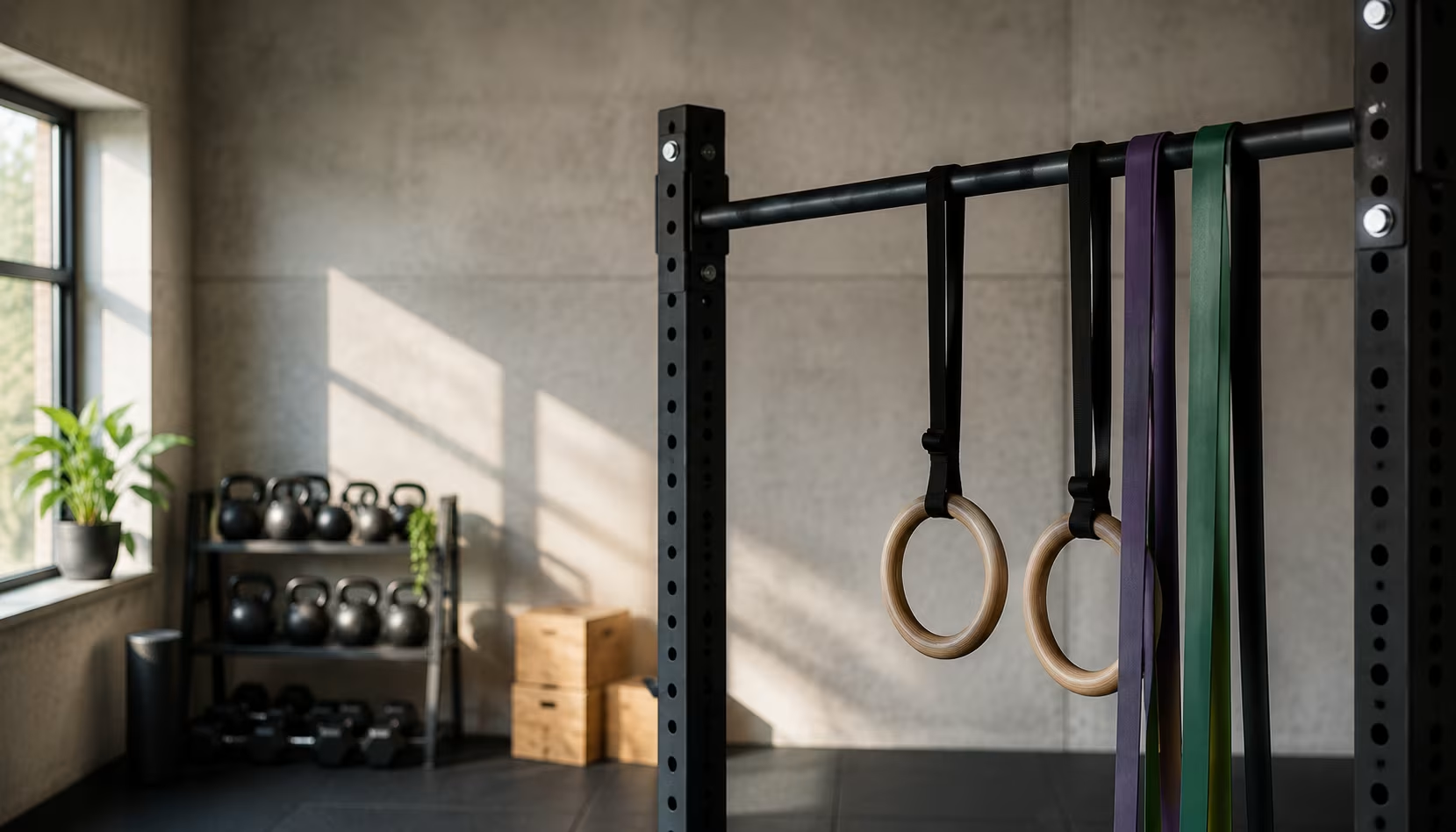
1. Hang and initiate (scapular pull): from a dead hang with arms straight, depress and retract the scapulae (pull the shoulder blades down and together) to initiate the rep. The body rises slightly without elbow flexion at this point.
2. Pull (elbow flexion + lat contraction): drive the elbows down and back, bringing the chin over the bar. Lats and biceps do the work; the trunk stays braced.
3. Lower (eccentric): descend under control, reversing the pull, until arms are fully extended and the scapulae upwardly rotated again. This is where the strength building happens for many beginners.
Many beginners skip phase 1 entirely: they start the pull from a dead hang with shoulders shrugged up, which is a weaker starting position and reinforces a poor pattern.
Why Bands Often Fail
The strength curve of a pull-up is hardest at the start (from full hang) and gets easier near the top. Bands assist most when they're stretched (at the bottom) and least when they're compressed (at the top). This is the opposite of what you need.
The result: someone training pull-ups with bands gets used to having a lot of help at the hardest part of the rep and very little at the easiest part. When they remove the band, the entry into the rep, the hardest part, is the part they've been practicing least.
Bands aren't useless. They're useful for:
- Total volume building when other variations are exhausted
- Specific top-half holds that aren't getting enough stimulus elsewhere
- Endurance work at higher rep ranges
But they should not be the primary tool for building a first pull-up.
The Foundation Exercises
The exercises that actually build a first pull-up:
1. Active dead hangs: hang from the bar with active shoulders (depressed, not shrugged). Build to 30+ seconds. Develops grip endurance and scapular control.
2. Scapular pull-ups: from a dead hang, raise the body slightly using only scapular depression and retraction (no elbow bend). Reinforces the start position.
3. Australian (inverted) rows: bar at hip height, body horizontal, pull chest to bar. Builds the same musculature as pull-ups but at a manageable bodyweight percentage. Adjust difficulty with foot position.
4. Negative pull-ups: start at the top (jump or step up) and lower as slowly as possible. Builds eccentric strength, which is typically much higher than concentric strength. The single most-effective exercise for building a first pull-up for most people.
5. Lat pulldowns: useful for total volume and for anyone too heavy for adequate Australian row volume. Use both wide and close grip variations.
6. Hanging knee raises and hollow body holds: for the core stability needed.
7. Chin-up holds (isometric): at the top, in the middle, with feet on a bench for assistance if needed. Build to 20–30 second holds.
The 8-Week Beginner Progression
A practical plan from zero pull-ups, assuming 4 training sessions per week.
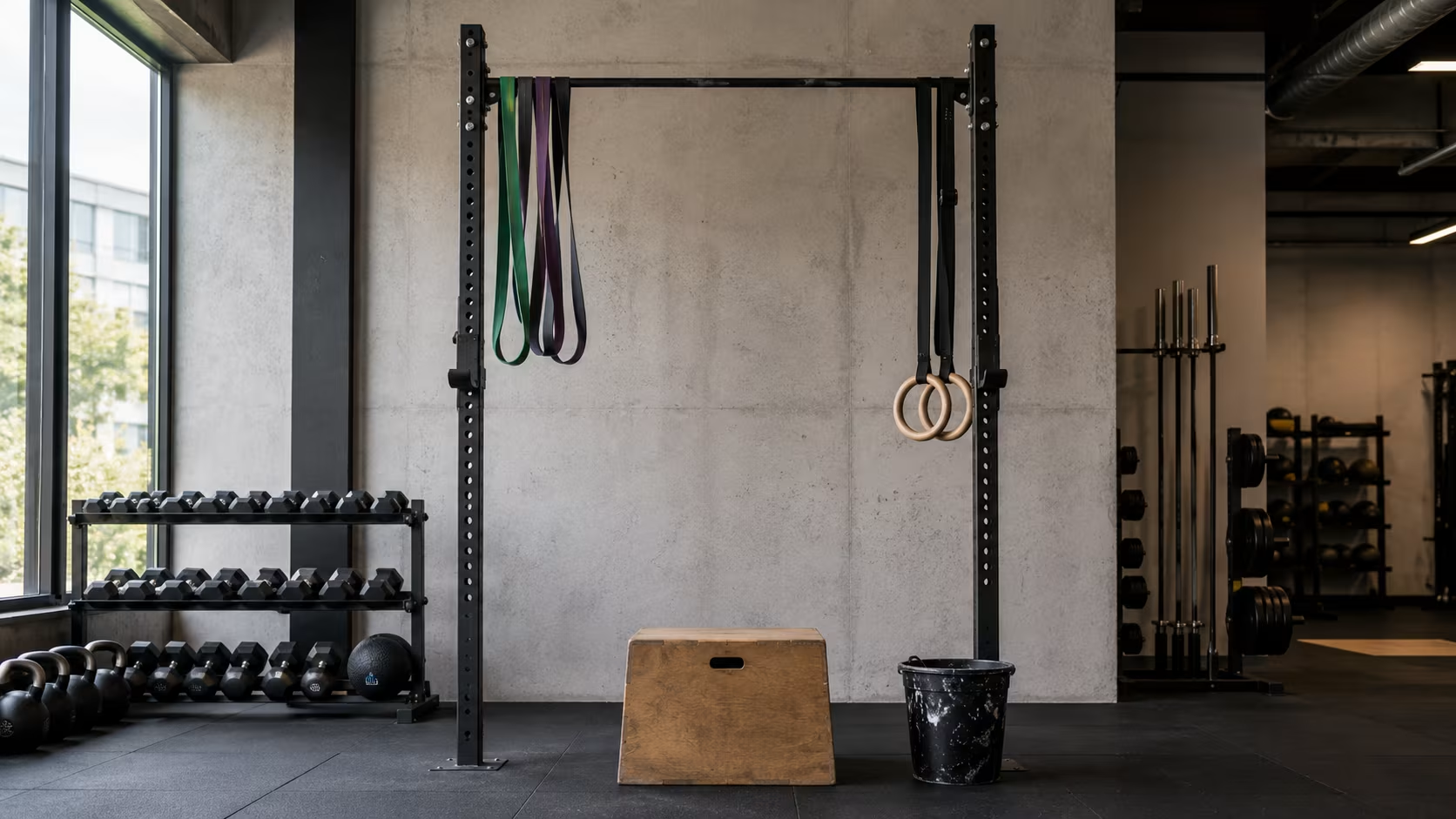
Week 1–2: Foundation
3 sessions per week, each containing:
- Active dead hangs: 3 sets, build from 10 to 20 seconds
- Scapular pull-ups: 3 sets of 5
- Australian rows: 4 sets of 8 (adjust foot position so 8 reps is challenging)
- Lat pulldowns: 3 sets of 10 at moderate weight
Week 3–4: Adding negatives
4 sessions per week, alternating:
Session A (Mon, Thu):
- Active dead hangs: 3 sets of 25 seconds
- Negative pull-ups: 4 sets of 3 (lower 5+ seconds each rep)
- Australian rows: 4 sets of 10
- Hanging knee raises: 3 sets of 8
Session B (Tue, Fri):
- Lat pulldowns: 4 sets of 10
- Chin-up holds at top (jump up, hold): 3 sets, 10 seconds
- Australian rows: 3 sets of 12 (harder foot position)
- Hollow body holds: 3 sets of 20 seconds
Week 5–6: Specific pull-up work
Same 4 sessions:
Session A:
- Negatives: 5 sets of 3 (slow as possible, 8+ seconds each)
- Active hang to scapular pull-up to chin-up hold (top position): 3 sets of 3 reps
- Australian rows with feet elevated: 4 sets of 8
- Lat pulldowns: 3 sets of 8 heavier
Session B:
- Half pull-ups (from top down to 90-degree elbow, then back up): 4 sets of 3 with band assist if needed, no band if possible
- Chin-up partials at top: 4 sets of 5 small range of motion at top
- Australian rows: 3 sets of 10
- Core: hollow body and hanging knee raises
Week 7–8: Testing and refinement
By week 7, attempt a strict pull-up at the start of each session before any other work. If it happens, congratulations.
If not, continue Week 5–6 protocol with one addition: grease-the-groove practice. 1–2 attempted pull-ups (or scapular pulls + chin-up hold) every time you walk past a bar throughout the day, several days a week. Builds neural efficiency without significant fatigue.
For most people following the plan, the first strict pull-up arrives between weeks 6 and 12.
Programming Frequency and Volume
Pull-up progression is one of the few areas where high frequency outperforms high volume per session. The specific neural pattern benefits from frequent practice, even at low intensity per session.
Optimal training pattern for building a first pull-up:
- 4–5 dedicated training sessions per week
- 2–3 grease-the-groove practice sessions per week
- Each session keeps total pull-up volume well below failure
- Recovery days included (1–2 per week)
Once you have a first strict pull-up, frequency can drop to 2–3 sessions per week with higher volume per session.
Excessive volume problem: trying to do too many pull-up attempts when you have only 1–2 in you produces poor reps, frustration, and excessive fatigue. Better to do several short sessions with quality reps than one long session with grinding reps.
Once You Have One: The Next Phase
The progression doesn't end at one. The next milestones:
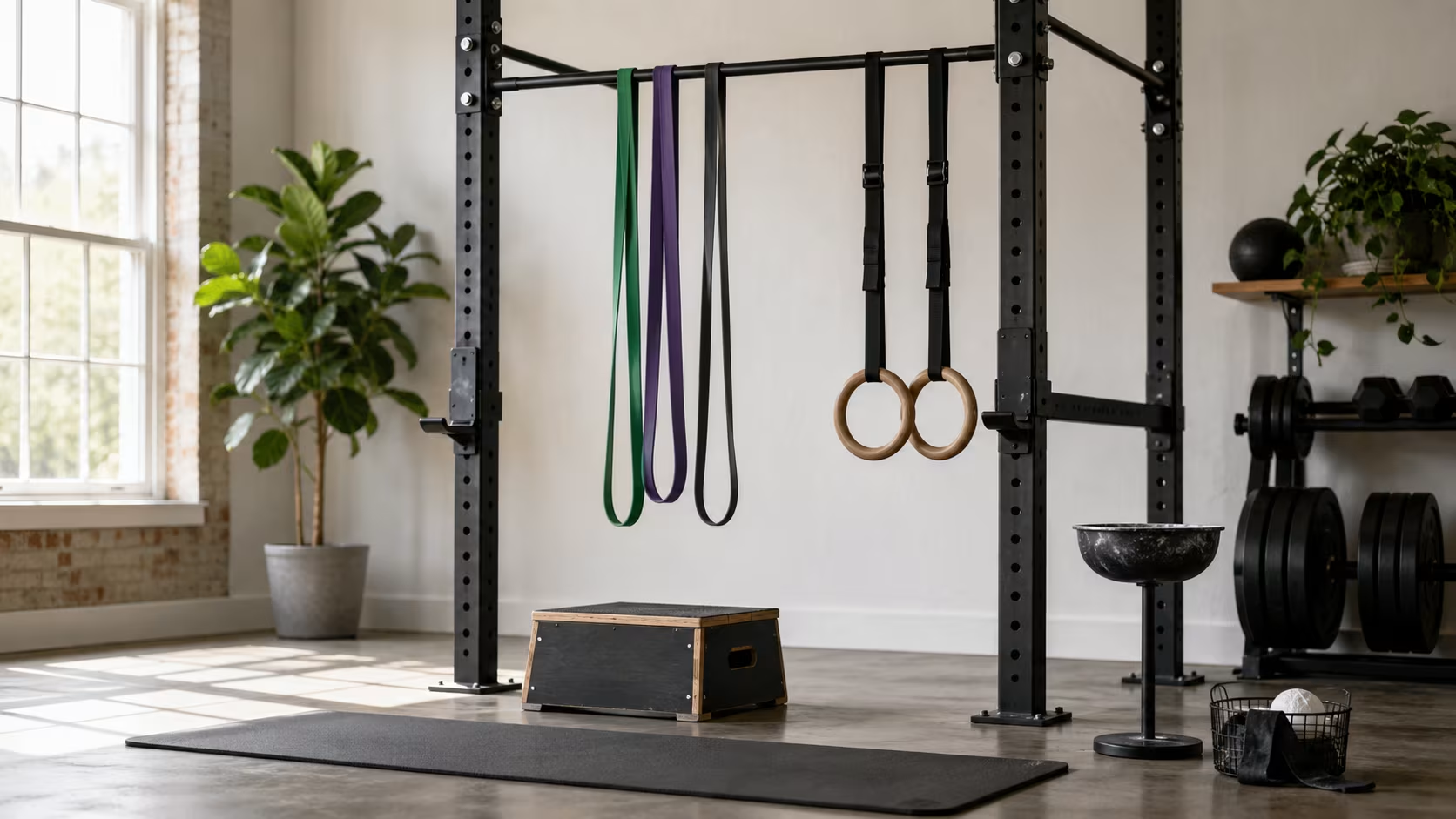
1 → 5 strict reps: usually 4–8 weeks of consistent practice. Frequency drops to 2–3x per week.
5 → 10: another 8–16 weeks. Add weighted pull-ups (2.5 kg, 5 kg) once you can do 8–10 strict bodyweight reps.
10+ strict bodyweight: shift to weighted pull-ups (5–20+ kg) for continued strength gain, or to volume work for endurance and conditioning.
Variations to add: chin-up (often easier than pull-up due to biceps), neutral grip (often most comfortable for shoulders), wide grip pull-up (more lat-dominant), narrow grip chin-up (more biceps-dominant).
Common Mistakes
Excessive band reliance: covered above. Use bands selectively, not as the primary tool.
Skipping eccentrics: negatives are the highest-leverage exercise for building first pull-ups and the one most beginners undervalue.
Training to failure on every set: pull-up training works best with quality reps left in the tank. Failure-based pull-up training builds bad form patterns.
Using kipping or momentum: the cultural style in some fitness movements. For building strict pull-ups, kipping reinforces the wrong pattern. Use strict reps only.
Insufficient grip work: many beginners' pull-up attempts end because their grip fails before their lats. Hangs and farmer's carries address this.
Not doing any rowing variations: pull-ups are vertical pulling; horizontal pulling (rows) builds complementary musculature and balanced shoulder function. Both should be in the program.
Expecting fast progress: 8–16 weeks is typical from zero. Lifters who quit at week 3 because "it's not working" never find out it would have worked.
Frequently Asked Questions
How long does it take to do a pull-up from zero?
For most adults training the right way, 8–16 weeks is realistic for a first strict pull-up. Lighter people and people with prior training experience progress faster; heavier people and absolute beginners take longer. Adequate frequency (3–5 sessions per week with pull-up specific work) and progressive overload matter more than the specific exercise variations chosen.
Are bands enough to build a pull-up?
Bands assist most at the bottom of the pull-up and least at the top, the opposite of how the strength curve actually works. Band-assisted pull-ups will not, by themselves, build a strict pull-up for most people. Negatives, scapular pull-ups, and Australian rows produce better transfer.
Should I do lat pulldowns to build pull-ups?
Lat pulldowns build the same muscles but in a slightly different motor pattern. They're useful as supplemental volume and for people who can't yet hold their bodyweight on the bar. They don't fully replace the specific neural and grip demands of an actual pull-up.
What's the difference between a pull-up and chin-up?
Pull-ups use a pronated (palms forward) grip; chin-ups use a supinated (palms toward you) grip. Chin-ups are easier for most people because they recruit more biceps and slightly less lat. Both are useful; chin-ups are often the first variation to achieve.
How often should I train pull-ups?
For building your first one, 3–5 times per week of grease-the-groove style practice plus 2 dedicated strength sessions per week works well. Once you have multiple strict reps, 2–3 times per week of focused training is sufficient for continued progress.
Sources and verification
Check current details with these primary or subject-authority sources before acting on the information.





0 Comments
Leave a comment
Your email won't be published. Required fields are marked with *.