


Continuous glucose monitor (CGM) data from non-diabetic populations has been a genuinely useful addition to nutrition research. Studies using CGMs in people without diabetes, including work from the Weizmann Institute of Science published in Cell in 2015 and subsequent replication studies, have documented that glycemic response to the same foods varies enormously between individuals, and that this interindividual variation is partially predicted by gut microbiome composition and other personalized factors. The result has been a wave of interest in blood sugar management outside of clinical diabetes care.
The interest is legitimate: post-meal glucose spikes, even within the non-diabetic range, are associated in observational data with inflammation, fatigue, and long-term metabolic risk. Managing post-meal glucose is a reasonable health goal. The confusion is that the most heavily marketed solution, a low-carbohydrate or ketogenic diet, is one option among several, and for many people it's not the most sustainable or necessary one.
This article reviews the evidence for four specific, well-studied dietary strategies that reduce post-meal glucose excursions within a diet that includes carbohydrates. The evidence for each varies in quality and effect size; those distinctions are made explicit.
What the evidence shows
Post-meal blood glucose (postprandial glycemia) is determined by the rate at which glucose enters the bloodstream from the gut, which is modulated by: the glycemic index (GI) and glycemic load of the food, the presence of fat and protein (which slow gastric emptying and reduce glucose absorption rate), dietary fiber (which slows digestion and reduces postprandial glucose in proportion to its viscosity), and the body's insulin sensitivity at the time of eating.
Strategy 1: Meal sequencing (vegetables and protein before carbohydrates)
A series of well-designed crossover trials from Cornell University (Shukla and colleagues, 2015–2019) found that eating vegetables and protein before carbohydrates in the same meal reduced postprandial glucose and insulin by 29–37% compared to eating the carbohydrates first, with the same food in the same total amount. The mechanism: protein and fat in the small intestine trigger GLP-1 secretion and slow gastric emptying, reducing the rate of glucose absorption. The effect is robust, replicated, and requires no dietary restriction: only a change in eating sequence.
The practical implication is straightforward: at a meal that includes rice or bread, eat the vegetables and protein first, pause, then eat the starchy component. This is a behavioral change, not a dietary restriction.
Strategy 2: Vinegar consumption before high-carbohydrate meals
Acetic acid (the active compound in vinegar) inhibits salivary and intestinal amylase activity (the enzyme that breaks starch into glucose) and is also proposed to slow gastric emptying. A 2005 meta-analysis in the European Journal of Clinical Nutrition examining seven trials found that vinegar consumption (15–30ml of apple cider or white wine vinegar) before high-carbohydrate meals reduced postprandial glucose by an average of 19–34%. A later 2015 review in Diabetes Care confirmed the effect specifically for apple cider vinegar in people with type 2 diabetes and insulin resistance.
The effect size is real but modest, and not everyone experiences meaningful response. Notably, vinegar is acidic enough to damage dental enamel and irritate the esophagus when taken undiluted or chronically: always dilute 1–2 tablespoons in water and do not take before bed lying down.
Strategy 3: Carbohydrate-fiber pairing
The glycemic response to carbohydrates is substantially modified by co-consumed fiber. Soluble fiber, particularly beta-glucan (oats, barley), psyllium, and pectin (apples, citrus), forms a viscous gel in the gut that slows carbohydrate digestion and glucose absorption. A 2015 Cochrane review of 28 trials on soluble fiber supplementation found a significant and consistent reduction in postprandial glucose across populations ranging from healthy adults to people with type 2 diabetes.
The practical principle: pair starchy foods with high-fiber foods rather than eating them alone. White rice eaten with lentils has a substantially lower glycemic response than white rice eaten alone, partly through fiber and partly through the protein. Mashed potatoes with skin-on (which preserves fiber) have a lower GI than peeled mashed potatoes. The food combination matters as much as the food itself.
Strategy 4: Post-meal movement
A brief bout of physical activity after a meal (as short as 10 minutes of walking) significantly reduces postprandial glucose excursions. During muscle contraction, glucose is taken up by muscle cells through an insulin-independent pathway (GLUT-4 translocation driven by AMP-kinase activation), which bypasses the insulin-resistance bottleneck and directly clears glucose from the bloodstream. A 2022 systematic review in Sports Medicine found that three 10-minute walks distributed around meals produced significantly greater reductions in postprandial glucose over 24 hours than a single 30-minute continuous walk, suggesting that the timing and distribution of movement relative to meals matters independently of total exercise volume.
This is one of the most practically actionable findings in metabolic health research: a 10-minute walk after meals is a highly effective and accessible glucose management tool that requires no dietary change.
How to apply it
These four strategies can be combined or used individually. Their effects are additive when used together.
Daily blood sugar management protocol
Step 1 Implement meal sequencing at your largest meal. Start with dinner (typically the meal with the highest carbohydrate load). Eat the non-starchy components first (salad, vegetables, protein) over 5–10 minutes before introducing the starchy component. Practice this as your initial change for two weeks before adding other strategies.
Step 2: Add fiber to your starchy foods
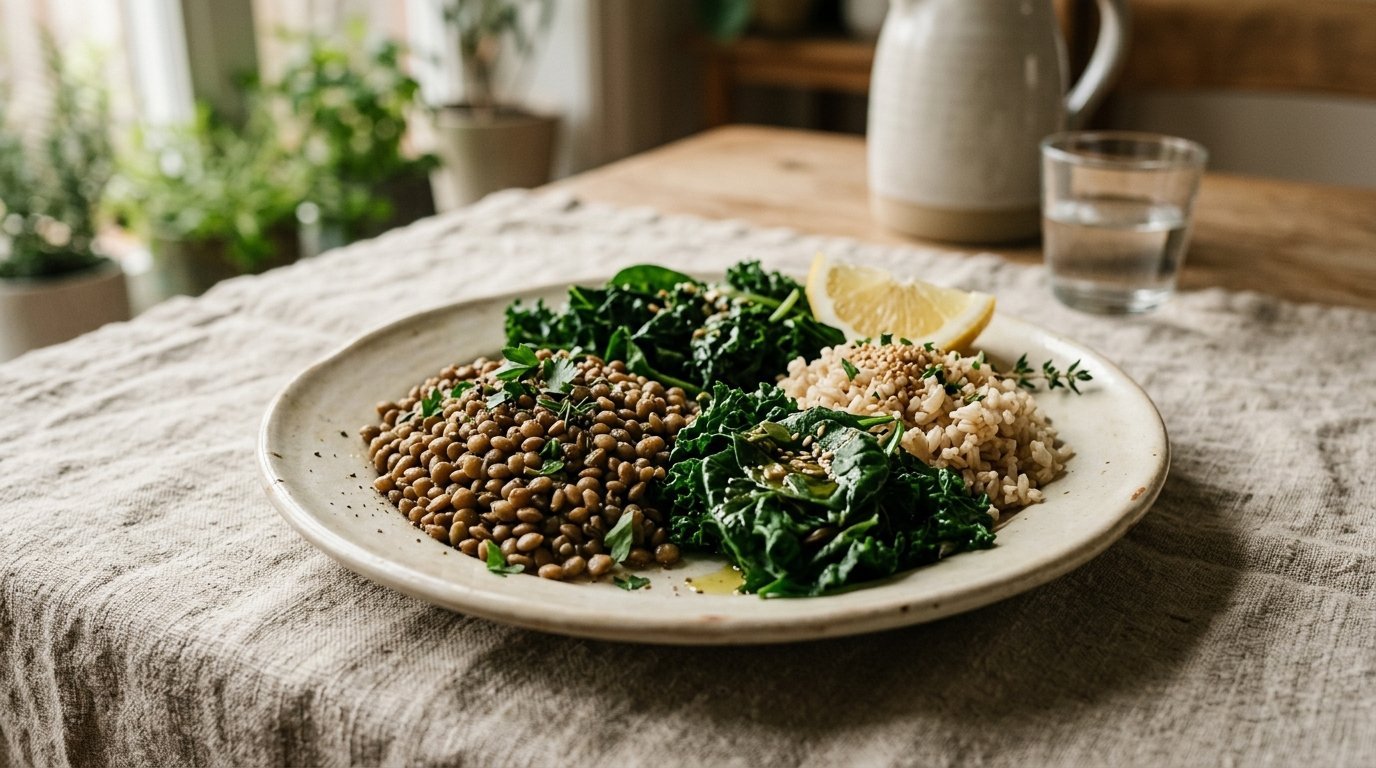
Audit your main starchy foods: white rice, pasta, bread, potatoes. At each meal that includes one of these, add a high-fiber companion: lentils to rice, a large vegetable portion to pasta, beans to a bowl. The goal is never eating starchy carbohydrates in isolation. This adds fiber and protein simultaneously.
Step 3: Add a brief post-meal walk to your largest meals
Set a ten-minute walk within thirty minutes of finishing your largest one or two meals of the day. This is the most effective single intervention in this list for acute postprandial glucose reduction. It requires no dietary change and compounds with other strategies.
Step 4: Try vinegar with one meal if tolerated
If you find vinegar palatable (1–2 tablespoons of apple cider vinegar in a tall glass of water immediately before the meal), add this at your highest-carbohydrate meal. Don't start with this; start with steps 1–3. Vinegar is optional, and the effect size is smaller than meal sequencing or post-meal movement.
Beginner version
Step 3 only, a 10-minute post-dinner walk, daily for two weeks. This is the most impactful single change with the lowest friction for most people.
Progression
Add meal sequencing at dinner (step 1) in week three. Add fiber pairing at lunch and dinner (step 2) in week five. Reassess: do you have more consistent energy across the afternoon? That's a real, subjective proxy for better postprandial glycemic control.
For people with type 2 diabetes or prediabetes
These strategies are appropriate adjuncts to medical management, not replacements for it. Glucose-lowering through lifestyle modification is highly evidence-supported and often produces meaningful reductions in HbA1c, but medication changes should be coordinated with your physician, particularly as lifestyle interventions may reduce medication requirements.
Common mistakes
Conflating blood sugar "spikes" with pathology in healthy adults
CGM data in healthy people shows significant post-meal glucose increases. A peak of 130–150 mg/dL after a carbohydrate-containing meal is normal in non-diabetic adults and is not necessarily harmful. The concern is sustained elevation, not the transient post-meal peak. Treating every glucose excursion as a medical event creates unnecessary anxiety.
Eliminating entire food categories without evidence for individual need
Bread, rice, and fruit are not harmful for most people with normal glucose metabolism. Eliminating them before trialing the strategies in this article skips steps that work for most people before resorting to more restrictive approaches.
Ignoring sleep's role in glucose regulation
A single night of poor sleep (less than 6 hours) measurably reduces insulin sensitivity the following day, producing higher postprandial glucose for the same food intake. Optimizing blood sugar management while chronically sleep-deprived is fighting the physiology. Sleep is the most upstream intervention.
Taking vinegar undiluted or before bed
Chronic undiluted vinegar use damages dental enamel and can cause esophageal irritation. Always dilute in a full glass of water. Avoid using immediately before lying down. These are real risks, not theoretical ones, particularly for people who take apple cider vinegar gummies or neat shots.
Not accounting for carbohydrate quantity alongside quality
Glycemic index and food sequencing reduce the rate of glucose absorption: they don't eliminate it. Eating 400g of white rice after vegetables still produces a large glucose load. Both quantity and food quality matter; these strategies are not permission to consume unlimited starch.
When to see a professional
Consult a physician or registered dietitian if: you have type 2 diabetes, prediabetes, or polycystic ovary syndrome (PCOS), all of which involve insulin resistance that benefits from specific medical and dietary management beyond the strategies described here; you are pregnant (gestational diabetes management has specific clinical protocols); or you experience symptoms of hypoglycemia (shakiness, sweating, confusion) after meals despite normal blood sugar levels, which may indicate reactive hypoglycemia and warrants investigation. A CGM prescribed and interpreted by a physician is more useful for understanding your specific glycemic patterns than over-the-counter CGM marketed directly to consumers without clinical context.
Frequently asked questions
Do I need a CGM to use these strategies?
No. Each strategy described has demonstrated benefit in clinical trials without personalized CGM feedback. A CGM adds useful information about your individual glucose response: some people respond more dramatically to meal sequencing or post-meal walks than the trial averages, but it's not required. If you're curious about your personal patterns, discuss CGM use with your physician; over-the-counter CGMs marketed directly to consumers are better interpreted with clinical context.
Is fruit bad for blood sugar?
Whole fruit, including higher-sugar varieties like bananas and grapes, has a substantially lower glycemic response than equivalent sugar as a refined carbohydrate, because cell wall structure and fiber slow digestion and glucose absorption. Most large observational studies show whole fruit intake associated with reduced risk of type 2 diabetes. Eating fruit alongside protein (yogurt, nuts, cheese) further attenuates the glucose response. Fruit juice is a different situation: it removes fiber and significantly raises the glycemic impact.
What are the best carbohydrate foods for blood sugar stability?
Within whole foods, the best glycemic response predictors are higher fiber content, higher accompanying protein, and lower degree of processing. Legumes (lentils, black beans, chickpeas) are the gold standard: high protein, high fiber, and a consistently low glycemic index. Steel-cut and rolled oats are also excellent choices. Refined grains eaten without fiber or protein companions produce the most pronounced glycemic excursions. Pairing any carbohydrate with vegetables and protein reduces its impact substantially.
Can these strategies measurably reduce HbA1c in prediabetes?
Yes. The combination of dietary modification, post-meal movement, and weight management (where relevant) has reduced HbA1c by 0.3–0.9% in multiple trials of people with prediabetes and early type 2 diabetes. The NIH-funded Diabetes Prevention Program found lifestyle intervention reduced progression from prediabetes to clinical diabetes by 58% over three years. These are clinically meaningful reductions. People with prediabetes benefit from coordinating these strategies with physician oversight to track response and adjust as needed.





0 Comments
Leave a comment
Your email won't be published. Required fields are marked with *.