


If you've had back pain for more than a few weeks and looked into what might help, you've probably encountered yoga as a recommendation. It shows up in clinical guidelines from the American College of Physicians, the UK's National Institute for Health and Care Excellence, and most professional bodies that issue back pain guidance.
The recommendation is well-supported but also more limited than a casual reader might assume. Specific yoga practices help specific kinds of back pain through specific mechanisms. Other yoga practices can make back pain worse. The teacher matters. The dose matters. And the underlying back problem matters more than any of it.
Here's what two decades of clinical research on yoga and back pain actually shows, and how to use it.
The evidence in plain terms
The Cochrane review of yoga for chronic non-specific low back pain — published in 2017 by Wieland and colleagues, drawing on 12 randomized trials with about 1,080 participants — found moderate-certainty evidence that yoga reduces pain and improves function at three to six months compared to no exercise. The effect sizes were small to moderate, consistent across studies, and comparable to other recommended exercise interventions.
A subsequent meta-analysis by Holtzman and Beggs in 2018, including additional trials, reached similar conclusions: yoga produces clinically meaningful improvements in pain and function for chronic non-specific low back pain, with effects roughly equivalent to physical therapy.
The 2017 American College of Physicians guideline for non-radicular low back pain explicitly recommends yoga as a first-line non-pharmacological option, alongside exercise, acupuncture, massage, spinal manipulation, and a few other approaches. The NICE guideline in the UK is similar.
What this means in practice yoga is well-supported as an option for chronic low back pain. It's not magic — the effect sizes are modest — but the evidence base is among the better-established for back pain interventions, and the side effect profile is favorable.
What the evidence does not show that yoga is superior to other forms of structured exercise for back pain, that it works for acute back pain specifically, or that any particular yoga style is dramatically better than others. The studies have used mostly Iyengar-derived and Viniyoga approaches, with some hatha and a few specific protocols developed for research. Vinyasa-style yoga is less studied for back pain and has potential pitfalls discussed below.
What kinds of back pain yoga helps
Yoga has reasonable evidence for several specific back pain presentations.
Chronic non-specific low back pain
The most-studied category and the one yoga is best for. This is back pain that's been present for more than 12 weeks without a clear identifiable cause beyond general dysfunction. Most chronic back pain falls into this category.
Postural and movement-related back pain
When the back pain is mostly the result of how you're sitting, standing, and moving — common in office workers and people with sedentary lifestyles — yoga's emphasis on body awareness and movement quality is well-targeted.
Back pain with significant stress component
Back pain has a documented bidirectional relationship with stress. Yoga's nervous system effects can interrupt the pain-stress-tension cycle in ways that exercise alone often doesn't.
Mild to moderate radicular pain that has stabilized
Carefully selected yoga can be helpful for sciatica-type symptoms once the acute phase has passed and the nerve isn't actively inflamed. The work needs to be specific and well-modified.
Postpartum back pain
Yoga, with appropriate modifications for postpartum recovery, can help the gradual return of trunk strength and reduce the back pain common in early motherhood.
What kinds it doesn't help
Several presentations where yoga is not the right answer.
Acute back pain from a recent injury
New onset severe back pain, especially if associated with a specific event, should be evaluated medically before any exercise intervention. Yoga has no role in the first days to weeks of an acute episode.
Back pain with red flag symptoms
Loss of bowel or bladder control, progressive weakness, numbness in the saddle area, severe night pain, fever, unexplained weight loss, or back pain in someone with cancer history — all reasons for immediate medical evaluation, not yoga.
Inflammatory back pain
Conditions like ankylosing spondylitis or other inflammatory arthritides need medical management. Yoga can be a useful supplement under appropriate medical guidance but isn't a primary treatment.
Spinal fractures
Including the compression fractures common in osteoporosis. Standard yoga can produce additional fractures in osteoporotic spines, particularly forward folding poses. Specialized adaptations exist but require qualified teaching.
Severe neurological compromise
Significant nerve root compression with progressive weakness needs surgical evaluation. Yoga is not a substitute for appropriate medical care in these cases.
For anything beyond chronic non-specific or postural back pain, the question of whether yoga is appropriate becomes a medical one. The general guideline: get a clear diagnosis first, then talk to the appropriate clinician about whether yoga fits into the treatment plan.
The mechanisms — physical and not
Why does yoga help back pain? Several mechanisms appear to contribute, in different proportions for different patients.
Trunk strength and endurance
Many yoga poses train the deep trunk muscles in ways that translate to better postural support. This is a real effect but probably not the primary mechanism — other exercises train trunk strength too, and the effect sizes from yoga aren't larger than from those other exercises.
Reduced protective muscle guarding
Chronic back pain often involves persistent low-level contraction of paraspinal muscles, which itself produces stiffness and discomfort. Yoga's emphasis on slow movement and breath-coordinated activity can reduce this guarding pattern over weeks.
Improved spinal mobility
Stiff backs hurt more than mobile backs, on average. Yoga's gradual work into spinal extension, flexion, lateral bending, and rotation can restore mobility that improves function and reduces pain.
Pain reprocessing
Chronic pain involves central nervous system changes that amplify pain signals beyond what tissue damage alone would produce. Yoga's mindfulness and breath components can reduce this central sensitization, much like other mind-body interventions. The effect is real and is probably underestimated in physical-mechanism-focused explanations.
Stress reduction
As discussed above, stress and back pain interact bidirectionally. Yoga's nervous system effects reduce the stress component, which reduces pain.
Improved sleep
Sleep deprivation amplifies pain perception. Yoga's evening effects on sleep onset and quality contribute indirectly to pain reduction.
Self-efficacy
Probably underrated. People who do yoga regularly develop a sense that they can do something about their condition, which itself reduces pain-related disability. This is a real, measured effect in chronic pain interventions across modalities.
No single mechanism explains all the benefit. The combination is probably what produces the moderate effect sizes seen in the trials.
Specific poses that consistently show up as useful
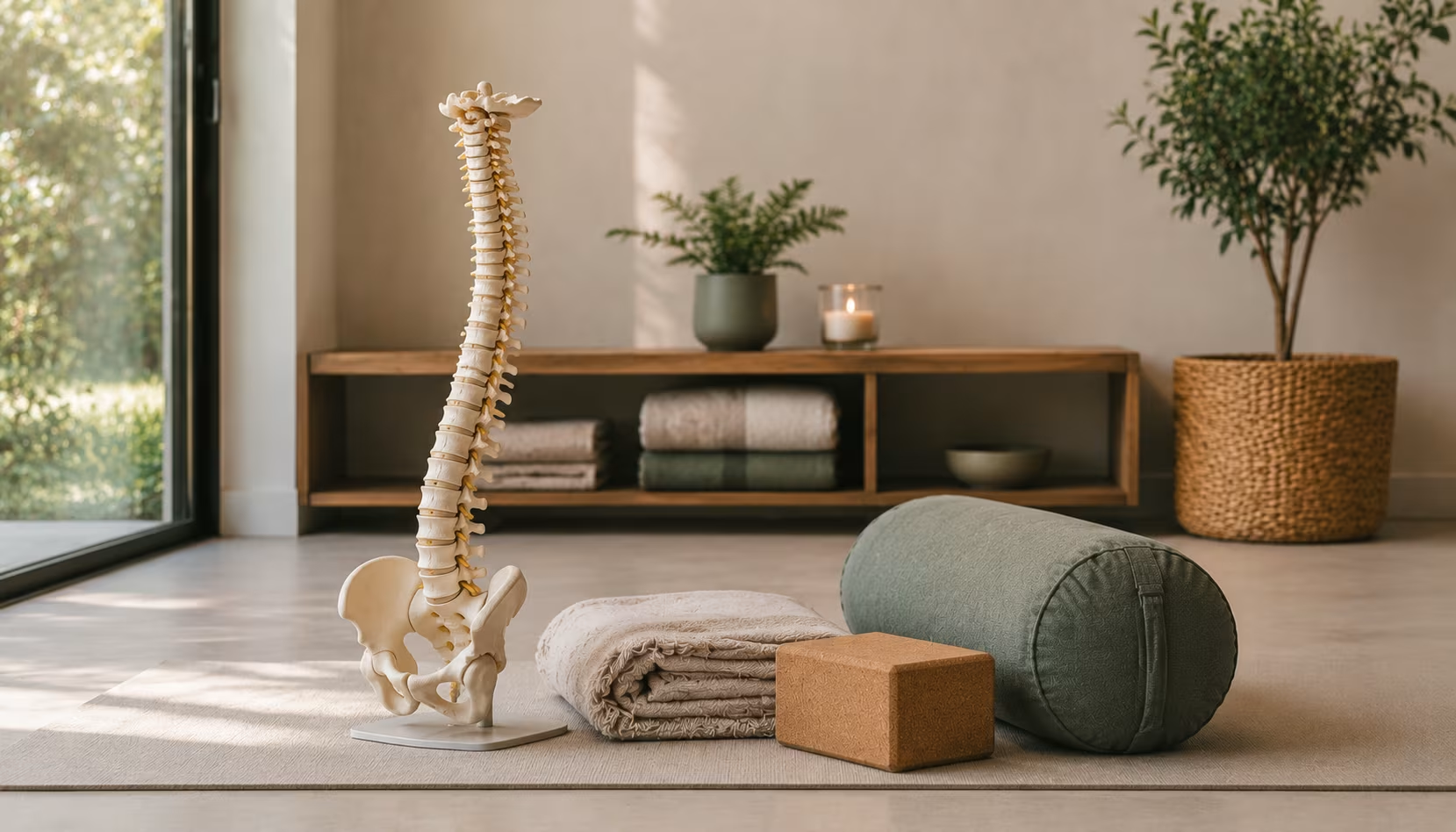
Several poses appear repeatedly in the research-based protocols and in clinical recommendations for back pain.
Cat-cow
Slow alternation between rounded and arched spine on hands and knees. Trains gentle spinal mobility through the safest possible range. Almost universally tolerated.
Child's pose
A kneeling forward fold with the torso resting on the thighs. Provides a gentle stretch to the lumbar paraspinals and gives the back a moment of unloaded rest. Good for both acute relief and as a transition.
Cobra/Sphinx
Gentle prone back extension. Helpful for back pain that's worse with sitting (i.e., flexion-intolerant patterns), which is a large fraction of office-worker back pain. The McKenzie protocol uses similar positions.
Bridge pose
Lying on the back with feet planted, lifting the hips. Trains glutes and posterior chain in a back-protective pattern, addresses the weak-glutes pattern common in chronic back pain.
Wall-supported standing forward fold
Folding forward with hands against a wall, hinging from the hips with a long spine. Stretches hamstrings without the spinal flexion of an unsupported fold.
Side-lying twist
Gentle rotation lying on the back with knees dropped to one side. Provides spinal mobility without axial loading.
Legs up the wall
Restful inversion that takes load off the lumbar spine and supports parasympathetic activation.
These poses are not a complete program. They're a starting point that's unlikely to make things worse and likely to help. A teacher or physical therapist familiar with back pain can build a fuller sequence around these foundational positions.
Poses to approach carefully or avoid
Several common yoga poses have potential pitfalls for back pain.
Unsupported seated forward folds
Sitting upright and folding forward with straight legs puts load on the lumbar discs in flexion, which is a position many backs don't tolerate. Bent knees, hands on the legs or blocks, or a folded blanket under the sitting bones helps. Or substitute a supported supine hamstring stretch.
Deep twists, especially seated
Aggressive seated twists can compress already-painful structures and aren't necessary for the spinal mobility benefits of twisting. Gentle supine twists give most of the benefit with much less risk.
Full wheel/upward bow
This deep backbend requires significant strength and flexibility through the front of the body, and is too demanding for most back pain situations. The smaller backbends (cobra, bridge) cover the back extension territory without the risk.
Plow and shoulderstand
As discussed in the inversions article, these put significant flexion load through the cervical spine. For back pain, they also load the lumbar spine in flexion. Skip them.
Standing forward folds without support
The hanging weight of the upper body in an unsupported fold loads the lower back substantially. Wall-supported versions or bent-knee versions are friendlier.
Headstand and other dramatic inversions
Beyond the cervical concerns, these put novel loads on the spine that aren't appropriate for backs in pain.
Power vinyasa flows
Fast-paced flowing classes often move through positions faster than safe modification allows. For back pain, the slower-paced styles (gentle hatha, Iyengar, Viniyoga) are more appropriate.
This isn't a permanent list. As back pain resolves and trunk strength returns, some of these poses can be reintroduced. But during the period of active back pain, conservative pose selection is the better approach.
Iyengar, Viniyoga, and the styles that work best
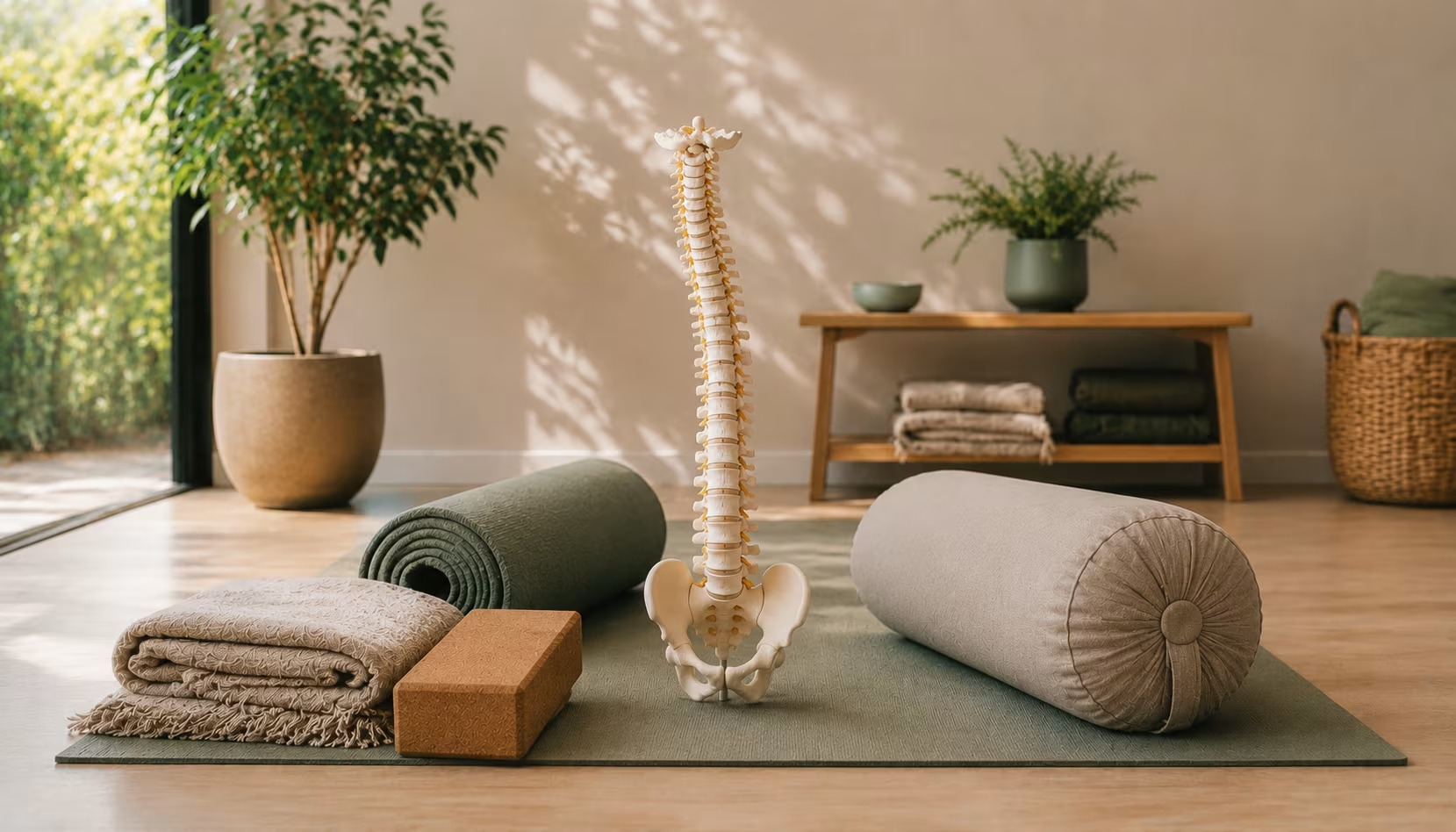
The yoga styles that have the best track record for back pain are those that emphasize precision, modification, and slow movement.
Iyengar yoga, developed by B.K.S. Iyengar, emphasizes detailed alignment, generous use of props, and long holds. The style is well-suited to therapeutic applications and most of the back pain research has used Iyengar-derived approaches. Find a certified Iyengar teacher (the certification process is rigorous and the credential is meaningful) and you'll get back-pain-appropriate instruction by default.
Viniyoga, developed by T. Krishnamacharya and refined by his son T.K.V. Desikachar, emphasizes adapting poses to the individual rather than fitting the individual to the pose. Several major back pain studies have used Viniyoga-derived protocols. The style is particularly well-suited to one-on-one therapeutic work but is also available as group classes from qualified teachers.
Hatha yoga, in its slower, gentler forms, can be appropriate. The challenge is variability — "hatha" in the modern studio scene can mean almost anything. Look for classes explicitly described as gentle or therapeutic, and inquire about the teacher's background with back pain.
Yoga therapy, a formal credentialing track (C-IAYT certification in the US), trains teachers in working with specific medical conditions including back pain. A qualified yoga therapist will work with you one-on-one or in small groups, with treatment integrated with your medical care. For complicated back pain, this is the most appropriate option within the yoga world.
Power yoga, hot yoga, and faster vinyasa styles are not where most back pain research has been done and are not the recommended starting point for back pain. They can be appropriate for general fitness once back pain has resolved, but during active back pain, the slower precision-oriented styles are the better fit.
Building a sustainable home practice
After working with a teacher for a few weeks, a daily home practice of 15 to 30 minutes addresses back pain better than weekly classes alone.
A basic structure: 5 minutes of breath work and gentle warm-up. 10 to 20 minutes of a curated sequence appropriate for your back (built with your teacher). 5 minutes of closing rest, ideally in legs-up-the-wall or a supported reclining pose.
Consistency matters more than intensity. A 15-minute practice done 6 days a week produces more change than a 90-minute class once a week. The daily practice keeps the nervous system effects accumulating, keeps the soft tissue work happening, and reinforces the body awareness that connects back to good movement during the rest of the day.
Modify the practice on bad days. When the back is flaring, do less, do gentler, do more restorative. The practice is the relationship with the body, not a fixed sequence to grind through.
Track what's working. Most people with chronic back pain develop a sense of which specific poses help and which produce more soreness the next day. Pay attention to this. Personal data is meaningful here — what helps you is more important than what works in studies.
Bring the practice to the rest of life. Yoga that doesn't transfer to how you sit at your desk, lift things, sleep, and move during the day is missing most of its potential value. The practice trains patterns; those patterns are useful in proportion to how much they show up outside the practice itself.
Sources
Wieland, L. S., Skoetz, N., Pilkington, K., Vempati, R., D'Adamo, C. R., & Berman, B. M. (2017). Yoga treatment for chronic non-specific low back pain. Cochrane Database of Systematic Reviews, (1), CD010671.
Holtzman, S., & Beggs, R. T. (2013). Yoga for chronic low back pain: A meta-analysis of randomized controlled trials. Pain Research and Management, 18(5), 267–272.
Qaseem, A., Wilt, T. J., McLean, R. M., & Forciea, M. A. (2017). Noninvasive treatments for acute, subacute, and chronic low back pain: A clinical practice guideline from the American College of Physicians. Annals of Internal Medicine, 166(7), 514–530.
Saper, R. B., Lemaster, C., Delitto, A., Sherman, K. J., Herman, P. M., Sadikova, E., Stevans, J., Keosaian, J. E., Cerrada, C. J., Femia, A. L., Roseen, E. J., Gardiner, P., Gergen Barnett, K., Faulkner, C., & Weinberg, J. (2017). Yoga, physical therapy, or education for chronic low back pain: A randomized noninferiority trial. Annals of Internal Medicine, 167(2), 85–94.
Sherman, K. J., Cherkin, D. C., Wellman, R. D., Cook, A. J., Hawkes, R. J., Delaney, K., & Deyo, R. A. (2011). A randomized trial comparing yoga, stretching, and a self-care book for chronic low back pain. Archives of Internal Medicine, 171(22), 2019–2026.
Tilbrook, H. E., Cox, H., Hewitt, C. E., Kang'ombe, A. R., Chuang, L. H., Jayakody, S., Aplin, J. D., Semlyen, A., Trewhela, A., Watt, I., & Torgerson, D. J. (2011). Yoga for chronic low back pain: A randomized trial. Annals of Internal Medicine, 155(9), 569–578.
Williams, K., Abildso, C., Steinberg, L., Doyle, E., Epstein, B., Smith, D., Hobbs, G., Gross, R., Kelley, G., & Cooper, L. (2009). Evaluation of the effectiveness and efficacy of Iyengar yoga therapy on chronic low back pain. Spine, 34(19), 2066–2076.
Frequently Asked Questions
Will yoga fix a herniated disc?
Yoga doesn't fix herniations in any structural sense — the disc doesn't unherniate from poses. What yoga can do is reduce the symptoms and improve function over months by training trunk control, reducing protective muscle guarding, and shifting how the nervous system processes pain. For most disc problems, this is enough.
Are there yoga poses I should avoid if I have back pain?
Deep forward folds with a rounded spine, deep twists with the back already painful, full backbends without preparation, and unsupported seated forward folds are the usual suspects. The actual contraindications depend on what's wrong; for most back pain a knowledgeable teacher can modify around it.
How long until yoga helps with chronic back pain?
The studies showing benefit used 8 to 12 weeks of weekly to twice-weekly classes. Some people notice improvement in two or three weeks; others take the full 12. The expectation should be gradual improvement over months, not relief after a single class.
Yoga or physical therapy for back pain?
For most non-emergent chronic back pain, the evidence shows roughly similar outcomes between supervised yoga and standard physical therapy. The choice often comes down to access, cost, and which the patient will actually do consistently. Either is better than rest or passive treatment.





0 Comments
Leave a comment
Your email won't be published. Required fields are marked with *.