


The argument that seed oils are uniquely harmful (that linoleic acid, the dominant fatty acid in soybean, canola, sunflower, corn, safflower, and grapeseed oil, drives inflammation, oxidative damage, and chronic disease) has moved from niche health-influencer territory to mainstream debate. The position has emotional weight. The actual evidence is more complicated and considerably less alarming than the strongest versions of the argument claim.
This is a guide to what the seed oils debate actually involves, what the research shows, and how to think about cooking fats without getting caught in marketing on either side.
What "Seed Oils" Refers To
In modern usage, "seed oils" usually means the industrially refined oils derived from seeds that became dominant in the Western food supply over the past 70 years: soybean, canola (rapeseed), corn, sunflower, safflower, grapeseed, cottonseed, and rice bran oil. These are different from oils pressed from fruits (olive, avocado, palm) or coconut.
The defining features:
- High in linoleic acid (omega-6 polyunsaturated fat), typically 50–80% by weight
- Extracted via solvent (hexane) and heat processing, then refined, bleached, and deodorized (a process called RBD) that produces a stable, neutral-flavor, long shelf-life product
- Inexpensive and widely available, leading to dominant use in restaurant frying and packaged food
The concerns about seed oils fall into two categories: (1) the linoleic acid itself is harmful, and (2) the industrial processing produces harmful compounds. These are different claims with different evidence.
The Inflammation Hypothesis
The most-cited argument: linoleic acid is converted in the body to arachidonic acid, which is the substrate for pro-inflammatory eicosanoids (prostaglandins, thromboxanes, leukotrienes). Therefore high linoleic acid intake should increase inflammation.
This is biochemically true at the pathway level. The question is whether it translates to measurable inflammation in humans.
Multiple systematic reviews have looked at this directly:
- Johnson and Fritsche (2012) reviewed controlled trials of linoleic acid intake on inflammatory markers in humans and found no consistent effect. Increased linoleic acid intake did not raise CRP, IL-6, TNF-α, or other inflammatory markers.
- Innes and Calder (2018) reviewed mechanistic and clinical data and concluded the evidence for linoleic acid as a pro-inflammatory dietary factor is weak.
- Su and colleagues (2017) meta-analysis showed inverse association between linoleic acid status and inflammatory markers in observational studies.
The biochemistry-to-clinical jump fails because arachidonic acid conversion is tightly regulated, and the eicosanoid response to dietary linoleic acid is modulated by many other factors (omega-3 intake, antioxidant status, individual genetics).
This does not mean linoleic acid is universally beneficial at any dose. Very high intake (over 8–10% of energy from linoleic acid) is unusual and less well-studied. But the moderate intake typical of Western diets, even at the high end, does not produce the inflammatory state the popular argument predicts.
What the Trials Actually Show
The most-relevant trials have looked at substituting seed oils for saturated fats and measuring cardiovascular outcomes:
The Sydney Diet Heart Study (1966–1973) was controversially re-analyzed in 2013, suggesting that substituting safflower oil for saturated fat in middle-aged men actually increased mortality. This re-analysis is the basis for much of the recent seed oil concern. However, the trial had methodological limitations including the use of trans-fat-rich margarine in the intervention arm, which confounds interpretation.
The Minnesota Coronary Experiment (1968–1973) had a similar re-analysis in 2016 that showed reduced cholesterol but no mortality benefit from replacing saturated fat with corn oil.
More recent meta-analyses consistently show that replacing saturated fat with polyunsaturated fat (including linoleic acid) reduces cardiovascular event rates. The Hooper et al. Cochrane review (2020) and the Hooper review of saturated fat reduction (2020) both support this conclusion.
The picture: seed oils are not harmless, but they're not specifically harmful either when replacing saturated fat in the diet. The bigger questions are about what foods they accompany and how they're used.
Industrial Processing and Oxidation
The second concern is more about manufacturing than the oil molecule itself.
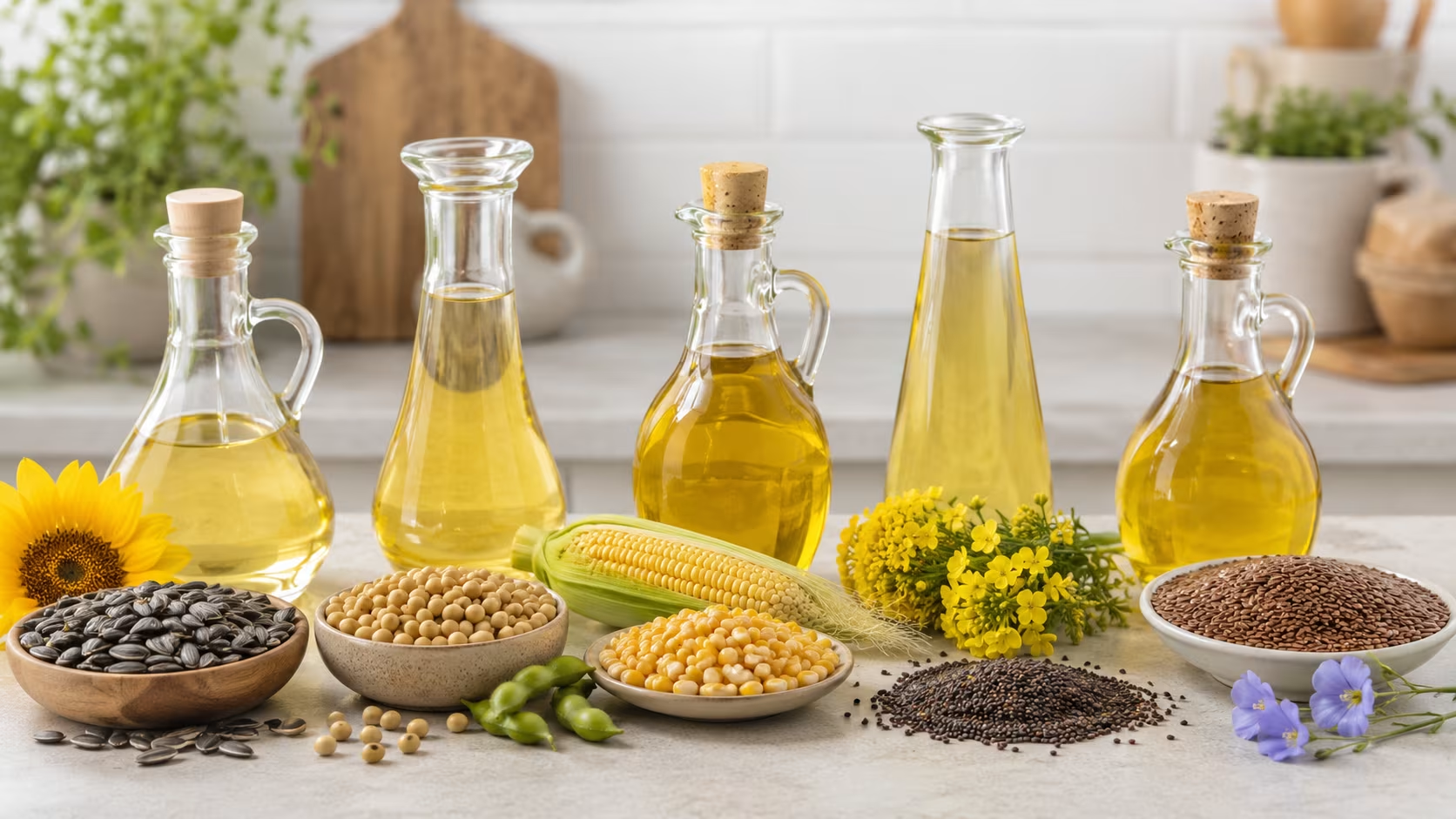
Refining process
solvent extraction (hexane), high-temperature deodorization, and bleaching produce some oxidation products and trans fats (though modern processing has reduced trans fat content substantially since the 1990s). Refined seed oils have lower vitamin E and polyphenol content than less-processed alternatives like extra-virgin olive oil.
Oxidation during cooking
polyunsaturated fats are more chemically reactive than monounsaturated or saturated fats. Repeated heating (as in restaurant deep fryers) produces oxidized lipids and aldehydes that may have health consequences. Home cooking at typical temperatures produces vastly less of these compounds than commercial frying.
Storage degradation
opened bottles of polyunsaturated oils oxidize over time, especially in clear bottles, in warm conditions, or after the expiration date. The "rancid oil" most people have tasted is oxidized oil.
These processing concerns are real but not catastrophic. A bottle of canola oil used within 6 months in a home kitchen at home cooking temperatures is not the same problem as deep-fried fast food cooked in repeatedly heated industrial oil.
The Bigger Variable: Ultra-Processed Foods
The most important context for the seed oils debate: the dominant source of seed oils in modern diets is ultra-processed foods. Chips, crackers, frozen pizza, packaged baked goods, fried fast food, salad dressings, and processed snacks all carry substantial amounts of refined oils alongside refined carbs, added sugars, salt, and engineered flavors.
People who reduce seed oil intake by cutting out ultra-processed foods typically improve their health. The improvement is real. The question is whether the seed oils themselves drove the problem or whether the broader package of ultra-processed eating did.
The honest answer based on current evidence: the package matters more than the oil. A handful of pumpkin seeds (high in linoleic acid) and a fast food fry (high in linoleic acid) have radically different health effects. A salad with sunflower oil dressing and a bag of sunflower oil-fried chips have radically different health effects.
If you cut out ultra-processed foods, your seed oil intake drops dramatically as a side effect, and your overall diet quality improves. The intervention works whether the active ingredient is the oils, the refined carbs, the additives, or all of the above.
Smoke Points and Cooking Practice
The "use stable fats for high heat" advice has some merit but is often misapplied.
Smoke points for common cooking fats (approximate):
- Extra-virgin olive oil: 190–210 °C
- Refined olive oil: 240 °C
- Avocado oil: 270 °C
- Butter: 175 °C
- Ghee: 250 °C
- Coconut oil: 175 °C
- Canola oil (refined): 220 °C
- Sunflower oil (refined): 230 °C
- Sesame oil (toasted): 175 °C
- Sesame oil (light): 230 °C
For comparison, typical home cooking temperatures:
- Sautéing: 120–180 °C
- Stir-frying: 175–225 °C
- Pan-frying: 175–195 °C
- Roasting/baking: 175–230 °C
- Deep-frying: 175–190 °C (rarely done at home)
Extra-virgin olive oil is suitable for most home cooking. A 2020 study by De Alzaa and colleagues directly tested cooking oil stability across common fats and concluded that extra-virgin olive oil was among the most stable under cooking conditions because of its high polyphenol content despite the lower smoke point. Smoke point alone is not the right metric for oil stability.
Avocado oil is genuinely useful for the highest-temperature applications (high-heat searing, oven roasting at 230 °C+). Refined olive oil works at similar temperatures.
A Reasonable Kitchen
A practical fat strategy for a home kitchen, broadly consistent with what the evidence supports:
Primary cooking fat
Extra-virgin olive oil for most sautéing, salad dressings, finishing, and roasting up to 200 °C. Choose oil from a single estate or country of origin in a dark bottle with a recent harvest date.
High-heat cooking
Avocado oil for searing, wok cooking, or any cooking above 230 °C. Refined olive oil also works.
Flavor and small amounts
Butter for breakfast cooking, sauces, and finishing. Ghee for higher-heat applications where butter would burn. Toasted sesame oil for flavor (added at the end, not for cooking).
Acceptable in moderation
Canola, sunflower, safflower for occasional use, baking that requires neutral oil, or when other oils aren't available. No need to panic if a restaurant uses these.
Generally avoid
Repeatedly heated frying oil (typical of fast food and deep-fryer restaurants), oxidized oils (rancid smell), and oil-heavy ultra-processed foods more for the broader diet quality than for the oil itself.
Coconut oil
Fine for occasional use, particularly for specific dishes that benefit from its flavor. Not a special "health food": it's roughly 90% saturated fat and behaves like other saturated fats nutritionally.
Frequently Asked Questions
Are seed oils inflammatory?
The claim that linoleic acid (the main fatty acid in seed oils) is inflammatory is not well supported by current evidence. Controlled trials in humans consistently fail to show that linoleic acid intake raises inflammatory markers, and some show modest reductions. The popular argument is based on biochemical pathways that don't reliably translate to clinical inflammation.
Should I avoid soybean and canola oil?
No clear evidence that moderate use of soybean, canola, or sunflower oil is harmful for healthy adults. The dominant variable in diet quality is what these oils are used to fry (heavily processed foods, fast food, baked goods) rather than the oils themselves. In a whole-food diet, modest use is not a meaningful health concern.
Is olive oil healthier than seed oils?
Olive oil has strong evidence for cardiovascular benefit in the context of a Mediterranean diet pattern. Whether it's specifically better than seed oils per unit of fat is harder to isolate from the rest of the dietary pattern. Extra-virgin olive oil is also rich in polyphenols that refined seed oils lack.
What about smoke point? Can I cook with olive oil?
Yes. Extra-virgin olive oil has a smoke point around 190–210 °C, adequate for most home cooking including sautéing and shallow frying. Studies of olive oil under cooking heat show good stability and minimal harmful compound formation. The "olive oil is unstable when heated" claim is overstated for typical home use.
What oils should I use at home?
Extra-virgin olive oil for most cooking, salad dressings, and finishing. Avocado oil for higher-heat cooking. Butter or ghee for taste and small amounts. Refined seed oils (canola, sunflower) are fine in moderation but offer no special advantage over olive oil for most uses.





0 Comments
Leave a comment
Your email won't be published. Required fields are marked with *.