

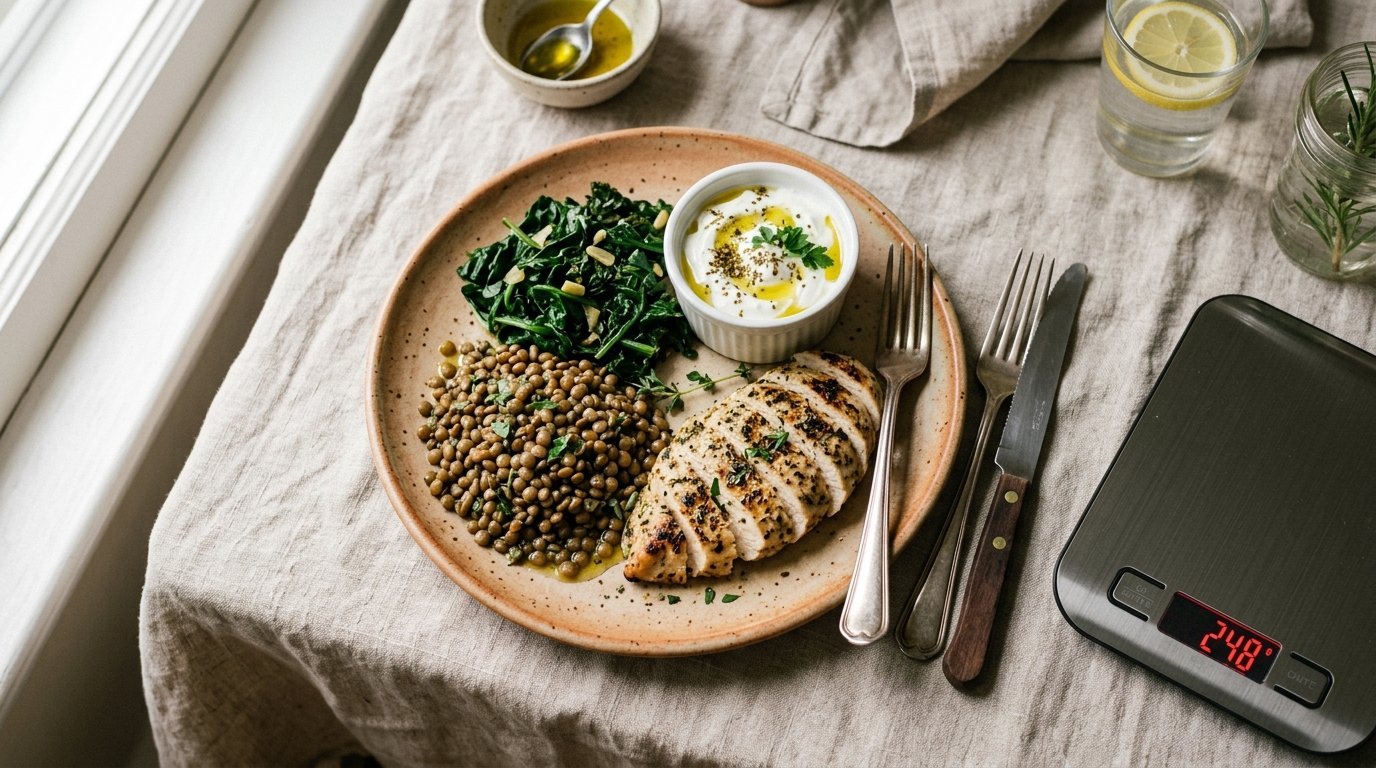
A 52-year-old woman I'll call Maria came to a registered dietitian with a complaint that's extremely common: she was strength training three days a week, eating what she considered a healthy diet, and still losing muscle definition. Her cardiologist had told her to "cut back on red meat," and she'd interpreted that as reducing all protein. Her intake hovered around 45–50 grams daily, well under half of what the current evidence suggests she needed.
The standard recommended dietary allowance (RDA) for protein is 0.8 grams per kilogram of body weight. For a 70kg person, that's 56 grams per day: roughly two eggs and a chicken breast. This figure was established as the minimum required to prevent nitrogen deficiency in sedentary adults, and it was never intended to be an optimization target. Yet it's cited so routinely that many adults (particularly women, who are often more conscientious about calorie intake) treat it as an upper limit rather than a floor.
The consequences, especially after 40, are real. Sarcopenia, the age-related loss of skeletal muscle mass and function, begins gradually in the mid-30s and accelerates after 60. It's associated with falls, metabolic dysfunction, reduced quality of life, and increased all-cause mortality. Adequate protein intake is one of the most modifiable variables in slowing it.
What the evidence shows
The mechanism is relatively straightforward: muscle protein synthesis (MPS), the process by which your body builds and repairs muscle tissue, requires sufficient dietary amino acids, particularly leucine, as a trigger. After eating protein, MPS rises and then falls within a few hours. When you're young, this anabolic response is fairly robust. After roughly age 40, research suggests the threshold rises, meaning older adults need more protein per meal to achieve the same MPS stimulus. This phenomenon is sometimes called "anabolic resistance."
A 2020 systematic review and meta-analysis in JAMA Network Open examining data from over 1,800 older adults found that protein intakes above 1.2g/kg/day were associated with significantly better preservation of lean mass compared to lower intakes. A 2019 review in the British Journal of Sports Medicine similarly concluded that for adults engaged in resistance training, protein intakes in the range of 1.4–1.6g/kg/day optimized muscle protein synthesis outcomes. The upper end of demonstrably beneficial intake for most people seems to fall around 2.2g/kg/day, with diminishing returns above that level.
There's an important nuance around distribution. The evidence, much of it coming out of research groups at Maastricht University and McMaster University (two institutions that have produced a large body of work in protein and aging), suggests that spreading protein intake across three to four meals of roughly 25–40 grams each is more effective for sustained MPS than eating the same total amount concentrated in one or two meals. The "leucine threshold" hypothesis suggests you need roughly 2–3 grams of leucine per meal to maximally stimulate MPS, an amount found in about 25–30 grams of most high-quality complete proteins.
What about kidney health? This concern is frequently raised, particularly for older adults with existing chronic kidney disease (CKD). The evidence here distinguishes between populations: for people with CKD, protein restriction remains appropriate and should be managed with a nephrologist. For adults with normal kidney function, the research (including a 2018 systematic review in the Journal of the Academy of Nutrition and Dietetics) does not support the conclusion that higher protein intakes cause kidney damage. However, talk to your physician before significantly increasing protein if you have any kidney concerns.
How to apply it
The practical target for most adults over 40 who are exercising is 1.2–1.6 grams of protein per kilogram of body weight daily. For a 70kg (154lb) person, that's roughly 85–110 grams per day. For a 80kg (176lb) person, 95–130 grams.
Step 1: Calculate your target
Divide your weight in pounds by 2.2 to get kilograms. Multiply by 1.4 as a starting midpoint. A 150lb person = 68kg × 1.4 = approximately 95 grams/day.
Step 2: Map it to meals
Aim for three to four meals per day, each containing 25–40 grams of protein. This forces a distribution that research supports.
- Breakfast: Greek yogurt (17g) + two eggs (12g) + 1 oz nuts (5g) = ~34g
- Lunch: 4 oz canned salmon (25g) + ½ cup edamame (9g) = ~34g
- Dinner: 4 oz chicken breast (35g) + 1 cup lentils (18g) = ~53g if large, or scale down
Step 3: Prioritize complete proteins
Complete proteins contain all nine essential amino acids. Animal sources (meat, fish, eggs, dairy) are complete. Plant sources often are not individually, though soy, quinoa, and combinations (rice + beans, for example) provide complete amino acid profiles. If you eat mostly plant-based, you need to be more deliberate about variety and may benefit from a protein powder (pea + rice blend provides a complete amino acid profile).
Step 4: Time around training
The "anabolic window" concept (the idea that you must eat protein immediately after training) has been largely overblown. What matters more is total daily protein and a moderate pre- or post-workout meal within a few hours of training. A protein-containing meal within two hours before or after resistance training is a reasonable guideline without being rigid about exact timing.
Beginner version
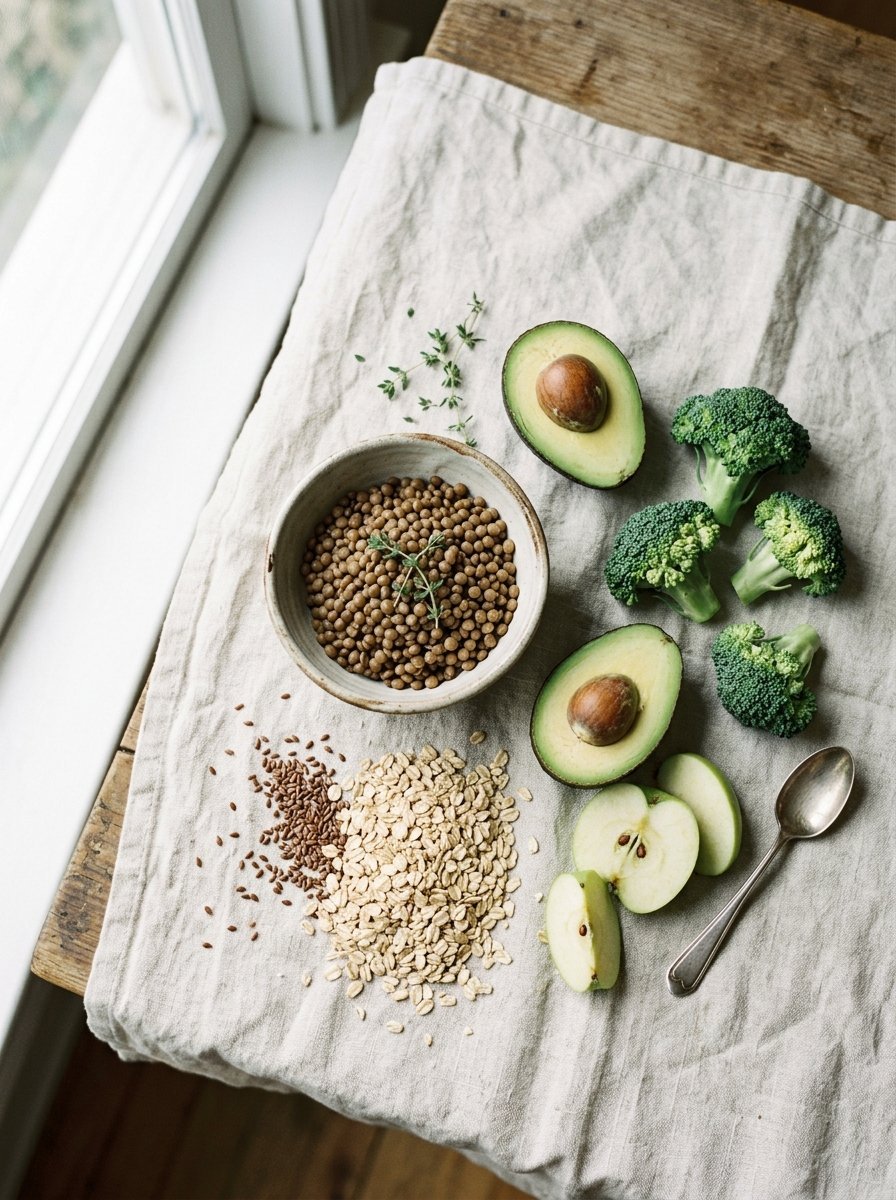
Start by adding one high-protein food to every meal and snack for two weeks. Don't count grams yet, just anchor each eating occasion to protein. Then track for three days to see where you actually land.
Progression
Once you have consistent protein at meals, address the distribution: are you getting 25g+ at breakfast, which is often the weakest meal? Adjust from there.
Common mistakes
Calculating for ideal weight, not actual weight
If you've gained weight in recent years, some practitioners suggest calculating protein based on a goal body weight rather than current weight, to avoid over-prescribing. This is a reasonable clinical adjustment for people significantly above a healthy weight.
Relying on protein bars as a primary source
Most commercial protein bars are 10–15g of protein in 200–300 calories, with added sugar and ultra-processed ingredients. Greek yogurt, cottage cheese, eggs, and legumes are more nutrient-dense sources at comparable or lower calorie cost.
Ignoring protein quality in plant-based diets
Not all plant proteins are equivalent. Soy protein is well-studied and effective for MPS. Pea and rice protein combined are also effective. Collagen protein, despite its popularity, is low in leucine and is a poor choice as a primary protein supplement.
4. Treating protein as optional on rest days. MPS occurs outside of the gym, and arguably you're rebuilding muscle on rest days as much as training days. Maintain protein intake uniformly throughout the week.
Assuming more is always better
Calories are still calories. Protein has 4 calories per gram, and protein supplements often come with additional calories. If you're adding 40g of protein powder above your actual needs, you're adding 160+ calories daily.
When to see a professional
A registered dietitian (RD) or registered dietitian nutritionist (RDN) with sports or aging specialization is worth consulting if: you have chronic kidney disease (CKD), where protein restriction is often appropriate; you're pregnant or breastfeeding, where protein needs differ and food safety considerations apply; you have phenylketonuria (PKU) or another amino acid metabolism disorder; or if you've been losing muscle mass despite meeting protein targets (which may indicate an underlying absorption issue, hormonal factor, or insufficient resistance training stimulus worth investigating).
Also consult a physician before adding large amounts of protein if you have gout (protein metabolism increases uric acid) or if you're on medications that affect kidney function.
Frequently asked questions
Is whey protein worth buying, or can I get enough from food?
Whole food sources are preferable when achievable: they carry fiber, micronutrients, and satiety advantages that protein powder doesn't. Whey protein is effective and convenient when food-based targets are difficult to meet, and it has a high leucine content that makes it a good post-training option. Whey concentrate is cost-effective; whey isolate suits those with lactose sensitivity. Neither is necessary if your diet consistently delivers the target protein.
What if I eat mostly plant-based? Do my protein needs change?
The total protein target is the same. The work is ensuring amino acid completeness: emphasize soy foods (tofu, tempeh, edamame), legumes, quinoa, and seitan, and consider a pea-rice blend protein supplement if targets are difficult to meet through food alone. Tracking for a few days usually reveals where the gaps are. Leucine content is worth attention since plant proteins generally have less per gram than animal proteins.
Does protein timing really matter, or is total daily intake what counts?
Both matter, but total daily intake is the bigger variable. Research supports distributing protein across three to four meals of 25–40g each for sustained muscle protein synthesis, rather than concentrating the day's intake in one or two meals. A protein-containing meal within roughly two hours of resistance training is reasonable but not critical if your overall daily total is on target.
I've heard high protein is bad for your kidneys. Is that true?
For people with existing chronic kidney disease, protein restriction is often clinically appropriate and should be managed with a nephrologist. For adults with normal kidney function, the available evidence (including a 2018 systematic review in the Journal of the Academy of Nutrition and Dietetics) does not support the conclusion that higher protein intakes damage kidneys. If you have any concerns about kidney function, check with your physician before substantially increasing protein intake.





0 Comments
Leave a comment
Your email won't be published. Required fields are marked with *.