


The advice to avoid screens before bed has become standard wellness wisdom. The dominant explanation focuses on blue light — the wavelengths emitted by screens that allegedly suppress melatonin and disrupt sleep. This is partly accurate but oversimplified.
The full picture of how screens affect sleep is more interesting and more useful. Multiple mechanisms contribute, the blue light story is only one of them, and the practical interventions that actually help are slightly different from what the popular advice suggests. Here's the more complete picture.
The blue light story (and what it gets right)
Blue light wavelengths (roughly 460 to 490 nanometers) suppress melatonin production more effectively than longer wavelengths. This finding is real and reproducible across studies.
The melatonin-suppressing effect of blue light is part of the body's normal circadian system — daylight contains substantial blue wavelengths, which suppress melatonin during the day and signal alertness. Evening exposure to blue light disrupts the natural rise of melatonin that supports sleep onset.
Screens emit blue light. Phones, tablets, computers, and televisions all produce significant blue wavelength output. Pre-bed screen use therefore exposes the visual system to wavelengths that suppress melatonin during the time when melatonin should be rising.
This much is accurate. The blue light story has a real foundation.
What's less commonly noted: the magnitude of the melatonin suppression from typical screen use is smaller than the popular framing suggests. Studies measuring actual melatonin levels after evening screen use show modest reductions — often 10 to 30 percent compared to no screen exposure. This is meaningful but isn't the dramatic disruption sometimes implied.
The melatonin suppression also depends on screen brightness, distance from the eyes, and duration of exposure. A bright screen held close to the face for hours produces more suppression than a dim screen viewed from across a room briefly.
For people with normal sleep, the blue light effect from typical evening screen use probably delays sleep onset by 15 to 30 minutes — not the dramatic disruption sometimes suggested but enough to matter when accumulated over months and years.
What the blue light story misses
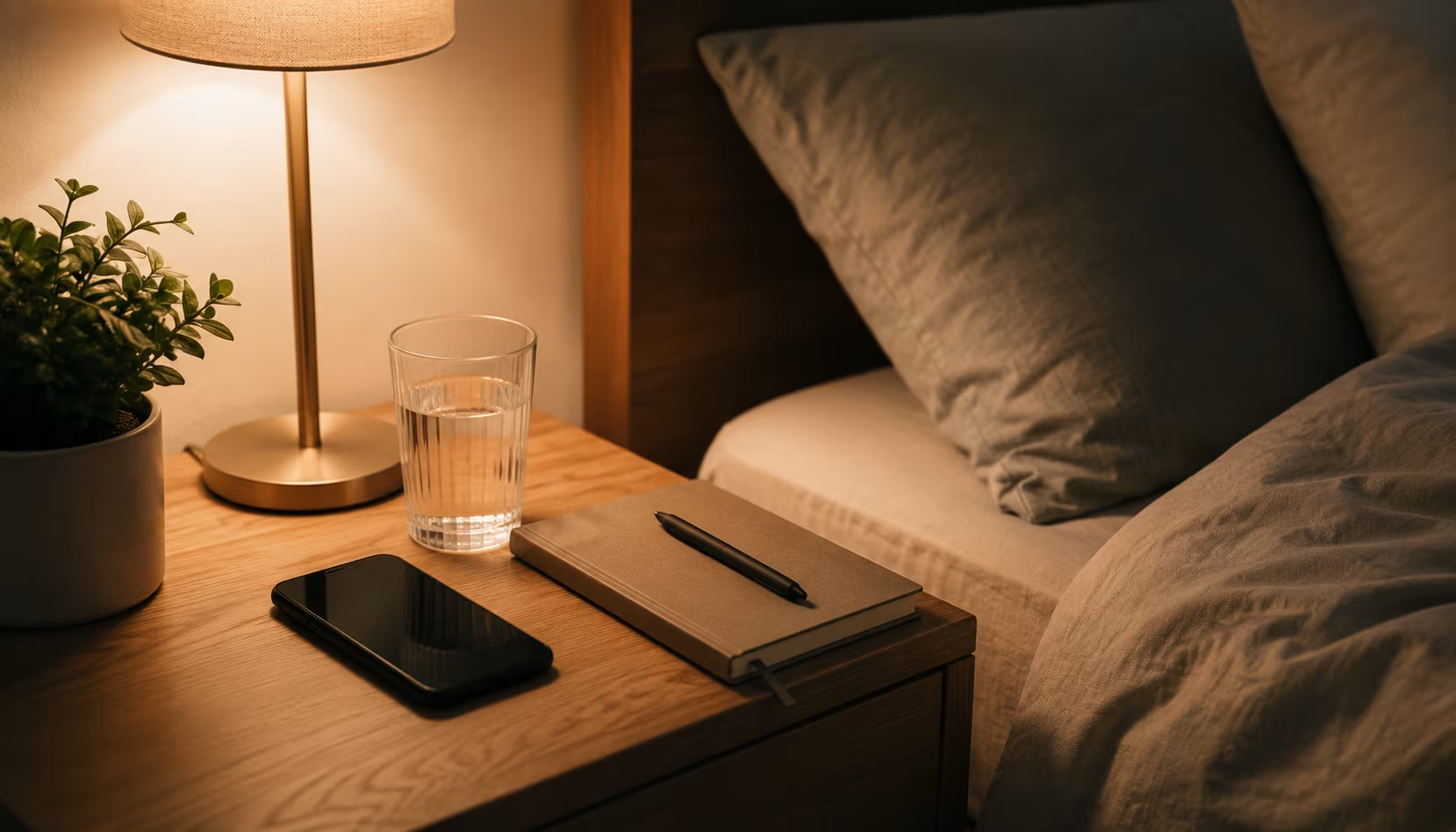
The narrow focus on blue light misses several factors that probably contribute more to the sleep cost of screens.
Total light exposure
Any bright light in the evening suppresses melatonin to some degree, not just blue light specifically. A bright incandescent bulb (less blue than a screen but still quite bright) produces meaningful melatonin suppression. The screen's brightness matters as much as its specific wavelength composition.
Visual stimulation
Active visual processing — following moving images, reading text — engages systems involved in alertness beyond just the light itself. Watching a wall under the same brightness produces less alertness than watching content under that brightness.
Cognitive demand
Mental engagement with content keeps the brain in active processing mode that's incompatible with sleep onset. The cognitive activation matters independent of the visual or light exposure.
Emotional activation
Content that produces emotional responses (excitement, anxiety, anger, longing) activates physiological systems that interfere with sleep onset. Even brief emotional activation from a single distressing message can delay sleep significantly.
Posture and physical state
Screen use while reclining or in bed itself affects sleep onset patterns. The body's signals that "it's time to sleep" weaken when wakeful activity continues in the bed.
Time displacement
People who use screens before bed often delay actual sleep onset simply by being awake longer. The screens occupy time that would otherwise be spent sleeping.
The blue light story focuses on the most measurable mechanism, but it isn't necessarily the most impactful one. For most people, the cognitive and emotional activation from screen content probably contributes more to sleep disruption than the light itself.
Cognitive activation: the bigger problem
The cognitive activation from screen content matters more than the popular advice acknowledges.
Reading a book before bed by the same light intensity that a screen would produce affects sleep less than equivalent screen use. The difference isn't primarily the light — it's the engagement pattern.
Books typically engage attention in a sustained, settling way. Screen content, especially social media and news, engages attention in shorter cycles with constant novelty, comparison, and emotional shifts. The cognitive pattern of social media use is different from book reading in ways that affect sleep onset.
A 2017 study by Hisler and colleagues found that adolescents using social media before bed had longer sleep onset latency than adolescents reading or doing other activities for the same duration. The effect persisted after controlling for total screen time) and light exposure.
Email, messaging, and work-related screen use before bed have particularly large effects because they bring active mental engagement with ongoing concerns into the pre-sleep period. The "one quick check of work email" before bed often activates concerns that take an hour to fully release.
News content, particularly if politically charged or emotionally activating, similarly delays sleep onset through emotional engagement that persists after the screen is put down.
The implication: the kind of content matters at least as much as the screen itself. A 30-minute documentary on calm subject matter may affect sleep less than 5 minutes of doomscrolling Twitter.
For practical sleep purposes, the pre-bed period should ideally exclude content that activates ongoing concerns or strong emotional responses, regardless of whether that content is on a screen or in another medium.
Different content types, different effects
Different screen content produces different effects on sleep.
Email and work-related content
Highest sleep cost. Activates ongoing concerns and decision-making. Often produces rumination that continues after the screen is put away.
Social media (especially comparison-heavy platforms)
High sleep cost. Triggers social comparison, emotional reactivity, fear of missing out. The infinite scroll structure encourages extended use beyond intended duration.
News
High sleep cost when content is emotionally activating. Lower cost for relatively neutral content. The current state of news media tends toward emotional activation.
Stimulating video content (action, drama, suspense)
Moderate sleep cost. The cognitive and emotional engagement matters.
Calm video content (nature documentaries, gentle entertainment)
Lower sleep cost than more stimulating content. Still delays sleep through the time displacement and some cognitive engagement.
Reading on a screen (e-books, articles)
Lower sleep cost than active interactive content. The cognitive engagement is more like book reading.
Audio content (podcasts, audiobooks, music)
Lowest sleep cost of "screen" content if the screen is actually off and only audio is playing. Can be sleep-supportive if the content is calming.
Meditation apps with audio guidance
Often actively sleep-supportive. The combination of relaxation focus and calming audio supports the transition to sleep.
For people who want some pre-bed screen activity, switching from social media or news to e-reader-style reading or calm video content reduces the sleep cost substantially while not requiring complete abstinence.
The hard line "no screens before bed" is more demanding than necessary. The more useful framing: avoid the most disruptive screen content (work, social media, activating news) while remaining flexible about less disruptive use.
What blue light glasses actually do
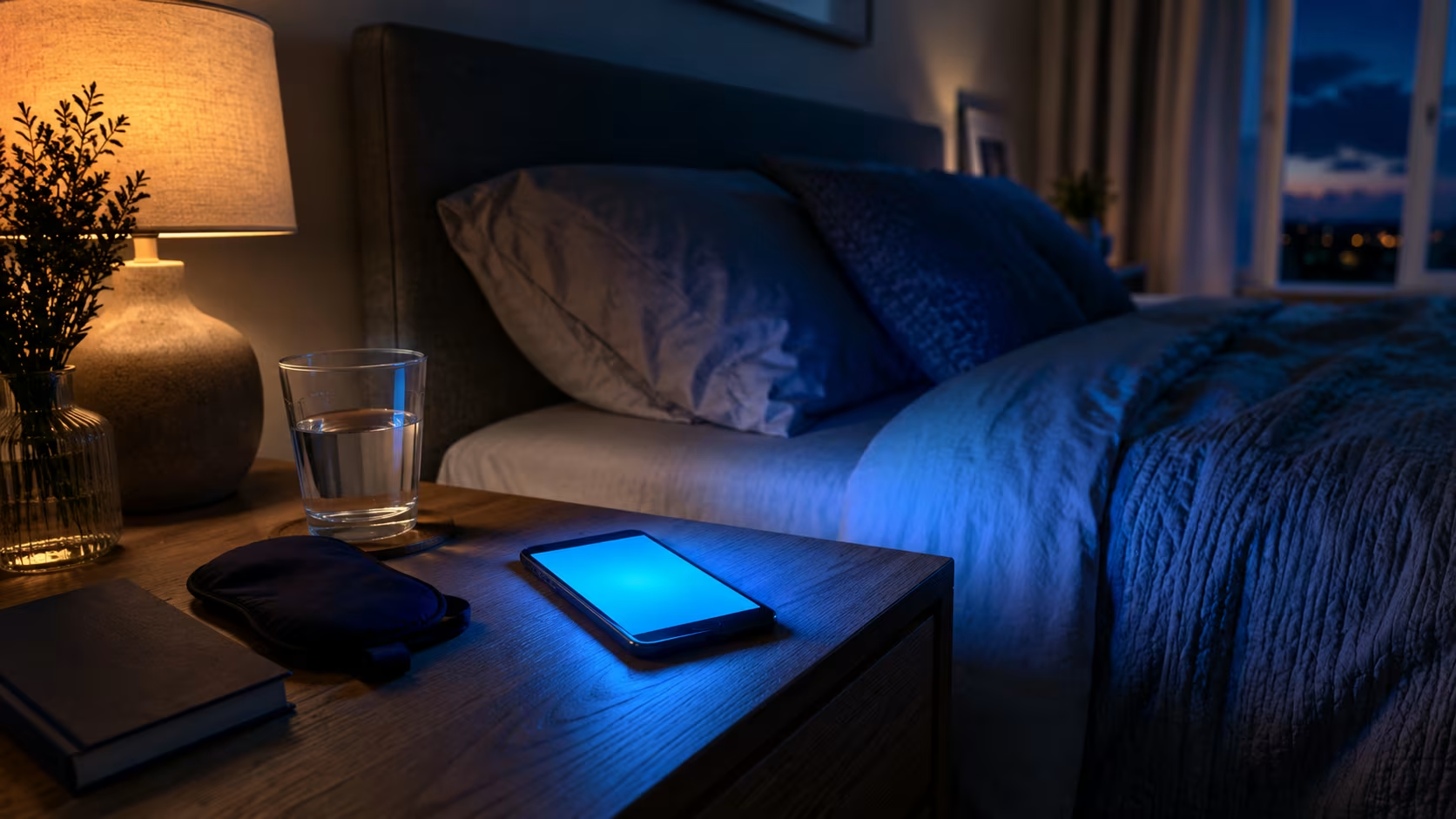
The blue light glasses industry has expanded significantly over the past decade. The actual evidence for their effectiveness is mixed.
For melatonin protection specifically, blue light glasses do reduce melatonin suppression compared to unfiltered screen exposure. The effect is real but small — typically 20 to 40 percent reduction in the melatonin suppression that would otherwise occur.
For sleep outcomes specifically, the evidence is thinner. A 2017 study by Burkhart and Phelps found that wearing amber-tinted glasses for 3 hours before bed improved sleep quality compared to clear glasses. The improvement was modest but statistically significant.
For eye strain from extended screen use, blue light glasses may help with subjective comfort. The objective effects on eye fatigue are less clear, with some studies showing minimal benefit.
The dramatic claims about blue light glasses transforming sleep aren't well-supported. The modest claims (slight reductions in melatonin suppression, possible small sleep improvements) are reasonable.
For people who want to use screens in the evening but minimize sleep disruption, blue light glasses are a reasonable accessory. They're probably not transformative but the cost is modest and any benefit is added value.
The night-mode or "warm" settings built into most modern devices provide similar effects as blue light glasses, often free. These software-based shifts to warmer color temperatures reduce the blue wavelengths emitted. The effect is similar to wearing glasses that filter blue light, without requiring additional eyewear.
For most people, enabling night mode on devices is an easier intervention than buying glasses. The benefit is similar.
What probably matters more than either intervention: reducing total screen time before bed and choosing less stimulating content when screens are used.
The phone in the bedroom
Of all the screen-related interventions for sleep, removing the phone from the bedroom may have the largest impact for many people.
The phone in the bedroom serves several sleep-disruption functions:
It enables late-night phone use that wouldn't happen if the phone were elsewhere. Even people committed to not using phones before bed often check "just one thing" if the phone is at hand.
It provides notifications that wake you at night even when not in active use.
It serves as the alarm clock, requiring it to be present and on.
It produces anxiety about messages received during the night that aren't responded to.
It contributes to morning phone use immediately upon waking, which has its own effects.
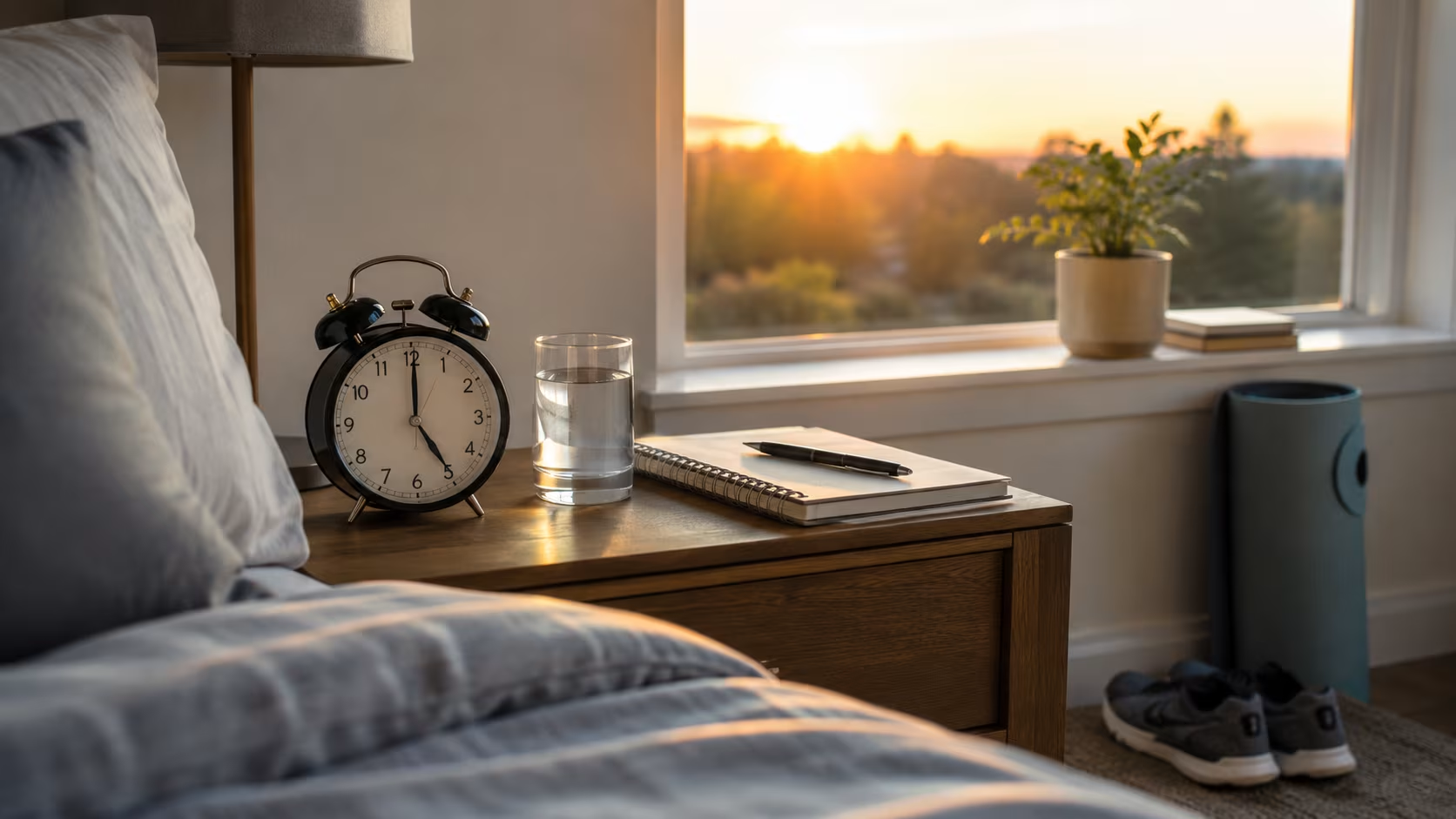
Moving the phone outside the bedroom requires solving the alarm clock problem. A simple alarm clock costs $20 and removes the need for the phone in the bedroom. This single change often produces dramatic improvements in sleep quality and morning experience.
For people with on-call responsibilities or genuine reasons to be reachable, configuring the phone to allow only specific calls through Do Not Disturb settings, while still being outside the bedroom, can preserve emergency reachability without the constant temptation.
The change is harder than it sounds. Many people are surprisingly attached to having the phone next to the bed. Trying it for a week is the test — if sleep improves, the change is probably worth maintaining.
For people who can't or won't remove the phone from the bedroom, putting it in airplane mode at bedtime accomplishes some of the same goals. No notifications, no wake-ups, no temptation to scroll if briefly awake. The phone is still there, but functionally inactive.
The middle ground that often fails: phone in bedroom with Do Not Disturb on. The temptation to check is preserved, the notifications return at the scheduled end time and may wake you, and the device's presence still pulls some of the attention the bedroom should be reserved for.
Building a screen-free wind-down
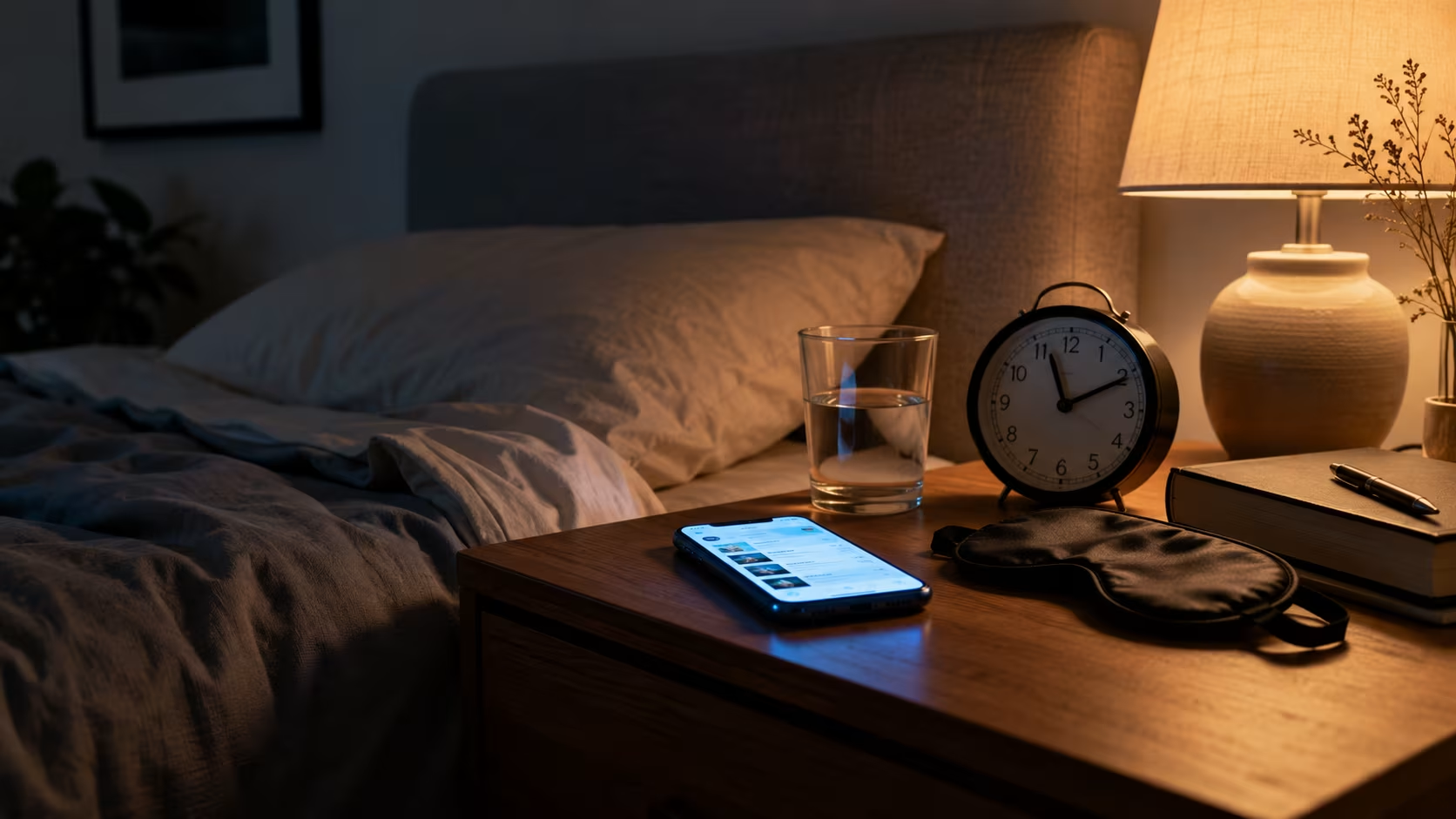
The most evidence-supported intervention for screens-and-sleep is having a screen-free period before bed. Various durations work; consistency matters more than exact length.
A 30 to 60 minute wind-down period is the standard recommendation. This means no screens (phone, computer, TV, tablet) for that period before sleep. The exact duration matters less than having any wind-down at all.
What to do during the wind-down:
Reading a physical book
The classic option. Engaging enough to occupy attention without the cognitive activation of screen content.
Conversation
Talking with a partner about non-stressful topics. Builds connection and supports the transition to sleep.
Bath or shower
The temperature drop after a warm shower supports sleep onset through circadian mechanisms.
Stretching or gentle yoga
Light physical activity that releases tension without raising heart rate.
Meditation
Brief sitting practice or body scan provides the cognitive transition from active day to sleep.
Journal writing
Brief writing about the day or planning for tomorrow can release ongoing concerns that would otherwise occupy the mind.
Listening to audio
Music, podcasts, or audiobooks that are calming. The screen stays off.
Boring tasks
Some people find that doing some intentionally boring task (folding laundry, light tidying) supports the wind-down.
What to avoid during the wind-down:
Email and work content. Activates ongoing concerns.
Social media. Provides emotional and comparison stimulation.
News, especially political content. Often emotionally activating.
Engaging entertainment. Movies, intense shows, video games — the more stimulating, the more disruptive.
Difficult conversations. Save serious discussions for daytime when possible.
Significant exercise. Should be done earlier in the day for sleep purposes.
Heavy meals or alcohol. Both interfere with sleep architecture.
For people who can't manage a full screen-free hour, even 15 to 30 minutes of screen-free time produces meaningful improvements in sleep quality. The cumulative benefit over weeks and months is substantial.
The first week of implementing a screen-free wind-down is often the hardest. The pull of the phone is strong. After a few weeks, the new pattern feels more natural and the sleep benefits become evident.
Realistic expectations and trade-offs
Some context for the screen-and-sleep conversation that the popular advice often misses.
Modern life involves screens. Going entirely screen-free in the evening is unrealistic for most people. The goal isn't perfection but improvement.
The sleep cost of screens is real but variable. People differ in their sensitivity. Some people sleep fine despite significant evening screen use. Others are highly sensitive. Knowing your own pattern matters.
The biggest factor for most people is probably total sleep duration, not screen-related sleep quality. Going to bed at 11 PM after some screen use produces more sleep than going to bed at 9 PM with no screens but inability to fall asleep until 11 PM. The sleep duration matters more than the sleep architecture quality differences.
For young people, the sleep cost of screens may be larger than for older adults. Adolescent circadian biology is more vulnerable to evening light exposure, and adolescent screen use patterns are often particularly sleep-disrupting. The interventions matter more in this population.
For older adults whose sleep is already affected by age-related changes, screen reductions can produce meaningful improvements that compensate for some of the natural sleep architecture changes.
For shift workers and others with non-standard schedules, the screen-and-sleep dynamic is different. The standard advice about evening screens has to be adapted to the person's actual schedule.
The wellness industry's messaging about screens and sleep is often more dramatic than the underlying evidence supports. The interventions are useful but not transformative. Sleep is affected by many things; screens are one factor among several.
The practical priority for most people: ensure adequate total sleep duration, maintain consistent sleep timing, optimize the bedroom environment, address obvious disruptors (alcohol, late caffeine, late heavy meals), and reduce the most disruptive screen content during the wind-down period. This captures most of what's available without requiring extreme behaviors.
Sources
Hisler, G., Twenge, J. M., & Krizan, Z. (2020). Associations between screen time and short sleep duration among adolescents vary by media type: evidence from a cohort study. Sleep Medicine, 66, 92–102.
Burkhart, K., & Phelps, J. R. (2009). Amber lenses to block blue light and improve sleep: a randomized trial. Chronobiology International, 26(8), 1602–1612.
Chang, A. M., Aeschbach, D., Duffy, J. F., & Czeisler, C. A. (2015). Evening use of light-emitting eReaders negatively affects sleep, circadian timing, and next-morning alertness. Proceedings of the National Academy of Sciences, 112(4), 1232–1237.
Cain, N., & Gradisar, M. (2010). Electronic media use and sleep in school-aged children and adolescents: A review. Sleep Medicine, 11(8), 735–742.
Levenson, J. C., Shensa, A., Sidani, J. E., Colditz, J. B., & Primack, B. A. (2016). The association between social media use and sleep disturbance among young adults. Preventive Medicine, 85, 36–41.
Tähkämö, L., Partonen, T., & Pesonen, A. K. (2019). Systematic review of light exposure impact on human circadian rhythm. Chronobiology International, 36(2), 151–170.
Lawrenson, J. G., Hull, C. C., & Downie, L. E. (2017). The effect of blue-light blocking spectacle lenses on visual performance, macular health and the sleep-wake cycle: a systematic review of the literature. Ophthalmic and Physiological Optics, 37(6), 644–654.
Frequently Asked Questions
Does blue light from screens really affect sleep?
Yes, but the effect is smaller than commonly claimed. The melatonin suppression from typical phone or computer use in the evening is real but modest. The bigger sleep cost from screens probably comes from the cognitive activation of the content, not the light itself.
Do blue light glasses actually work?
Modestly. Studies show they reduce melatonin suppression slightly compared to no glasses. The effect on actual sleep outcomes is small. The main practical benefit may be reducing eye strain from extended screen use, not transforming sleep.
Is it the light or the content that's the problem?
Both, but probably the content more. Watching a show might delay sleep slightly through light exposure. Doomscrolling Twitter delays it dramatically through cognitive and emotional activation. The kind of content matters more than people often realize.
How long before bed should I stop using screens?
The standard recommendation is one hour. Honest answer: even 30 minutes of screen-free wind-down before bed produces measurable sleep improvements for most people. The key is having any wind-down at all, not the exact duration.


0 Comments
Leave a comment
Your email won't be published. Required fields are marked with *.
Your name, email address and comment are processed to publish and reply to the comment; your email address is never published. Details: Privacy Notice.