


The deadlift is one of the most-rewarding lifts in any program and one of the most commonly blamed for back pain. The blame is usually misplaced. Lower back pain from deadlifting is rarely caused by the lift itself: it's caused by setup errors, incomplete bracing, load progression that outran technical capacity, or training through fatigue that compromised mechanics. The lift gets the credit; the execution carries the actual problem.
This is a guide to identifying and fixing the most common causes of deadlift-related back pain, in roughly the order they should be checked.
What Lower Back Pain From Deadlifts Usually Is
Most lifting-related lower back pain falls into three categories:
1. Muscular soreness
Diffuse, dull, achy, present in the first 24–72 hours after a heavy session. Movement helps. Resolves on its own. Normal training experience.
2. Erector spinae or quadratus lumborum strain
Sharper, often unilateral, present at rest as well as with movement, sometimes with visible muscle spasm. Worse with bending or twisting. Resolves with relative rest, gentle movement, and load reduction over 1–3 weeks.
3. Disc-related pain
The more serious category. Sharp, often radiating into the buttock or down the leg. May include numbness, tingling, or weakness in the leg. Does not improve quickly with rest. Often correlated with specific positions (sitting, bending forward).
Categories 1 and 2 are fixable through training adjustments. Category 3 needs medical evaluation. Pain that radiates into the leg, persists more than 2 weeks, or is associated with neurological symptoms is not a "tough it out" situation.
The Bracing Sequence
The single most under-coached aspect of the deadlift is intra-abdominal bracing. Without an adequately braced trunk, force production transfers to spinal erector muscles and ligaments rather than to a stable cylinder pressurized from inside.
The correct bracing sequence:
- Stand over the bar. Feet under hips, bar over mid-foot.
- Take a 360-degree breath into the belly and lower ribs. Not just into the chest. The diaphragm should descend, the abdominal wall should expand outward in all directions including laterally and posteriorly.
- Tense the abdominal wall against the breath. As if anticipating a punch to the stomach.
- Hold this pressure as you hinge to the bar.
- Initiate the lift with the held pressure intact.
- Maintain the pressure throughout the rep.
- Reset before each rep: re-breathe and re-brace.
Most people who have back pain from deadlifts are bracing only the front of the abdominal wall, without the lateral and posterior components, and breathing into the chest rather than the belly. The fix is conscious, deliberate practice with submaximal weight before adding load.
Setup Errors That Drive Pain
A few setup details that disproportionately contribute to back pain:
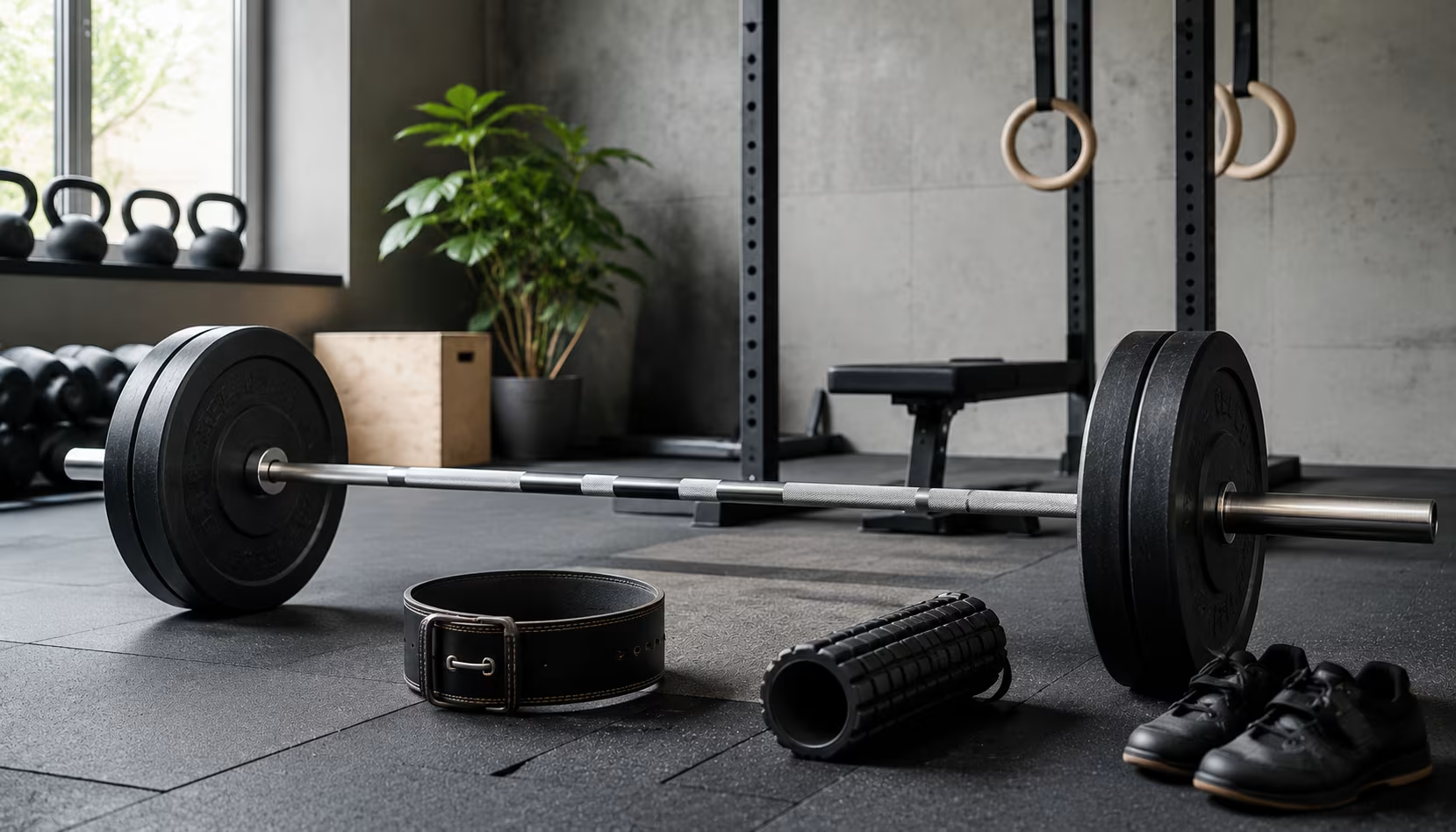
Bar too far from shins
Pulls the lifter into a more horizontal back angle from the start, increasing lever arm on the lower back. Bar should be over mid-foot, almost touching the shins at setup.
Stance too wide for body proportions
Produces unstable hip position. Most people deadlift conventionally with feet hip-width apart, slightly toed out.
Slack in the bar
Failing to "pull the slack out" before initiating the lift means the bar yanks against your body, jerking the spine. Pull the bar tight against the plates before the rep starts.
Arms not fully extended
Bent elbows at the start collapse during heavy pulls and create asymmetric stress.
Looking up dramatically
Extreme cervical extension translates down the spine. Neck should be neutral; eyes can look straight ahead or slightly down.
Hips too low at start (squatting the deadlift)
Moves the load too far in front of you and leads to immediate hip rise. Hips should be higher than knees at setup, not at squat depth.
A 5-second pre-rep checklist: feet over mid-foot, bar near shins, arms fully extended, slack pulled out, breath taken and held, brace engaged. Every rep, every time.
Hips Rising Before the Bar — The Most Common Form Issue
This is the single most common form problem in heavy deadlifts, and one of the most damaging.
What it looks like
The lift starts. The hips shoot up first, the bar barely moves, and the lifter ends up with hips high and torso parallel to the floor before the bar leaves the floor. From this position, the deadlift becomes essentially a stiff-leg pull from a deficit, with much higher demand on the lower back.
Why it happens:
- Quadriceps are not strong enough to drive the lift through the legs initially
- Lifter intuitively shifts to back to compensate for weak legs
- Setup hip position was too low, requiring more leg drive than the legs could provide
- Bracing wasn't established, so the spine collapsed first
How to fix it:
- Reduce weight to 50–60% of working max for several weeks
- Practice the start position with a long pause at the floor: set up, take 3 seconds, then lift, focusing on driving feet through the floor
- Add front-loaded squats and Bulgarian split squats to build single-leg quad strength
- Use tempo deadlifts (3-second eccentric, pause at the floor, controlled lift) to slow down and re-pattern the start
- Film your setup and the first 20 cm of bar movement from the side. The hips and shoulders should rise at the same rate, not the hips first
Once hips rise before the bar, the rest of the lift can't recover safely. The fix is at the start, not the finish.
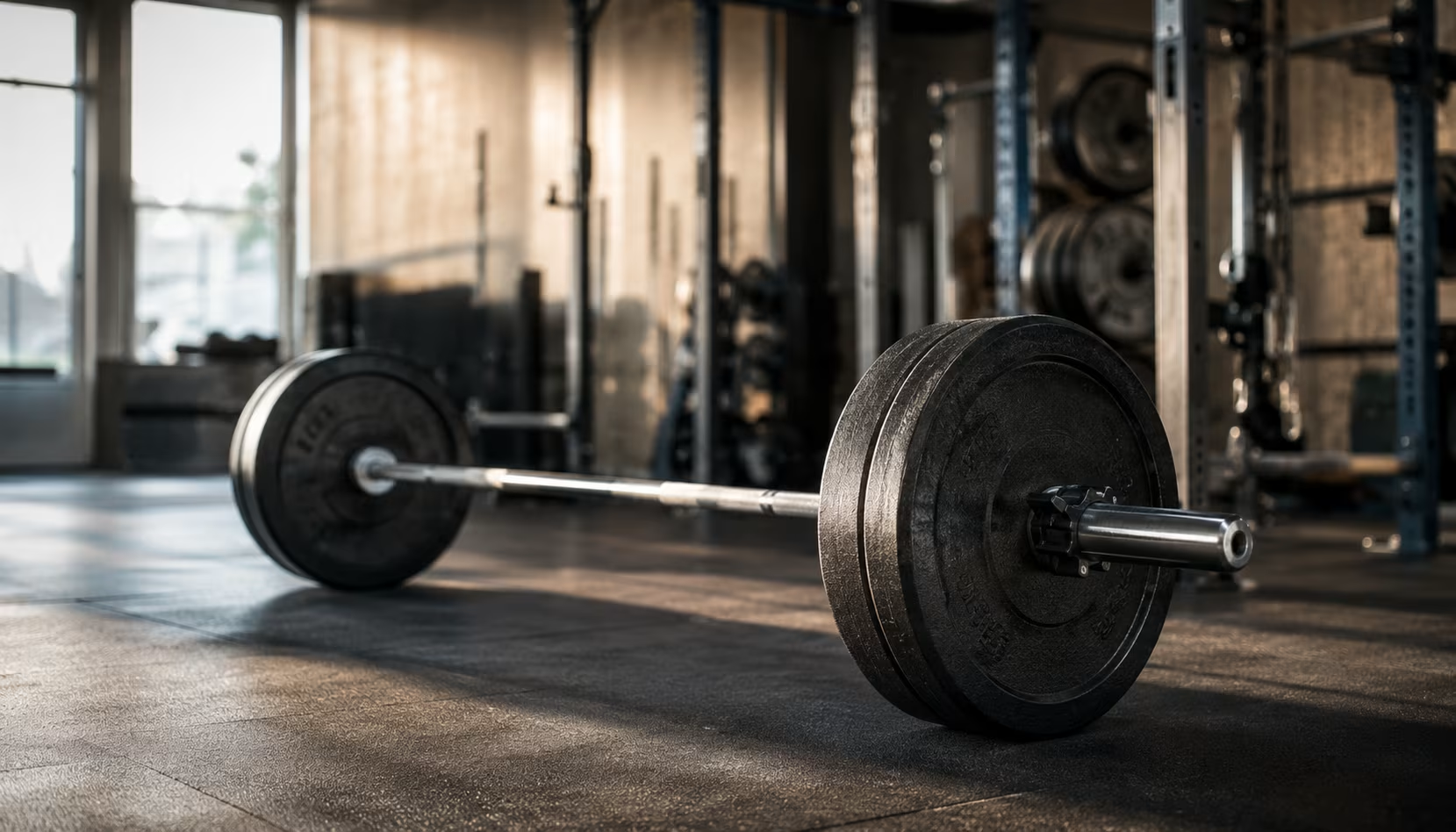
Mid-Back Position
Some thoracic flexion at heavy deadlifts is normal and not necessarily injurious. Strict "lock the spine in extension throughout" cueing is impossible at maximal loads and creates anxiety without preventing actual injury.
What matters
The spine should be rigid and braced, not necessarily perfectly neutral. The thoracic spine can round modestly under load (some elite lifters intentionally do this to create a shorter moment arm). The lumbar spine should not round excessively and the lift should not start with a pre-rounded mid-back.
The actual injury patterns:
- Sudden flexion under load: the spine bends mid-rep, often with a visible "valgus" or asymmetric collapse. This is what causes acute injury.
- Cumulative micro-strain from chronic poor position: many sets at moderate intensity with consistent excessive flexion produces gradual irritation.
Cue: "Big chest, tight upper back." Pulling the shoulder blades down and slightly back at setup creates upper back rigidity. Holding a tight lat (imagine "armpits squeezing") keeps the bar close to the body and protects the lower back through better leverage.
Load and Volume Progression
A common scenario: someone who deadlifted 100 kg comfortably for months adds 20 kg in 6 weeks and develops back pain. The lift wasn't the problem; the rate of progression outpaced the technical and tissue capacity.
Reasonable deadlift progression for a non-novice:
- Add 1.25–2.5 kg per week when the lift feels easy
- Plateau or deload every 4–6 weeks
- Increase volume gradually over 4–6 weeks before testing 1RM
- Avoid simultaneous increases in weight, reps, and frequency
Volume matters as much as load. Going from 3 sets of 5 once a week to 5 sets of 5 three times a week is a 5x increase in weekly volume. The body needs months to adapt to that, not weeks.
Conventional vs Sumo
Conventional and sumo deadlifts load the lower back differently:
Conventional
Narrower stance, bar farther from hip joint, more horizontal back angle, higher demand on lumbar erector spinae.
Sumo
Wider stance, bar closer to hip joint, more vertical back angle, more demand on hip adductors and quadriceps, lower lumbar shear force.
For lifters with chronic mild low-back issues, sumo is often more comfortable. The biomechanics genuinely shift load away from the lumbar region. Many lifters whose conventional deadlift caused recurring back issues found sumo allowed continued heavy training.
This is not universal. Hip mobility and individual anatomy matter: some people physically cannot get into a comfortable sumo position. Trial and adaptation determine which works for you.
A reasonable middle position: train both stances with primary focus on whichever feels better; use the alternate stance for lighter work and variety.
When to Stop and See Someone
Continue training (with adjustments) for:
- Mild diffuse soreness that resolves in 1–3 days
- Modest unilateral muscular tension that responds to mobility work and reduced load
- Discomfort that fades within a session as you warm up
Stop and seek evaluation for:
- Pain radiating into the leg below the buttock
- Numbness or tingling in the leg or foot
- Weakness in the leg, foot drop, difficulty getting on toes or heels
- Pain that doesn't improve over 2 weeks of relative rest
- Pain that worsens at night or wakes you from sleep
- Pain associated with bowel or bladder symptoms (red flag, immediate medical attention)
A physical therapist who works with strength athletes is the right first resource for non-emergency lifting-related back pain. They can assess movement patterns and provide a graded return-to-training protocol.
The Rehab Protocol
For non-emergency back tweaks from deadlifting, a standard return-to-training protocol:
Week 1
Stop heavy hinging. Continue easy walking, hip mobility work, core work that doesn't aggravate symptoms (dead bugs, bird dogs, pallof presses). Avoid sitting in poor positions for long.
Week 2
Begin reintroducing hinging with light kettlebell deadlifts at very low weight (25–40 kg or whatever doesn't reproduce pain). Focus on bracing, position, and movement quality. No max effort.
Week 3
Add back the trap bar deadlift or Romanian deadlift at moderate load (50–60% of pre-injury working weight). 3 sets of 5 with full control.
Week 4–6
Progressive load increase, returning to barbell deadlifts at 70%, then 80%, then 90% of pre-injury working weight over 3–4 weeks, monitoring symptoms.
Week 7+
Resume normal programming with attention to bracing, setup, and progression rate.
The emphasis throughout is technical quality over load. The same fault that caused the issue will cause it again if not addressed during rehab.
Frequently Asked Questions
Why does my lower back hurt after deadlifts?
Most often: incomplete bracing, hips rising before the bar leaves the floor, or a rounded mid-back without controlled posterior chain tension. Sometimes: jumping weight too fast or training when fatigued. Acute pain after a single session is usually muscular strain; persistent pain over weeks needs investigation.
Should I deadlift if I have lower back pain?
Mild muscular soreness is normal in the first 1–3 days after heavy work. Sharp, lateralized, or radiating pain, especially with numbness, tingling, or pain into the leg, needs medical evaluation before continuing. A physical therapist who works with lifters is the right resource.
Conventional or sumo deadlift for back issues?
Sumo distributes load differently: more demand on hips and adductors, less on lumbar erector spinae. Many people with chronic mild low-back issues tolerate sumo better than conventional. The right answer depends on your individual anatomy; not a universal rule.
How heavy should I deadlift if my back is sensitive?
Drop the weight to a load you can move with perfect setup, full bracing, and controlled tempo. For most people that's 50–60% of previous max. Stay there for 4–8 weeks while rebuilding pattern, then progress slowly using technical RPE rather than load chasing.
Should I wear a belt for deadlifts?
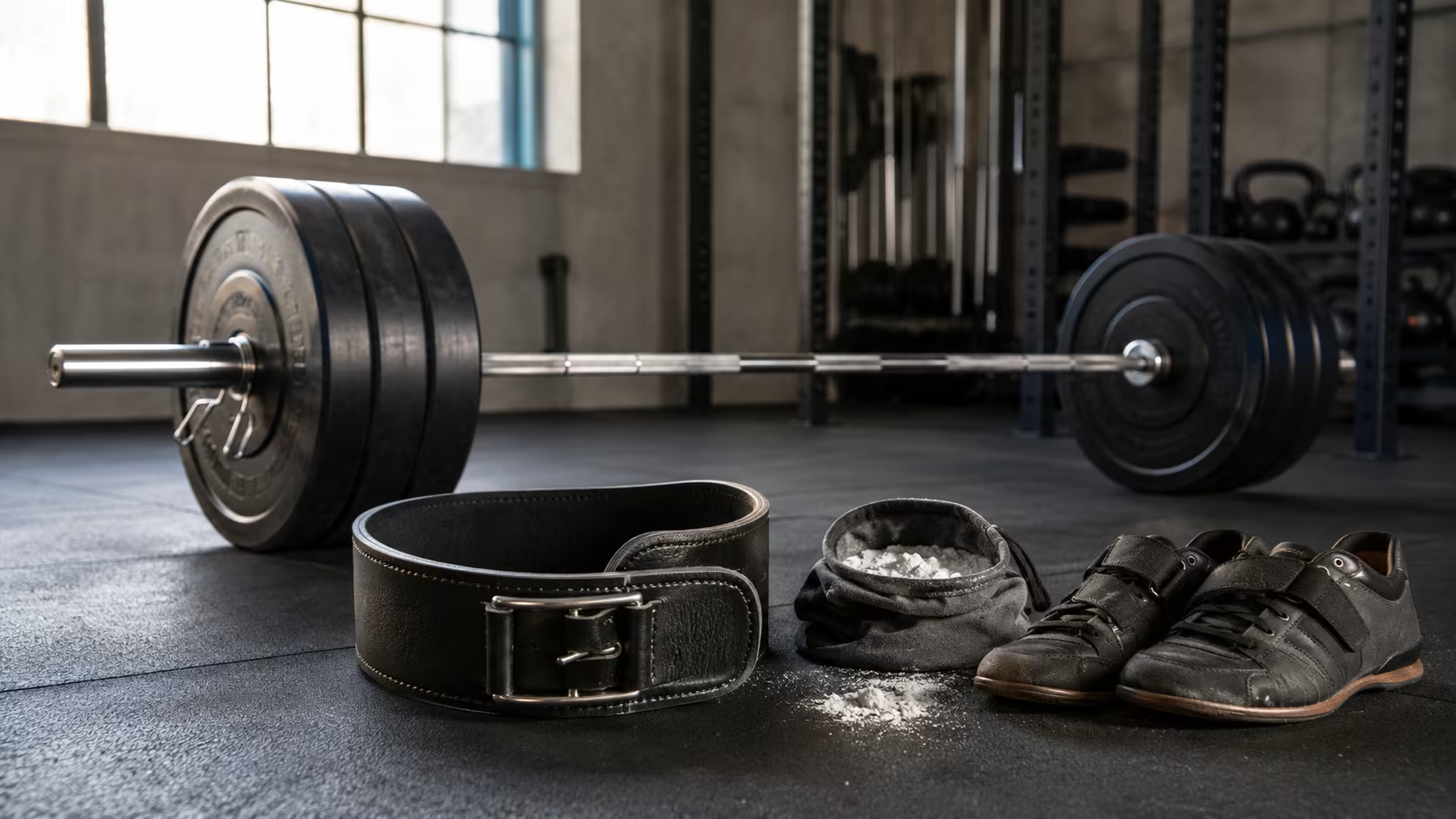
A belt increases intra-abdominal pressure and provides tactile feedback for bracing, useful for heavier sets above 80% of your max. For lighter work, training without a belt builds your own bracing capacity. Belt-dependence isn't ideal; use it as a tool for heavy work, not as a daily crutch.





0 Comments
Leave a comment
Your email won't be published. Required fields are marked with *.