


The recovery industry has become big business. NormaTec compression boots (now part of Hyperice) cost $700 to $1,500. Theragun and similar percussion massagers run $200 to $700. Compression garments. Red light panels. Cryotherapy chambers. Pulsed electromagnetic field devices. The pitch for each promises measurable recovery improvements that translate to better training, faster results, fewer injuries.
Some of these claims are supported by research. Some aren't. Here's a careful look at the most popular recovery tools, what the evidence shows, and how to think about what's worth your money.
Pneumatic compression: NormaTec and competitors
Pneumatic compression devices (NormaTec, RecoveryAir, Air Relax, and others) use sequenced inflating chambers to apply intermittent pressure to the legs, arms, or hips. The pressure pattern typically runs from distal to proximal — squeezing the feet first, then the calves, then the thighs — mimicking the body's natural muscle pump that returns blood and lymph from the extremities.
The research base on pneumatic compression for recovery is moderate. A 2014 study by Sands and colleagues with elite athletes found significant improvements in perceived recovery and reduced delayed-onset muscle soreness with regular use of NormaTec sessions after training. Subsequent studies have been mixed, with some showing benefits for perceived recovery and others showing minimal objective performance changes.
The mechanism is a combination of enhanced venous return, increased lymphatic drainage, and possible reduction of swelling. The subjective experience is usually quite pleasant — many athletes report feeling significantly more refreshed after a 30-minute session.
Where pneumatic compression makes sense:
Elite athletes with daily heavy training
The marginal recovery benefit, multiplied across many sessions, can be worth the cost. Many professional teams provide compression boots in their facilities.
Athletes traveling for competition
The boots help with the swelling and stiffness from extended sitting on flights and the recovery between competition rounds.
Long-distance runners and cyclists during high-volume periods
The volume of leg work makes the recovery investment more justifiable.
Post-race or post-long workout when nothing else is available
A 30-minute session feels measurably better than passive rest.
Where pneumatic compression doesn't make as much sense:
Recreational athletes training 3 to 4 times a week
The cost-to-benefit ratio doesn't favor a $1,000+ purchase for occasional use. The same recovery benefit is achievable with cheaper interventions.
As a substitute for adequate sleep
No recovery technology compensates for chronic sleep deprivation.
For dramatic weight loss or "detox" claims
Pneumatic compression doesn't produce these effects despite some marketing claims.
For people who want the benefits without the home purchase, many recovery studios and gyms now offer pneumatic compression on a per-session basis. This is often more sensible than buying the device for occasional use.
Percussion massagers: Theragun and similar
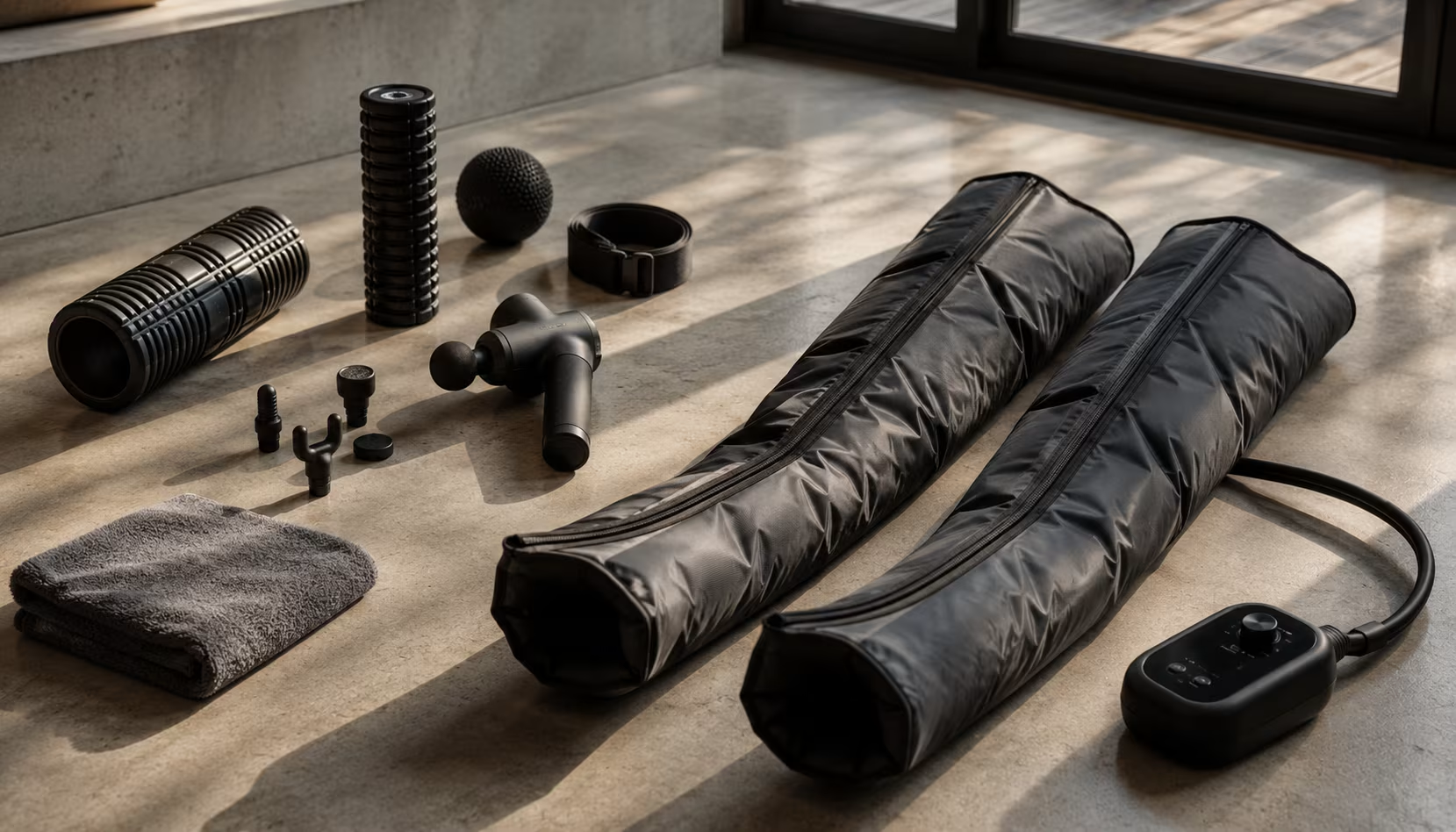
Percussion massagers (Theragun, Hypervolt, and many cheaper alternatives) deliver rapid percussive strokes to muscle tissue, typically at frequencies of 30 to 50 hits per second.
The research on percussion devices specifically is growing. A 2020 study by Konrad and colleagues found that 5 minutes of percussion massage increased range of motion and reduced muscle stiffness similarly to traditional massage. A 2021 systematic review by Imtiyaz and colleagues concluded that percussion devices produce effects on muscle soreness, range of motion, and perceived recovery that are broadly similar to manual massage.
The mechanism is largely the same as manual massage — neural inhibition of muscle tone, increased local blood flow, and the sensory input that affects pain processing. The percussion frequency is in the range that activates muscle spindle responses and produces neural relaxation.
Where percussion massagers make sense:
Daily use for muscle maintenance
A 5-minute session on tight or sore areas before or after activity. The convenience makes consistent use feasible in a way that booking professional massages doesn't.
Pre-workout warmup of specific tight areas
A few minutes on quads before squats, calves before running.
Travel and remote training situations
A small massage gun fits in a bag and provides recovery options when away from regular tools.
Self-treatment between professional massage appointments
Extends the benefit of professional work.
What to know when buying:
The premium devices (Theragun Pro, Hypervolt 2 Pro) cost $400 to $700 and offer multiple speed settings, longer battery life, more attachments, and quieter operation. Mid-range devices ($150 to $300) work nearly as well for most users. Cheap devices (under $100) often have weak motors that don't produce enough amplitude for meaningful tissue effects.
Cautions: don't use over the front of the neck, the spine, the kidneys, joints themselves, or areas of acute injury. Use lower settings on bony areas and the face. Pregnant women should consult their doctor.
For most people, a mid-range percussion massager is one of the better recovery purchases — affordable, useful daily, and broadly applicable.
Compression garments for daily wear
Compression garments — socks, sleeves, tights — are sold for athletic recovery, performance during exercise, and general daily wear.
For specific medical applications (venous insufficiency, varicose veins, lymphedema, deep vein thrombosis prevention during long flights), graduated compression has clear documented benefits and is often medically prescribed.
For athletic recovery, the evidence is more nuanced. A 2017 meta-analysis by Brown and colleagues found that wearing compression garments after exercise produced small reductions in delayed-onset muscle soreness and small improvements in subsequent performance, with effect sizes in the small-to-moderate range. The effects are real but smaller than the marketing often suggests.
For performance during exercise, a 2018 systematic review by da Silva and colleagues found minimal evidence that compression garments improve performance during running or cycling. The proprioceptive and psychological effects may produce subjective improvements; objective performance changes are usually small or absent.
Where compression garments make sense:
Long-distance running or cycling events
Compression sleeves on the calves during ultras or long bike rides have anecdotal support for reducing late-event leg fatigue. The objective evidence is mixed but the comfort matters.
Post-event recovery
Wearing compression tights or socks for several hours after a long event is well-tolerated and may provide modest recovery benefit.
During long flights or extended sitting
Real benefits for circulation and reduced leg swelling.
For specific medical conditions. As prescribed by a physician.
Where compression garments don't make as much sense:
Daily wear for general wellness
No real evidence of benefit, and tight garments worn constantly can contribute to skin issues.
As a primary recovery strategy
The effect is modest. Other interventions (sleep, hydration, light movement) do more.
Expensive premium brands when basic versions work
The price differences between $30 socks and $100 socks usually don't reflect proportional differences in compression quality.
For someone who wants to try compression garments for recovery, a middle-range pair of compression sleeves or socks is a reasonable purchase. The expectations should be modest.
Red light therapy and photobiomodulation
Red light therapy (also called photobiomodulation, low-level laser therapy, or LLLT) uses red and near-infrared light to stimulate cellular processes. The technology has accumulated an interesting research base over decades, with applications ranging from wound healing to muscle recovery to skin conditions.
The proposed mechanism involves red and near-infrared light penetrating tissue and being absorbed by mitochondrial cytochrome c oxidase, leading to increased ATP production and various downstream cellular effects.
The research is uneven across applications. Some uses have substantial evidence:
Wound healing
Red light therapy reliably accelerates healing of certain wounds.
Skin conditions
Acne, psoriasis, photoaging — moderate evidence for benefit.
Hair loss
Some evidence for androgenetic alopecia.
Muscle recovery
A 2016 meta-analysis by Leal-Junior and colleagues found that pre-exercise photobiomodulation improved performance and reduced markers of muscle damage. Post-exercise application has shown similar effects in some studies.
Pain management
Some evidence for various chronic pain conditions.
Where the evidence is weaker:
General "wellness" applications
Vague claims about energy, longevity, immune function, etc., are often beyond what the research supports.
Whole-body applications without specific targeting
The intense industry of expensive whole-body red light beds promises more than the targeted research supports.
Many specific brands' specific claims
The technology is real; the marketing of specific consumer products often exceeds the evidence.
For consumer use, the small targeted devices ($100 to $400) for specific applications (skin, joint pain, muscle recovery) have more research support than the whole-body panels ($1,000+) marketed for general wellness. The dose and wavelength matter — not all "red light" devices are equivalent.
Pulsed electromagnetic field (PEMF)
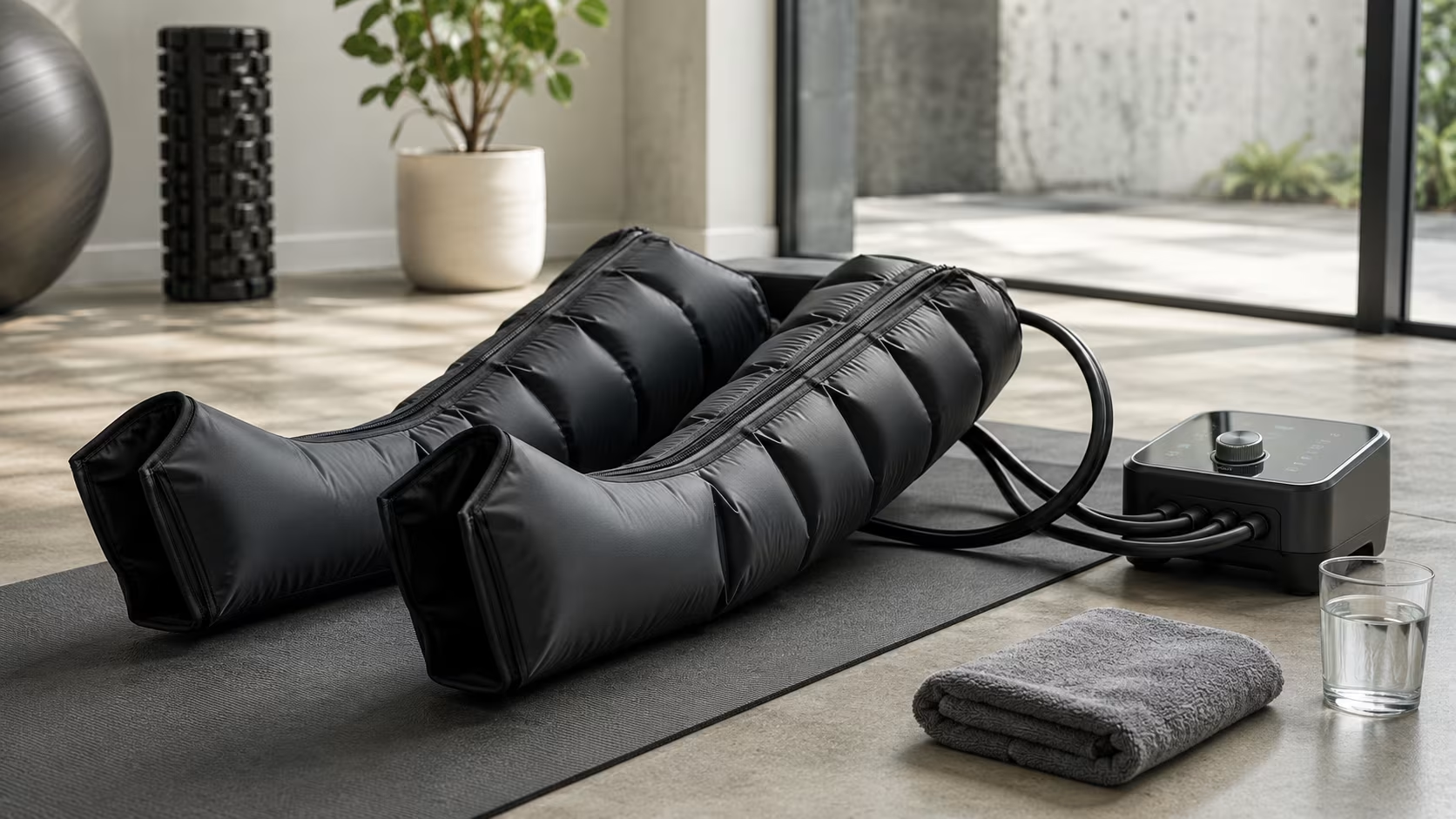
PEMF devices generate pulsed electromagnetic fields that supposedly support cellular function and various health outcomes. Brands include BEMER and others, with consumer products ranging from $1,500 to over $5,000.
The research base on PEMF is mixed. There's documented evidence for specific medical applications — bone healing in delayed unions, certain types of chronic wounds, post-operative pain management. The FDA has approved specific PEMF devices for these medical indications.
Beyond these medical applications, the consumer wellness claims are less well-supported. Studies on PEMF for general wellness, athletic recovery, and chronic pain have been mixed, with effect sizes often smaller than the marketing suggests.
The mechanism is theoretically interesting but practically uncertain. Different PEMF devices use different frequencies, intensities, and waveforms, and the research isn't typically generalizable across these different parameters. A device that works for bone healing may not work for muscle recovery.
For most consumer applications, PEMF is in the category of "interesting research, unproven for the marketed wellness applications." The cost is substantial. The opportunity cost of buying a $3,000 PEMF mat versus other recovery investments is real.
For specific medical conditions where PEMF has documented evidence, devices may be appropriate (often through medical channels). For general wellness, the cost-benefit ratio rarely favors purchase.
Electrical muscle stimulation (EMS)
EMS uses electrical impulses to cause muscle contractions. The technology has been around for decades and has documented uses in physical therapy, post-injury rehabilitation, and prevention of muscle atrophy.
For specific medical applications, EMS has clear evidence. Post-surgical patients use EMS to maintain muscle activity when they can't actively move. People with certain neurological conditions benefit from EMS as part of rehabilitation. Athletes recovering from injury may use EMS to maintain muscle conditioning during periods of restricted movement.
For general athletic enhancement, the evidence is weaker. EMS-stimulated muscle contractions are different from voluntary contractions in important ways — different recruitment patterns, different metabolic demands, different adaptations. Studies comparing EMS training to voluntary training have generally shown EMS to be either similar or inferior for most outcomes.
The "EMS workout suits" marketed in the 2010s and 2020s — full-body suits delivering EMS during exercise sessions — have been a particular point of controversy. The marketing claims include dramatic muscle building, fat loss, and time-efficient workouts. The research support for these claims is thin. Some studies have shown small benefits over comparable non-EMS workouts; others have shown no difference. The suits also cost significantly more than regular gym memberships.
For specific TENS-style devices marketed for pain relief (different from training EMS), the evidence is moderate. TENS units can produce real pain reduction for various chronic pain conditions, and they're inexpensive ($30 to $100 for a basic unit).
For general athletic use, EMS is a niche tool. It has its place in rehabilitation and specific situations. As a primary training or recovery method, the evidence doesn't support it.
What basic tools cover for most people
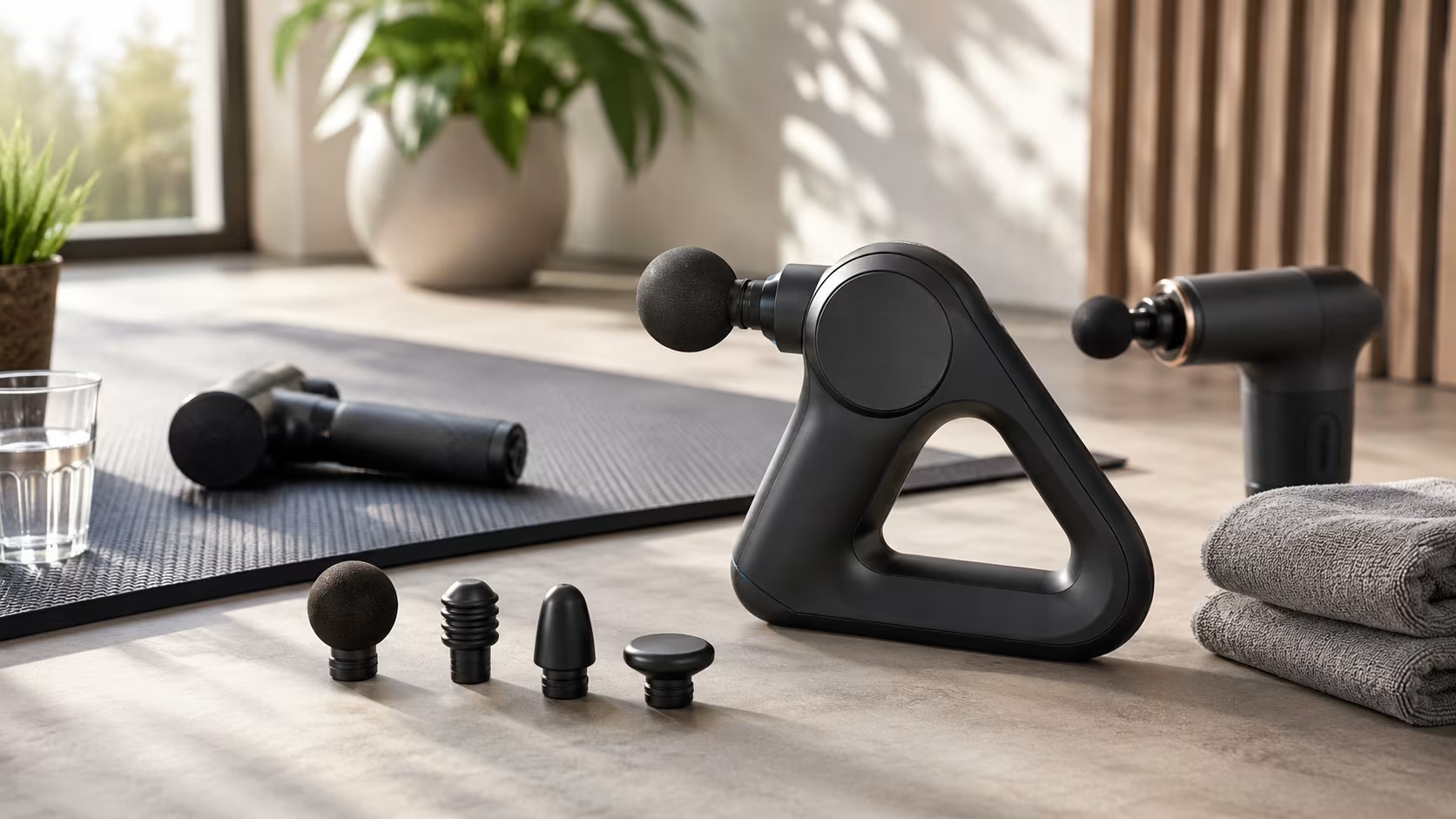
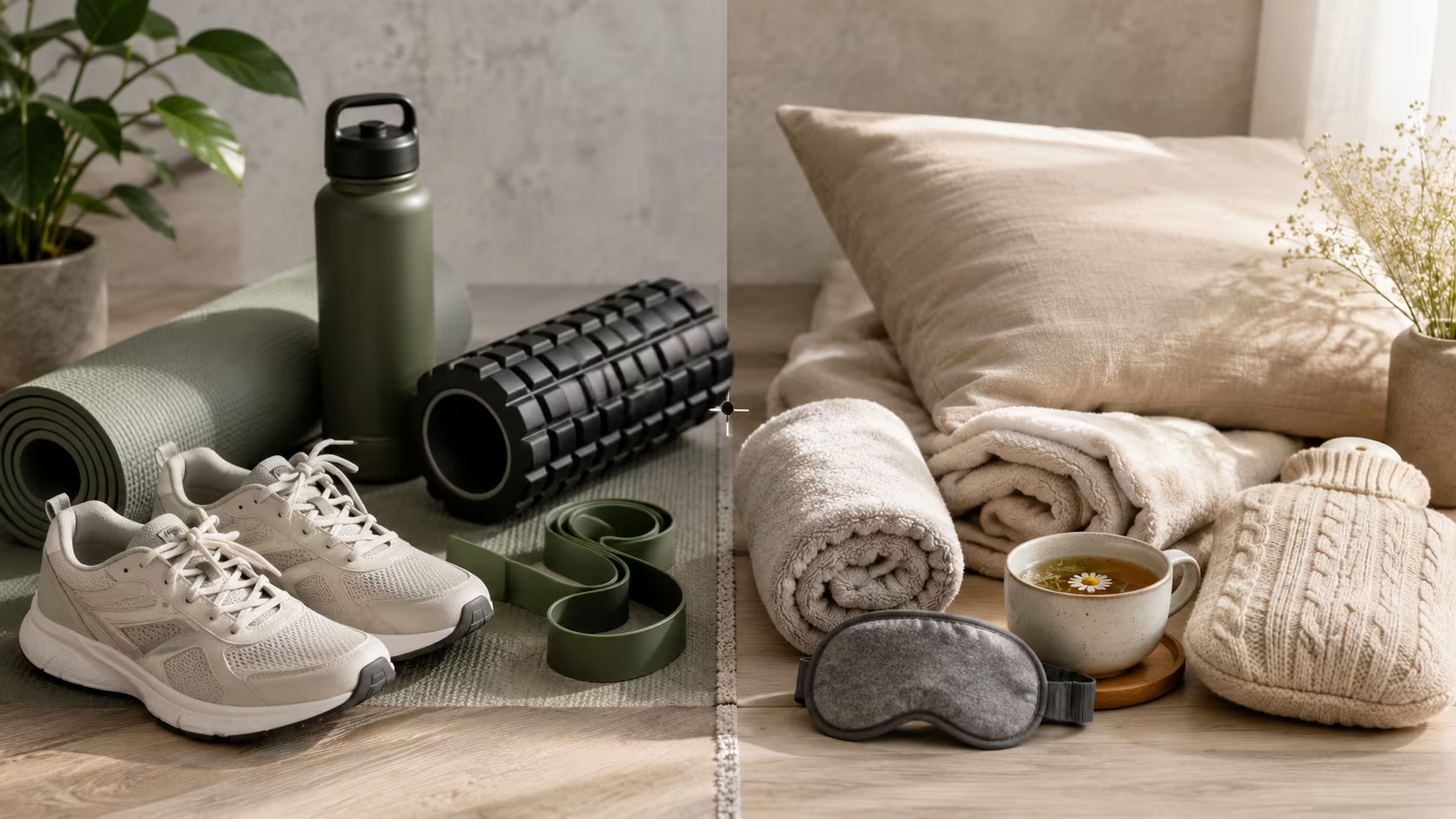
For most recreational athletes and active adults, the basic recovery tools cover the majority of what's achievable.
Foam roller
$25 to $50. Covers most self-massage needs for major muscle groups. Discussed at length in a separate article.
Massage balls (lacrosse ball, smaller specialty balls)
$5 to $20. For areas the foam roller can't reach.
Yoga mat or comfortable surface
$20 to $50. For stretching, mobility work, and breath practices.
Quality pillow and mattress
Variable cost, but the highest-impact "recovery purchase" most people can make. Sleep is the foundation everything else builds on.
Black-out curtains
$30 to $100. Cheap and high-impact for sleep quality.
Programmable thermostat or window AC
Variable cost. A cool sleeping environment dramatically improves sleep quality.
Compression sleeves for specific use cases. $20 to $50 for basic versions.
Mid-range percussion massager
$150 to $300. The most defensible "fancy" recovery tool for most people.
For under $500 total, this collection covers most of what recovery technology can accomplish for a recreational athlete. Adding $1,000+ in additional gadgets typically produces diminishing returns relative to consistent use of the basics.
How to think about recovery spending
A few principles for prioritizing recovery investments.
Sleep first
Anything that improves sleep produces more recovery benefit than any technology. Mattress, environment, light blocking, temperature management, sleep tracking if useful — all higher priority than premium recovery tools.
Address basics before optimization
Adequate calories, sufficient protein, hydration, basic stress management — all matter more than any recovery gadget.
Match tool to need
Generic recovery shopping (buying things because the marketing is good) is less useful than identifying specific recovery limitations and addressing them.
Use cases per dollar
A $100 percussion massager used 3 times a week for 2 years is $0.32 per use. A $1,500 compression boot system used 1 time a week is $14 per use. Frequency matters for value.
Consider rental and access
Many recovery studios offer pneumatic compression, cryotherapy, infrared sauna, and other technologies on a per-session basis. Try before buying.
Beware the upgrade cycle
Recovery technology changes every few years. A premium device today may be eclipsed by a better, cheaper version in 18 months.
Don't substitute technology for behavior
No recovery tool compensates for chronic poor sleep, inadequate calories, training too hard too often, or unmanaged stress. Address the behavior; let the tools support it.
For most active people, the ideal recovery spending is probably $200 to $500 for tools, plus prioritized investment in sleep environment, plus occasional professional services (massage, sauna access) on a per-use basis. This produces most of the available recovery benefit at a reasonable cost.
Sources
Sands, W. A., McNeal, J. R., Murray, S. R., Ramsey, M. W., Sato, K., Mizuguchi, S., & Stone, M. H. (2015). Stretching and its effects on recovery: A review. Strength & Conditioning Journal, 37(2), 79–87.
Konrad, A., Glashüttner, C., Reiner, M. M., Bernsteiner, D., & Tilp, M. (2020). The acute effects of a percussive massage treatment with a Hypervolt device on plantar flexor muscles' range of motion and performance. Journal of Sports Science & Medicine, 19(4), 690–694.
Imtiyaz, S., Veqar, Z., & Shareef, M. Y. (2014). To compare the effect of vibration therapy and massage in prevention of delayed onset muscle soreness (DOMS). Journal of Clinical and Diagnostic Research, 8(1), 133–136.
Brown, F., Gissane, C., Howatson, G., van Someren, K., Pedlar, C., & Hill, J. (2017). Compression garments and recovery from exercise: A meta-analysis. Sports Medicine, 47(11), 2245–2267.
Leal-Junior, E. C., Vanin, A. A., Miranda, E. F., de Carvalho, P. D. T. C., Dal Corso, S., & Bjordal, J. M. (2015). Effect of phototherapy (low-level laser therapy and light-emitting diode therapy) on exercise performance and markers of exercise recovery: A systematic review with meta-analysis. Lasers in Medical Science, 30(2), 925–939.
Kraemer, W. J., Bush, J. A., Wickham, R. B., Denegar, C. R., Gómez, A. L., Gotshalk, L. A., Duncan, N. D., Volek, J. S., Putukian, M., & Sebastianelli, W. J. (2001). Influence of compression therapy on symptoms following soft tissue injury from maximal eccentric exercise. Journal of Orthopaedic & Sports Physical Therapy, 31(6), 282–290.
Filipovic, A., Kleinöder, H., Dörmann, U., & Mester, J. (2012). Electromyostimulation—a systematic review of the influence of training regimens and stimulation parameters on effectiveness in electromyostimulation training of selected strength parameters. Journal of Strength and Conditioning Research, 26(9), 2600–2614.
Frequently Asked Questions
Are compression boots worth $1,000+?
Worth depends on use. For elite athletes with daily heavy training, yes — they save time and produce real recovery effects. For recreational athletes training a few times a week, the marginal benefit is small relative to the cost. A foam roller and proper sleep address most of the same goals at a fraction of the price.
Can a massage gun replace a real massage?
Partially. The percussion produces some of the same neural and tissue effects as manual massage. What you lose: the trained hands of a therapist, the broader healing presence, and the precision of someone reading your specific tissue. For routine recovery between professional sessions, a massage gun fills the gap reasonably well.
Do compression socks work for daily wear?
For specific conditions like venous insufficiency, varicose veins, or long flights — yes, with documented benefit. For general athletic recovery during normal daily activity, the evidence is much weaker than the marketing suggests. The performance benefit during running or other activity is also smaller than commonly claimed.
Is electrical muscle stimulation (EMS) actually useful?
For specific medical applications (rehab, atrophy prevention, pain management) it has clear evidence. For general athletic enhancement or fat loss, the evidence is weak. EMS-based 'workout suits' marketed as replacing strength training don't deliver what they promise.


0 Comments
Leave a comment
Your email won't be published. Required fields are marked with *.